





MEREDITH — A changing climate and documented weather patterns influence the risk of cyanobacteria blooms in New Hampshire lakes, but the unique conditions present in those lakes also play an important role. Most influential, however, is land use and development, which is definitively linked to the scourge.
State and private-sector partners met on June 18 to discuss cyanobacteria and various monitoring, planning and mitigation efforts in a forum hosted by conservationists with the Lake Winnipesaukee Alliance.
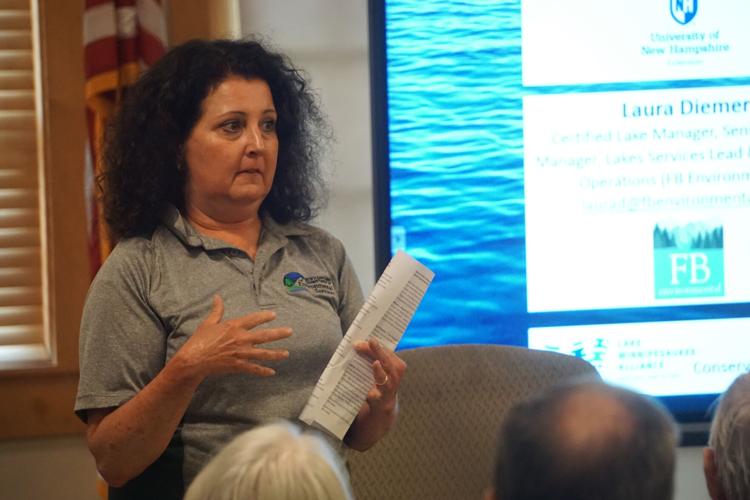
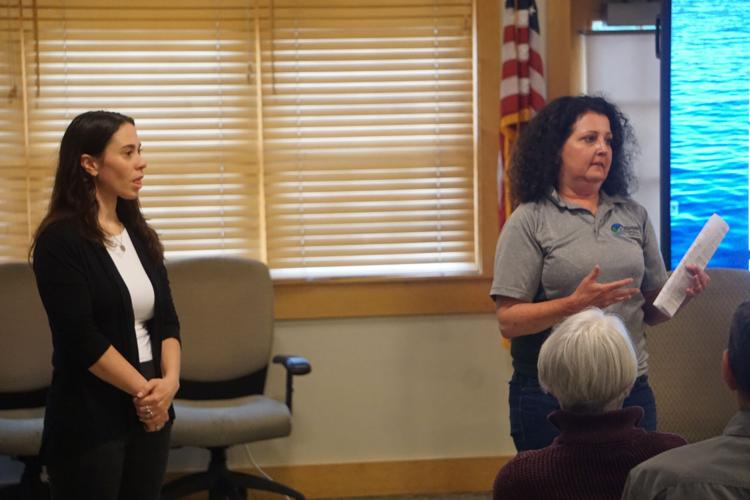
Around 60 people from the Lakes Region attended a presentation at the town community center to hear Laura Diemer, director of operations for FB Environmental, and a panel discussion featuring environmental and water quality experts representing the New Hampshire Department of Environmental Services and the University of New Hampshire Cooperative Extension.
Citing the Waukewan Cyanobacteria Monitoring Source Water Protection project, Diemer told the crowd communities can work together to make an impact in protecting water quality.
Cyanobacteria are small, photosynthetic bacteria which grow in a variety of environments, including our lakes. They’re important because, while a natural part of the ecosystem, they can produce cyanotoxins which could present serious health risks to humans, pets, livestock and wildlife. Humans can experience liver, kidney or reproductive organ damage, eye and skin irritation, gastrointestinal pain or illness and, in serious cases, death.
Cyanobacteria require carbon dioxide, water, sunlight and essential nutrients and minerals for growth. Diemer said phosphorus is usually the limiting nutrient for growth, so the more phosphorus available in the environment, the more cyanobacteria will grow.
“We all know that cyanobacteria is a growing problem,” Diemer said. “Not only in our state, but across New England and the country.”
Development in the watershed leads to more nutrient-rich runoff that can fuel cyanobacteria growth, she said, and some lakes can derive additional nutrient sources internally through sediment, triggering cyanobacteria growth. Climate change effects, like more intense rainfall increasing nutrient runoff into the lake, and warming air temperatures creating warm waters where cyanobacteria can thrive.
“All our lakes are generally experiencing similar changes in weather patterns and most have development impacts, so why aren’t all of our lakes blooming?” Diemer posed to the audience. “There are other factors that can come into play that can stimulate or inhibit cyanobacteria growth,” like geochemistry and morphology.
“While we can’t control the impact of climate change on our lakes, we can manage the impact of watershed development and, sometimes, internal nutrients to reduce that nutrient availability for cyanobacteria growth,” she said.
According to the data, Diemer said, rain events which bring nutrients into the water, followed by warming events, generally promote cyanobacteria growth and correspond to documented past blooms.
“They seem to thrive in these short-term nutrient pulses followed by warm, sunny days in spring,” she said. “Summer is a little different. With more bloom reporting, we have more consistent warm air and water temperatures as well. Rain typically becomes lower in summer, though you can see that we did have a wet August last year and then September was very dry. Cyanobacteria also can become more diverse in summer, as many are able to grab nutrients from deeper depths and thrive in more stable water columns that are created by stratification in late summer.”
Diemer said a good watershed management plan is like a roadmap and should comprise three parts: identifying major sources of phosphorus through modeling and field surveys; setting a water quality goal, improving water quality and minimizing the risk of blooms and at least meeting state water quality standards; and prioritizing actions to reduce phosphorous sources to meet water quality goals.
At present, FB Environmental is working to update the watershed management plan for Lake Waukewan.
“Runoff is usually the No. 1 concern. There are so many actions that shoreline property owners can take to help minimize stormwater and erosion impact to water quality,” Diemer said. “The two key elements of slowing runoff are infiltration and filtration — we essentially want to slow down the erosive power of stormwater to allow the ground to soak up the water and trap any unwanted pollutants, like nutrients, before reaching surface waters, and landowners can play a huge part in that by diverting runoff to gardens or other retention areas.”
Minimizing the use of chemicals and fertilizers and maintaining or enhancing buffers are also effective steps to take in protecting water quality. Ensuring a working septic system is another major part of protecting New Hampshire’s waterways.
“When we are alerted about a bloom, we’re asking everyone to use our bloom report form, which is a pretty comprehensive online form that allows you — the individual — to enter data that lets us know where you’re seeing the bloom, how prevalent the bloom is. You can submit photographs of what you’re seeing to better inform us of the bloom,” Amy Smagula, chief aquatic biologist at NH DES, said during a panel discussion following Diemer’s presentation. “If you can submit a sample to us in Concord, that’s fantastic. If you can’t, we do have the ability to have an intern come out.”
Readers can report potential blooms at des.nh.gov/water/healthy-swimming/harmful-algal-blooms.
Smagula said they try to turn samples over within 24 hours, but have a person temporarily covering their cyanobacteria program, and can’t fill the position because of an ongoing state hiring freeze.
“Usually a lot of the more nutrient-rich systems are the ones that tend to bloom longer,” Smagula said. “Not always, but often.”
“We can start to see just what might be starting to grow early spring, but then that does tend to build up over time, we get more diversity of organisms,” Professor Amanda McQuaid, director of the Lakes Lay Monitoring program at University of New Hampshire Cooperative Extension, said. “By the fall, and in fact we saw with Kanasatka and the [Lake Winnipesaukee] spillover, that was late October. We want to be able to get the dynamic differences over time and one thing [NH DES] has suggested is doing more plankton analysis over time.”
State and private partnerships have resulted in marked benefits in the past. Pierce Rigrod, supervisor of the source water protection program at NH DES, said a 2008 project on Paugus Bay saw the state and Laconia’s Department of Public Works collaborate to install a bioretention swale. That funneled rainwater through a series of engineered media, preventing contamination.
Paugus Bay is the source of drinking water in the City of Laconia, and Waukewan is the source for much of Meredith. As of Wednesday afternoon, there were no reported blooms on either Waukewan or Winnipesaukee.
“A whole ecosystem was formed to treat this water prior to discharging right into the bay,” Rigrod said. “We need to do more of that — we’re funding a handful of projects, many through the [Lake Winnipesaukee Alliance], to understand where we should be focusing our [efforts] on nutrient controls.”


(0) comments
Welcome to the discussion.
Log In
Keep it Clean. Please avoid obscene, vulgar, lewd, racist or sexually-oriented language.
PLEASE TURN OFF YOUR CAPS LOCK.
Don't Threaten. Threats of harming another person will not be tolerated.
Be Truthful. Don't knowingly lie about anyone or anything.
Be Nice. No racism, sexism or any sort of -ism that is degrading to another person.
Be Proactive. Use the 'Report' link on each comment to let us know of abusive posts.
Share with Us. We'd love to hear eyewitness accounts, the history behind an article.