




(Emma Hyde/ETH Zurich via SWNS)
By Dean Murray
Researchers have, for the first time, captured the moment someone catches the flu.
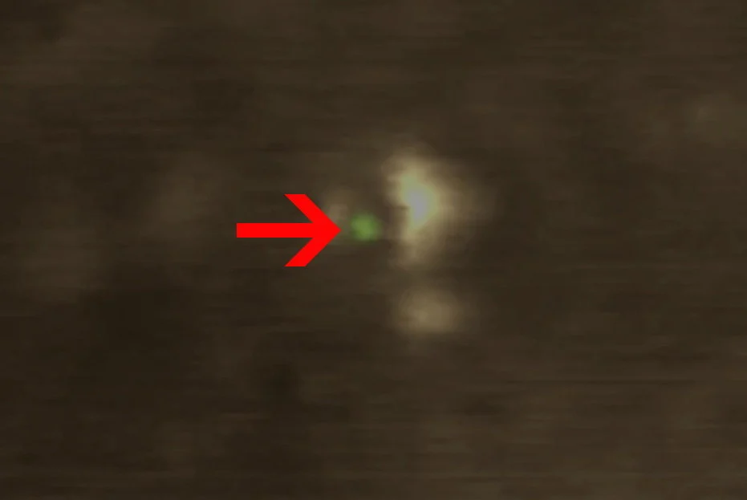
A new microscopy technique allows live observation of influenza viruses infecting living cells.
Researchers from Switzerland and Japan used the innovation they developed themselves to zoom in on the surface of human cells in a Petri dish.
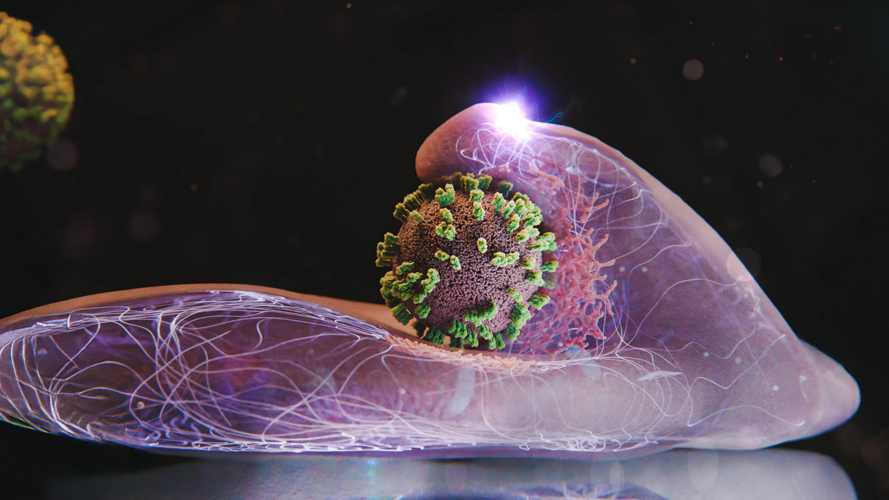
They describe the virus as "surfing" along the cell, looking for a way in to complete the infection.


It was also shown that the cell actively promotes virus uptake on various levels by recruiting the functionally important clathrin proteins to the point where the virus is located. The cell surface also actively captures the virus by bulging up at the point in question.
Observing the process in high resolution could help to develop antiviral therapies in a more targeted manner.

(ETH Zurich via SWNS)
Led by Yohei Yamauchi, Professor of Molecular Medicine at ETH Zurich, the researchers were surprised by one thing in particular: the cells are not passive, simply allowing themselves to be invaded by the influenza virus. Rather, they actively attempt to capture it.
Yohei Yamauchi said: "The infection of our body cells is like a dance between virus and cell."
ETH Zurich said: "The new technique therefore provides key insights when it comes to the development of antiviral drugs. For example, it is suitable for testing the efficacy of potential drugs in a cell culture in real time. The study authors emphasize that the technique could also be used to investigate the behavior of other viruses or even vaccines."


(0) comments
Welcome to the discussion.
Log In
Keep it Clean. Please avoid obscene, vulgar, lewd, racist or sexually-oriented language.
PLEASE TURN OFF YOUR CAPS LOCK.
Don't Threaten. Threats of harming another person will not be tolerated.
Be Truthful. Don't knowingly lie about anyone or anything.
Be Nice. No racism, sexism or any sort of -ism that is degrading to another person.
Be Proactive. Use the 'Report' link on each comment to let us know of abusive posts.
Share with Us. We'd love to hear eyewitness accounts, the history behind an article.