


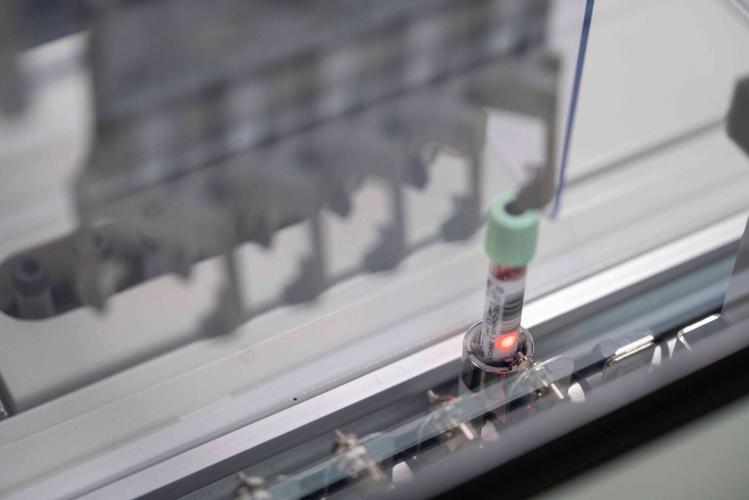


A large, international study led by City of Hope found that the new, investigational liquid biopsy, called PANXEON, was highly sensitive in detecting stage 1 and 2 pancreatic cancer and had a low rate of false positives. (City of Hope via SWNS)
By Stephen Beech
An experimental blood test can spot one of the deadliest forms of cancer at its earliest stages.
The Panxeon test has shown "promise" in trials for detecting pancreatic cancer when the disease is more treatable and potentially curable, say American scientists.
Panxeon, which combines multiple biomarkers, also identified a precancerous condition of the pancreas, potentially opening a path to treatment before invasive cancer develops.
The new test was developed by scientists at California-based City of Hope, a nonprofit cancer and diabetes research and treatment center.
Pancreatic cancer currently has the lowest survival rates of any form of cancer, with just one in seven patients (14%) living five years after diagnosis.
Some 90% of pancreatic cancer patients only have their tumors detected at advanced stages when the malignancy has already spread.
A new study, published in the journal Nature Medicine, found that the Panxeon liquid biopsy was "highly sensitive" in detecting stage 1 and 2 pancreatic cancer, and had a low rate of false positives.
The experimental test was also able to identify high-grade dysplasia, a precancerous condition of the pancreas, potentially enabling early intervention.

City of Hope researcher Ajay Goel, Ph.D., AGAF, led the development of a new, investigational blood test that could detect pancreatic cancer at its earliest stages. (City of Hope via SWNS)
Study senior author Ajay Goel, from City of Hope, said: "Pancreatic cancer remains so deadly largely because we find it after the window for cure has begun to close.
"For patients, these findings represent progress toward finding pancreatic cancer before symptoms appear and while more treatment options remain available."
He says Panxeon has the potential to "dramatically change" when pancreatic cancer is detected and treated.
Goel explained that it works by testing a blood sample for not just one but three markers of pancreatic cancer: circulating microRNAs, exosomal microRNAs and a protein called CA19-9.


The test then uses artificial intelligence (AI) to combine all three measurements into a single score that estimates the patient's risk.
It is the first investigational test to combine the three biomarkers into a single test.
Researchers tested the liquid biopsy in more than 1,700 patients across the United States, Europe and Asia to determine whether its previously reported promising results would hold up in diverse clinical settings.
Goel says the results were "very encouraging" with the blood test correctly identified stage 1 and 2 pancreatic cancer 87% of the time, while its false-positive rate was just 3% in low-risk groups, and 16% in high-risk groups.
Rather than replacing imaging or other diagnostic tests, Goel said Panxeon could help identify high-risk patients who should undergo further evaluation.

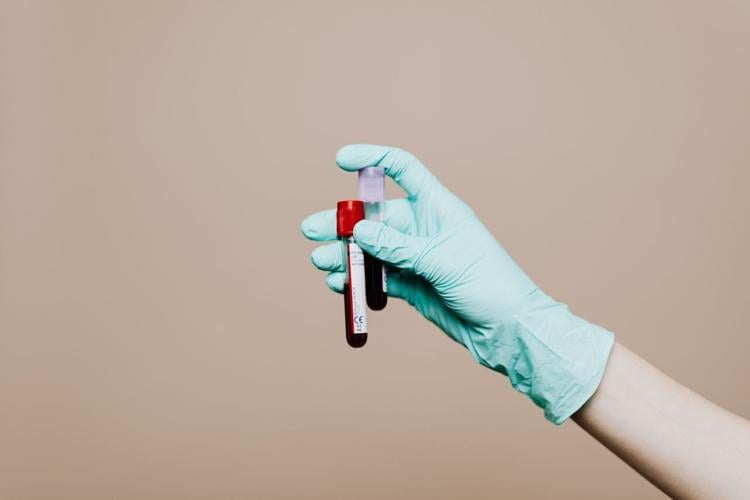
(Photo by kaboompics via Pexels)
The test also detected high-grade dysplasia, an advanced precancerous condition that is often considered "stage 0" pancreatic cancer, more than 64% of the time.
The research team believes it could help physicians better identify which pancreatic cysts require active monitoring or intervention before invasive cancer develops.
Early detection has been a major research goal for years, but previous blood-based tests have fallen short.
Goel says combining multiple biomarkers into a single test and then evaluating it in people with familial or inherited genetic risk, pancreatic cysts and chronic pancreatitis, rather than only healthy controls, is what sets Panxeon apart.
He said: "Most biomarkers tell you one part of the story.
"Combining multiple biological signals gives us a clearer picture of what may be happening in the pancreas."
Goel says patients most likely to benefit include those with inherited risk, a family history of pancreatic cancer, pancreatic cysts or chronic pancreatitis.
Those patients are often monitored through imaging and other tests, but Goel says current approaches are invasive, expensive and only somewhat helpful at detecting cancer at the earliest stages.
He added: "The earlier we find pancreatic cancer, the greater the chance that meaningful intervention is still possible."


(0) comments
Welcome to the discussion.
Log In
Keep it Clean. Please avoid obscene, vulgar, lewd, racist or sexually-oriented language.
PLEASE TURN OFF YOUR CAPS LOCK.
Don't Threaten. Threats of harming another person will not be tolerated.
Be Truthful. Don't knowingly lie about anyone or anything.
Be Nice. No racism, sexism or any sort of -ism that is degrading to another person.
Be Proactive. Use the 'Report' link on each comment to let us know of abusive posts.
Share with Us. We'd love to hear eyewitness accounts, the history behind an article.