



How to choose the right in-home care provider
Realizing a parent or other senior family member needs extra help at home isn’t easy. There’s never a good time to broach the subject of in-home care, especially if the senior is proudly independent. It’s a situation that requires sensitivity, honesty and a desire to do what’s right for a senior loved one.
When we age and reach a stage where extra help is needed, the thought of hiring an in-home care provider can feel overwhelming because we’ve become so used to our independence. Apart from finding someone to assist with daily tasks, a family caregiver can become a trusted companion — someone invested in your loved one’s physical, mental and emotional well-being.
How can concerned and caring family members ensure they choose the right in-home care provider? It’s all about understanding what will meet a senior’s needs. This guide from Village Caregiving helps you narrow your search criteria by providing everything you need to know.
Key Takeaways
- The role of an in-home care provider can vary depending on the needs of your senior loved one.
- These roles can include in-home family caregiving for daily support and housekeeping, or medically trained nurses providing physical therapy and medication assistance.
- Understanding seniors’ needs can help determine the level of care your loved one requires.
- Choosing an in-home care provider involves licensing, training and background checks, reviews and budget considerations.
- Your loved one’s safety and well-being can depend on the family caregiver you choose.
- Quality of care, personalization, transparency and communication are important to developing a strong relationship with this person.
- Be wary of any agency that’s cagey about billing information or pressures you into signing a contract immediately.
Understanding the Role of In-Home Care Providers
In-home family caregivers’ roles vary and sometimes go far beyond helping with chores or running errands. Some providers offer basic assistance, like housekeeping and meal preparation, while others provide flexible and comprehensive services like bathing, dressing or companionship. Then there’s more specialized care, like medical services provided by trained nurses or aides, which include monitoring vital signs and assisting with medications or physical therapy.
Seniors looking to age in place will need the right kind of support to enjoy the quality of life they deserve.
How to Choose the Right In-Home Care Provider
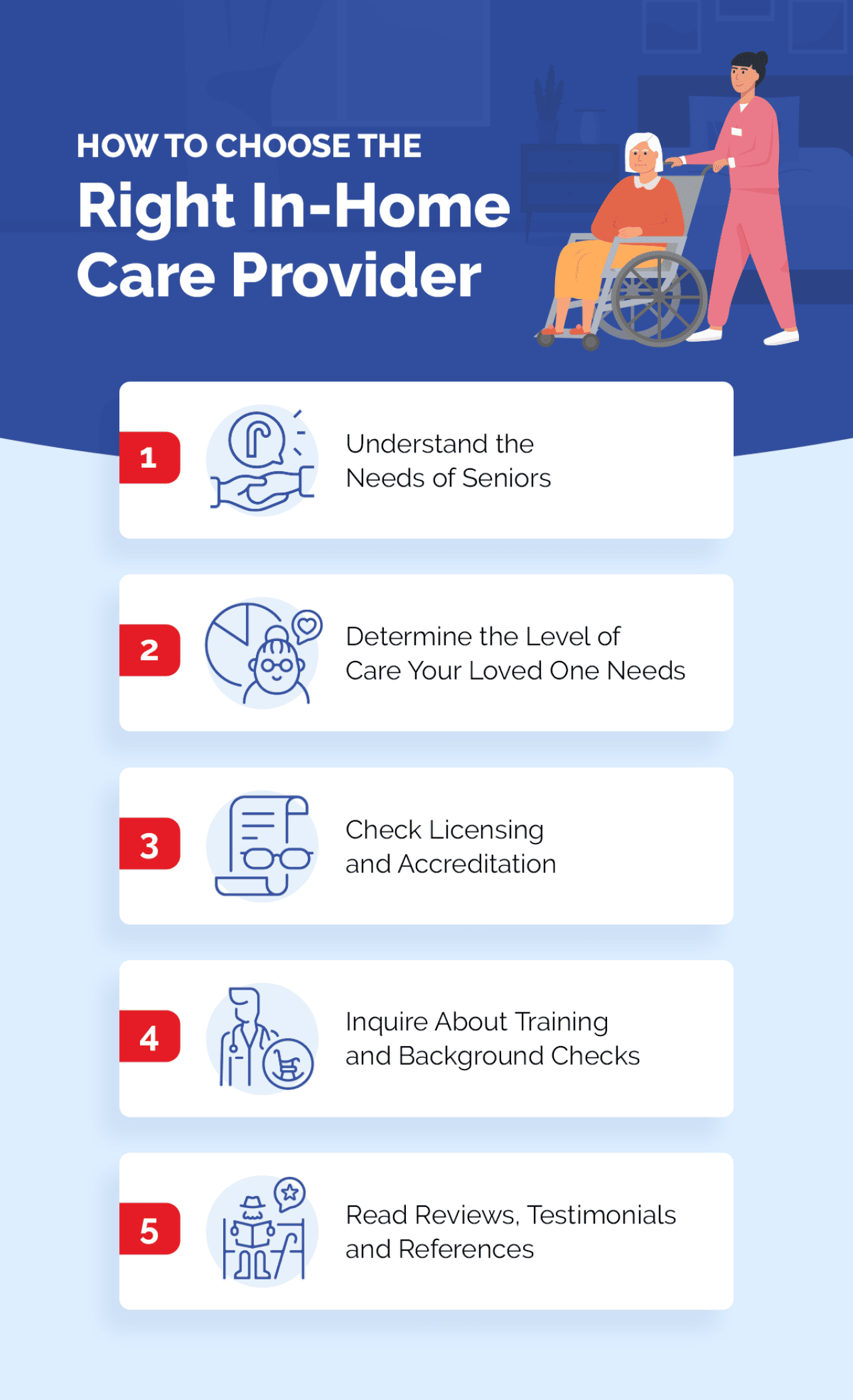
Choosing the right in-home care agency isn’t just about browsing through names and reviews. It entails asking the right questions, evaluating services and finding a provider that suits your loved one’s needs, budget and long-term goals. If you’re open and honest as a family or community, you can make the best choice for your loved one.
Following the steps below can help you find someone who feels more like an extended family member than a hired service provider.
Understand the Needs of Seniors
No one should have to sacrifice their dignity and individuality when looking for in-home support. Every individual is different, and so are their needs. Before contacting an agency, sit down with your loved one and have an honest conversation about what kind of help would make them feel comfortable. If the person requiring care isn’t able to communicate their needs effectively, involve other family members to evaluate the current situation.
The following areas of conversation can lead to meaningful, insightful answers about your loved one’s care needs.
- Personal care: Some seniors may struggle to admit they need help with daily functions. Does the person need help with activities of daily living (ADLs), such as dressing or toileting?
- Companionship: Perhaps your loved one is lonely and could benefit from having someone around for conversation, outings or hobbies.
- Medical care: If your loved one has chronic conditions or mobility issues or needs help with medication, they may require professional medical services.
- Specialized care: Seniors who are living with dementia or Alzheimer’s deserve the right support for their needs. This may include nonmedical personalized support.
- Duration of needs: Is this short-term assistance, or does your loved one require long-term care? Conversations like this can help determine the level of care needed.
Approaching these subjects with compassion and care can make all the difference.
Determine the Level of Care Your Loved One Needs
Aging in place is a popular choice among seniors. It’s completely understandable why so many of our loved ones wish to stay in familiar surroundings. A 2024 survey conducted by the American Association of Retired Persons (AARP) revealed that 75% of adults aged 50 or older want to remain in their current homes as they age.
By listening to the needs and concerns of a senior family member, you can better understand the level of care they require. This is where it’s important to separate nonmedical care needs from medical ones. Seniors who need regular wound care or injections require support from a skilled nurse. Nonmedical care will typically include areas like safety, hygiene and companionship.
Your loved one might require a bit of both. A senior may require medical care, but having a nonmedical in-home family caregiver can allow them to remain at home between medical visits.
Check Licensing and Accreditation
Licensing and accreditation ensure an agency meets state standards and regulations. This can offer peace of mind for concerned family members. You can usually check this information on the agency’s website, but feel free to ask directly. Agencies accredited by organizations like the Joint Commission or relevant state-based regulatory bodies often mean they uphold certain standards of care.
An in-home care provider may be licensed in several states nationwide. This may not always be the case, as some states don’t require home care licensing. It’s worth checking if your specific state requires this kind of license. Medical in-home care typically has a broader range of licensing and accreditation requirements than nonmedical services.
Inquire About Training and Background Checks
A reputable provider will conduct thorough background checks on all employees. You’re inviting someone into your home to take care of a loved one, so knowing they’ve been properly vetted for criminal history, drug use and any other potential concerns is vital.
The agency should also provide ongoing training to ensure its employees are up to date on best practices in senior care. For example, if you hire someone to help manage diabetes, you want a family caregiver who understands blood sugar and dietary needs specific to the condition.
The level of training in-home family caregivers have can significantly influence your decision. Below are some of the main areas of training and caregiver qualifications to look for:
- Codes of conduct and ethics
- Handling emergency situations
- Professional boundaries
- Oral hygiene and bathing
- Incontinence and toileting
- Positioning and skin care
- Safe transfers and ambulation
Regular training in these areas and more ensures that seniors get the dignified care they deserve. Training in areas like the Health Insurance Portability and Accountability Act (HIPAA) demonstrates adherence to protecting sensitive information about your senior loved one and their health.
Read Reviews, Testimonials and References


The experiences of other families can be incredibly telling. Take time to read reviews and testimonials, both on the agency’s website and on independent platforms. This gives you a broader perspective on the quality of care and service available. Positive reviews highlight an agency’s strength, while any negative feedback can serve as a red flag.
Look for comments that discuss the reliability and professionalism of the family caregivers. Consider writing out a few promising words you want to find in those comments. Terms like professionalism, reliability and happiness are signs of consistently satisfied families.
Don’t hesitate to ask for references from current or previous clients. Speaking directly to those who have firsthand experience with the provider will give you deeper insights into how the agency operates, the family caregiver’s level of compassion and the overall quality of care. Ask questions such as:
- How long did you or your loved one use the agency’s services?
- Was the family caregiver consistent, or did you experience frequent staff changes?
- Was the family caregiver punctual and dependable?
- How did the agency handle scheduling conflicts or family caregiver absences?
- Was a replacement provided promptly in the event of an absence?
Each need and care situation will be different. Having a broader range of experiences from other people in your situation can reduce a lot of potential worry.
Consider Your Budget and Cost of In-Home Care
No one wants to put a price on the quality of care a senior loved one receives. Understandably, cost is a significant cause of stress for many family members. By taking the time to think about what your senior family member actually needs, you can ensure you use your budget wisely.
The following areas can narrow down what matters most in budgeting and cost, helping determine which in-home care provider can accommodate these needs.
- Frequency of use: Do you need care daily, weekly or just a few times a month? More frequent care will naturally increase the total cost. Starting with fewer visits and increasing them if and when needed can help reduce unnecessary spending. Agencies that charge by the hour can show flexibility to suit different needs.
- Services provided: The level of care, whether it’s basic help with chores or more involved medical assistance, will affect the cost. Help with groceries and chores that don’t involve medical assistance is typically less expensive than medical in-home care. This is an important distinction to make when exploring the right in-home care provider.
- Insurance and financial assistance: Some agencies work with specific insurance plans, which may cover part of the cost. Explore financial options, including Medicare, Medicaid and other insurance plans. While these benefits will vary by state, it’s worth checking. Agencies may also offer long-term care insurance or home care services for veterans, both of which are common for nonmedical care.
- Things to watch out for: Agencies should be transparent and honest about pricing. You may be asked to provide an unexpected fee, like a deposit up front. Search for options that don’t require an up-front deposit. Being encouraged to lock into a set minimum contract length is also a potential red flag.
Remember that meaningful care isn’t always determined by the most expensive option, or the length of a family caregiver’s stay. Short hourly visits can offer just as much support as longer stays, depending on your senior loved one’s needs.
How to Ensure Your Loved One’s Safety and Well-Being With a Family Caregiver
Aside from the practical considerations above, it’s important to remember that your chosen family caregiver will become a central part of your life. Choosing a safety-conscious person who values your senior loved one’s well-being and quality of life is just as crucial.
Studies show that strong social connections are linked to better mental and physical health. Finding someone your senior relative sees more as a companion than a stranger can contribute to a better overall life.
A family caregiver should ensure your loved one’s safety and well-being.
Quality of Care and Personalization
Your family and senior loved one shouldn’t have to accommodate the needs of an agency. The agency’s provided in-house family caregiver should cater to your family’s needs. Discuss with the provider how they tailor care plans to the individual. Don’t hesitate to ask about flexibility in adjusting these care needs over time.
An agency caregiver should have the same attitude toward in-home family care. If your loved one has dietary preferences or hobbies they enjoy, the in-home family caregiver should add these to their daily care plan. This can help form stronger bonds quickly. Agencies that offer personalized care provide a higher-quality experience, which supports their clients’ physical and emotional well-being.
Communication and Transparency
Trust is built through consistency, dependability and clear communication, especially when you’re entrusting the care of an aging loved one to another person. If any agency shows these qualities, it’s a good sign that a family caregiver will do the same. An agency that’s clear about its service will typically provide a family caregiver with the same attributes.
Your senior loved one deserves a family caregiver who enjoys the things they do. An outgoing senior may want a similar personality for deep conversations, days out and general household maintenance. Someone who speaks and presents themselves as an open book can help reduce concerns for seniors.
Look for agencies that offer direct and easy communication channels, preferably ones that are available 24/7. Knowing you can reach someone at any time adds another layer of security for you and your loved one.
Finding the Right Provider and Family Caregiver
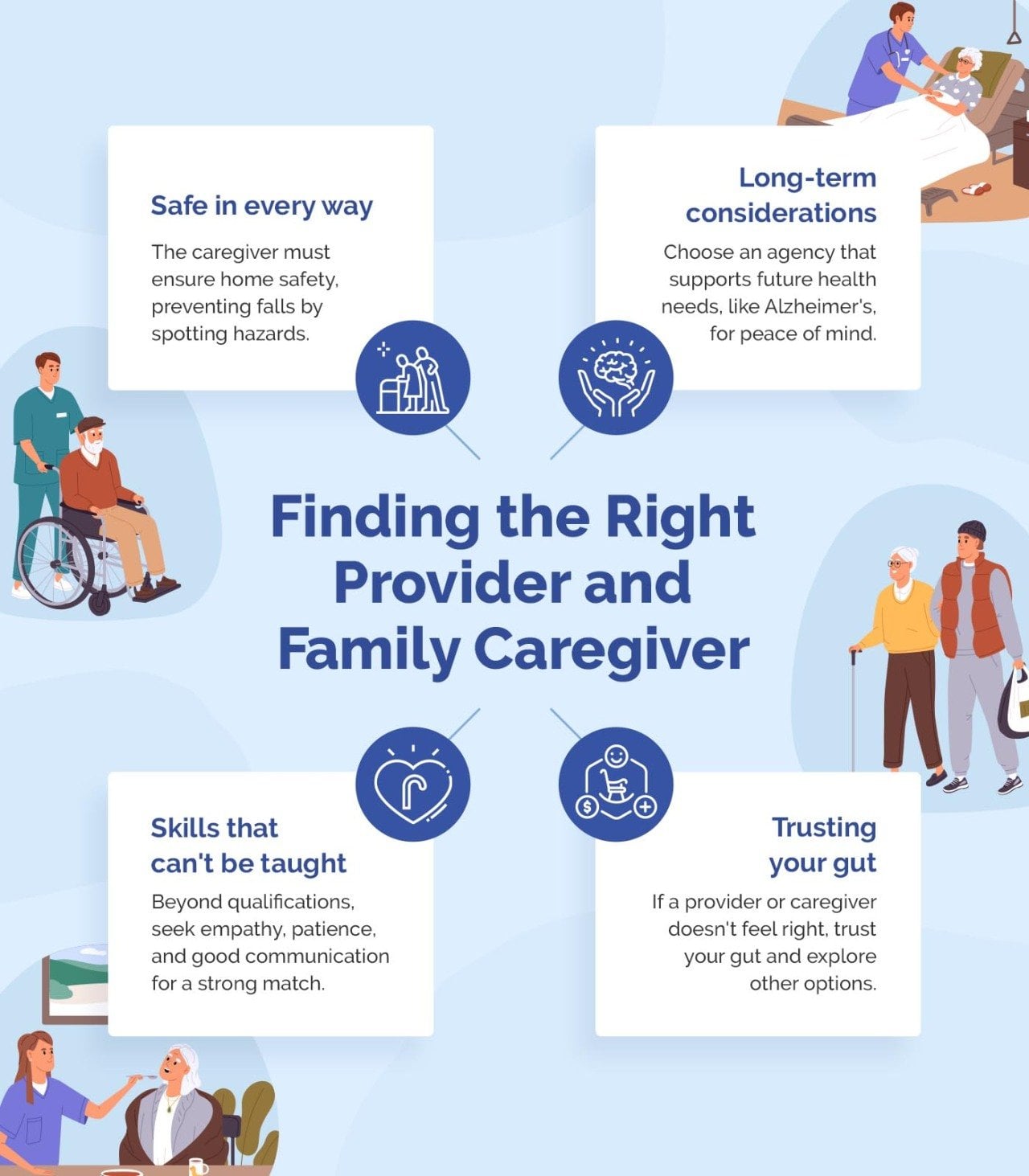
The right in-home care provider makes you feel heard, understood and secure in your choice. Getting to know a potential in-home family caregiver can also narrow down your decision-making. The following factors can be extremely helpful to uncertain families who have to make this choice.
- Safe in every way: Safety is a major concern for all family members when a senior relative begins receiving in-home support. An agency with this mindset should provide a family caregiver who implements safety measures at home when necessary. Falls are the leading cause of injury for seniors. Someone trained to spot hazards and risks at home can be a great help.
- Long-term considerations: Choosing an agency with services beyond your current needs may help with long-term care plans. While no one likes thinking of declining health, an estimated 7.2 million Americans aged 65 and over live with Alzheimer’s. Finding an agency and a regular family caregiver who offers support for this can ensure peace of mind for the future.
- Skills that can’t be taught: An ideal family caregiver should be qualified on paper and in person. This means having strong soft skills, like empathy, patience and the ability to enjoy a good conversation. These skills, combined with the caregiver qualifications a reputable agency looks for in a hire, can give you a better potential match for your senior loved one.
- Trusting your gut: Everyone just wants to make sure their family members get the help they need. You know your senior loved ones better than anyone. If you sense an agency or a family caregiver isn’t the right fit for your loved one, it’s OK to trust your gut and go a different direction.
The combined choice of agency, the family caregiver provided and gut instinct can give you more confidence in your final decision.
Red Flags When Interviewing Potential Agencies
When talking with prospective agencies, keep an eye out for the following red flags. These issues can signal potential concerns later down the line:
- Refusal to explain billing clearly.
- Pressure to sign a contract immediately.
- No clear answers to questions about emergency situations.
- No clear protocol for absences in regular family caregivers.
- A lack of interest in your senior loved one’s specific needs.
- Unclear processes for canceling or pausing services when needed.
Conclusion
Everyone deserves dignity and respect, regardless of their age. Think of this as a chance for the right agency to earn your trust. It may not always be easy, especially when a loved one’s quality of life is involved. But when the right option presents itself, it can lead to happier loved ones who enjoy great companionship and get help with their everyday lives.
This story was produced by Village Caregiving and reviewed and distributed by Stacker.


(0) comments
Welcome to the discussion.
Log In
Keep it Clean. Please avoid obscene, vulgar, lewd, racist or sexually-oriented language.
PLEASE TURN OFF YOUR CAPS LOCK.
Don't Threaten. Threats of harming another person will not be tolerated.
Be Truthful. Don't knowingly lie about anyone or anything.
Be Nice. No racism, sexism or any sort of -ism that is degrading to another person.
Be Proactive. Use the 'Report' link on each comment to let us know of abusive posts.
Share with Us. We'd love to hear eyewitness accounts, the history behind an article.