


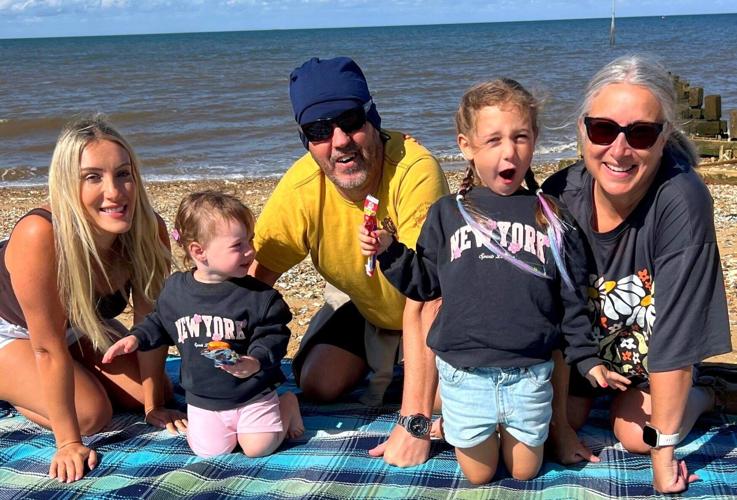

Andrew Hayes in Norfolk with his daughter, Kirsten, wife, Lisa, and granddaughters, Ayla and Ella. (Brain Tumour Research via SWNS)
By Joseph Rodway
A grandad who put his headaches and fatigue down to sleep apnoea was diagnosed with aggressive brain cancer.
Andrew Hayes, 61, started suffering from headaches in June 2025, which he and his family thought were caused by sleep apnoea.
But when he started suffering from severe head pain, he went to Queen's Medical Centre, Nottingham, in July 2025, where a CT scan revealed he had a brain tumor.

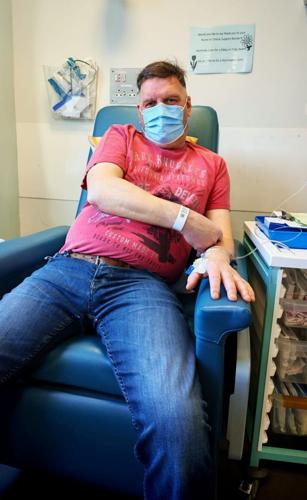
Andrew Hayes undergoing chemo. (Brain Tumour Research via SWNS)
An MRI scan led doctors to suspect a glioma, and he underwent brain surgery to debulk the tumor, with surgeons removing the majority and leaving only a small amount remaining.
A week later, the family were told it was a glioblastoma, an aggressive and incurable form of brain cancer.
His daughter, Kirsten Lowe, 35, a finance manager from Nottingham, said: “The signs weren’t obvious at first.
"My mum, Lisa, and sister, Lily, noticed he seemed more tired than usual, and when the headaches started, we thought it was sleep apnoea or a migraine.
"On 11 July 2025, everything changed. He was in so much pain he couldn’t stand, and after a scan, they told him he had a brain tumor.
“I was at home with my daughters when Mum called to tell me.
"It was heart-breaking. When we were given his prognosis of 12 to 18 months, I couldn’t accept it. I couldn’t face knowing my dad had been given such a short amount of time to live."
After putting his severe headaches and fatigue down to sleep apnoea, Andrew went for a scan at Queen's Medical Centre.

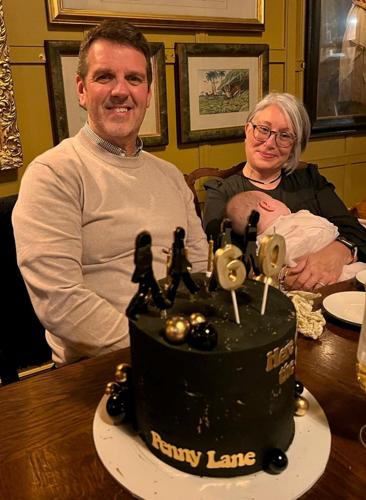
Andrew Hayes with wife Lisa and grandchild Ella. (Brain Tumour Research via SWNS)
After the scan, on July 11, 2025, Kirsten said her dad "couldn't stand" due to the pain he was suffering.
“My dad has always been the kind of person who just gets on with things," Kirsten.
"He worked as a print finisher and is genuine, resilient and hardworking.


"Before his diagnosis, he loved watching football, walking the dog and doing DIY. He is also the most amazing Grandad, and my girls, Ayla and Ella, love him so much."
A further MRI scan led doctors to suspect a glioma, and he underwent brain surgery to debulk the tumor, with surgeons removing the majority and leaving only a small amount remaining.
A week later, the family were told it was a glioblastoma, an aggressive and incurable form of brain cancer.
“Dad doesn’t talk about his cancer to me or my sister,” Kirsten said.
“He doesn’t know his prognosis and prefers not to discuss it. He has faced this journey with such silent strength and determination, even though we know how difficult it must be.

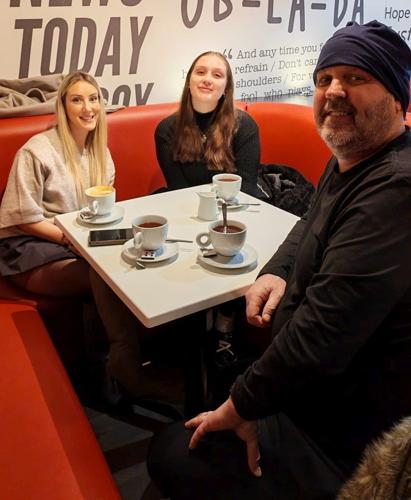
Andrew Hayes with daughters Kirsten and Lily. (Brain Tumour Research via SWNS)
Andrew underwent six weeks of radiotherapy and chemotherapy at City Hospital in Nottingham.
When the treatment didn’t work, he began a different type of chemotherapy and is now awaiting scan results to determine whether it has been successful.
In the months following his diagnosis, Andrew has experienced memory loss, increased fatigue and a loss of independence. He was forced to give up his driving licence and stop working.
Kirsten said: “Sixty-one is no age to be living with terminal brain cancer. It has devastated our family, but it has also brought us closer together and reminded us how important it is to cherish every moment.”
By taking on the National Three Peaks Challenge, Kirsten will raise vital funds for research, such as work happening at the new Brain Tumour Research Centre of Excellence at the University of Nottingham.
Scientists at the centre are using artificial intelligence, advanced brain imaging and genomic techniques to better understand glioblastoma recurrence and accelerate progress towards improved treatments
Kirsten said: “After Dad’s diagnosis, I felt an overwhelming need to turn the fear and helplessness into something positive. Climbing the three highest peaks in the UK feels symbolic of the emotional mountains we’ve had to climb as a family.
“Knowing that researchers at the Nottingham Centre of Excellence are working to better understand and treat glioblastoma gives us hope. It feels empowering to know that what I’m doing could help fund research and give other families hope for the future.”
Ashley McWilliams, community development manager at Brain Tumour Research, said: “We are incredibly grateful to Kirsten for taking on the National Three Peaks Challenge in support of her dad and the wider brain tumor community. Turning such a devastating diagnosis into something positive takes immense courage and determination.
“Every step she takes up those mountains will help fund vital research into glioblastoma and bring us closer to better treatments and, ultimately, a cure. Supporters like Kirsten are the driving force behind our work, helping to give hope to families facing this disease.”
To support Kirsten’s National Three Peaks Challenge fundraiser, visit here.


(0) comments
Welcome to the discussion.
Log In
Keep it Clean. Please avoid obscene, vulgar, lewd, racist or sexually-oriented language.
PLEASE TURN OFF YOUR CAPS LOCK.
Don't Threaten. Threats of harming another person will not be tolerated.
Be Truthful. Don't knowingly lie about anyone or anything.
Be Nice. No racism, sexism or any sort of -ism that is degrading to another person.
Be Proactive. Use the 'Report' link on each comment to let us know of abusive posts.
Share with Us. We'd love to hear eyewitness accounts, the history behind an article.