


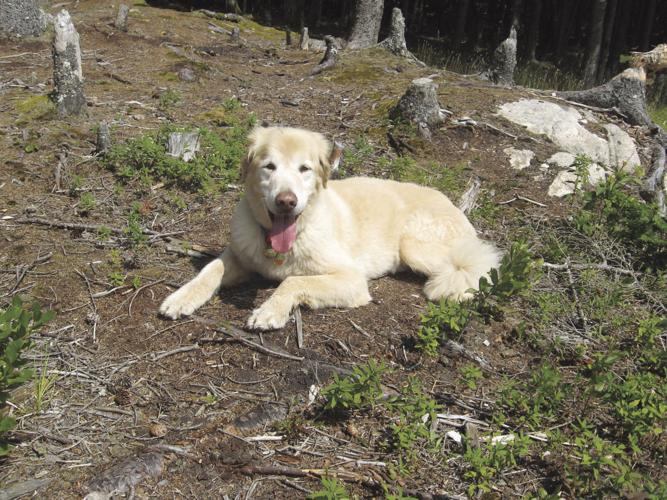
As many of you know, if you have been reading my weekly hiking column, my dog, Reuben, usually hikes with me, and we have been great companions on the trail for 11 years. We have made many friends and have had memorable experiences on our mountain excursions. But he is now 12 years old (84 in human years) and his hiking days are slowly waning. I must now carefully select hikes that Reuben can physically accomplish without taxing his stamina, especially the strength in his hind legs.
Those of you who don’t own a dog have no understanding of the joy and comfort a dog provides, especially when hiking. Reuben is truly my favorite hiking compadre and, at times, I enjoy hiking on a wilderness trail with no others but Reuben.
Reuben is very proud of his mountain feats he’s accomplished over the years: summiting the NH 48-4,000 peaks, 32 of them in winter; climbing to the summits of the Trailwrights 72 - 4,000 footers; climbing most of the highest 200 mountain peaks in New Hampshire and trotting well over 1,000 miles of trails, including sections of the Appalachian Trail in New Hampshire and the Long Trail in Vermont. Just like an aging rock-and-roller, the road has taken its toll on his body, but his spirit wants to continue our adventures together. He is always waiting by the door as I get ready to leave the house for a ramble in the woods.
Reuben once told me,“For many of our adventures, I just want to hike with you, Gordo [his name for me]. Some people say Reuben doesn’t care about hiking the 4,000-footers, it’s just Gordon’s goal. That statement is the farthest from the truth, as I truly looked forward to our mountain adventures together.”
Through the years, I learned a great deal about hiking with my faithful companion. I thought it might be a good idea if Reuben and I put our heads together for you dog-lovers and shared our thoughts on hiking with your pooch.
Planning — Plan your hike carefully, with your dog in mind, so you and your buddy know what to expect. Some parks — particularly state parks and some national parks — don’t allow dogs, or you must keep them leashed. It may be wise to keep your dog leashed at all times if the trail is active with mountain bikers, families, and small children. At the very least, you must keep your dog under voice control to avoid unpleasant circumstances.
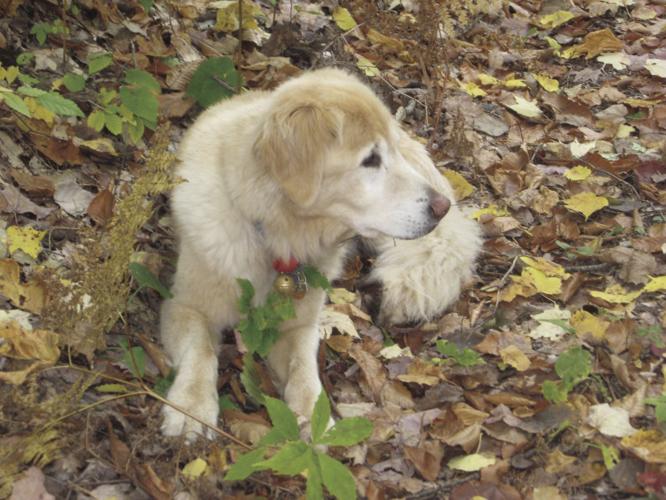
Reuben always has a bear bell on his collar. This gives bears, moose, and other wildlife an advanced warning that he’s on the trail. Bears especially don’t like to be surprised, and neither would you or your dog.
You may also want to carry a rope to tie your dog to a tree when resting or eating lunch.
Fitness — I hiked with a friend whose dog was terribly overweight and not conditioned to hike in mountainous terrain. It took us eight hours to hike four miles. This was not fair to the dog or me, so be sure your dog has the appropriate level of fitness for the trail. Some dogs just don’t have the stamina to do a 10-mile hike, and you don’t want to end up carrying your pooch five miles to the finish line.
Ease your dog into the routine of hiking. Begin by walking one or two miles. Gradually increase the distance and build their endurance, just as you would build your own. Your vet is also a great resource for advice on the exercise level that is right for your dog.
Food and Water — Hydration is crucial for an active dog. Research your hike to learn of water sources along the trail. Remember that, during periods of drought, small streams and ponds may be dry, and during winter, those bodies of water have turned to solid ice. Always carry at least one liter of water for Fido, along with a collapsible water dish to drink from. Carry enough dog food or treats to ensure your dog will be getting the right amount of calories for the estimated energy that will be expended.
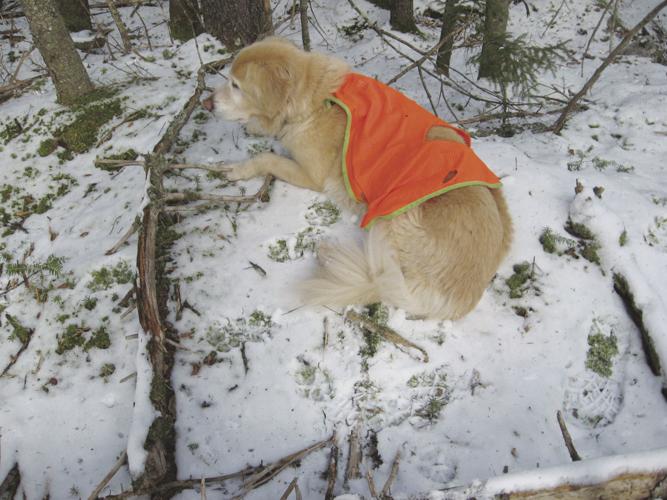
Clothing and Footwear — You may want to consider purchasing dog booties when hiking in rough, rocky terrain, especially above treeline. Your dog’s pads are not made of leather and can easily be cut open by sharp rocks found at higher elevations. During hunting season, your dog (and you) must wear hunter orange. A dog can easily be mistaken for a deer, coyote, or other wild animal, and a hunter orange jacket is a sure way of keeping him safe during hunting seasons. You should be aware of when and where hunting is taking place. Bow, black power, and rifle seasons are all different. You can check with N.H. Fish and Game with the location and time for each season.
You may also want to purchase a dog coat for those extremely cold and windy conditions, especially when you hike above treeline.
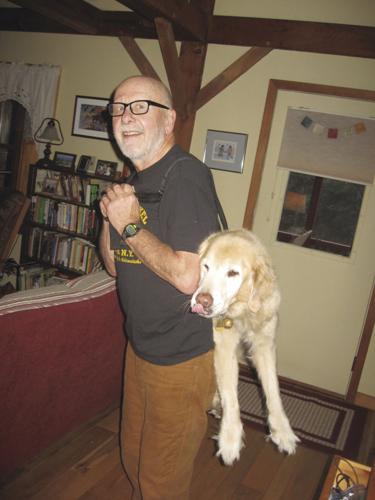
Emergency Gear — Recently I purchased an Emergency Dog Harness for Reuben. With his aging legs, I realized that he may become fatigued or unable to climb steep ledges such as on Whiteface Mountain. The harness allows you to carry your dog securely and comfortably on your back, similar to a rucksack. It can also be used to carry even the fittest dog up ladders like on the Cannon High Trail or the Six Husbands Trail or across fast-running streams. Hopefully, I’ll never need it for an injury, but I’ll always be prepared if an accident does happen. You can find out about the Pack-a-Paw Rescue Harness by going to the website Mountaindogware.com.
You may have a first aid kit for yourself, but what about your canine comrade? Dogs can have accidents, just as you can. Therefore, you need to carry one for your dog. A dog-specific first aid kit should include aspirin, sterile stretch gauze bandage, gauze pads, alcohol wipes, antibiotic ointment, and soft-cloth surgical tape. Remember to consult with your veterinarian for suggestions. They may have specific recommendations for your dog based on its age, breed, and overall health.
Other Things to Keep in Mind — Clean up after your dog, just as you should do, following Leave No Trace practices. Dogs are not wild animals, and their refuse is not part of nature. Bring along a plastic bag to carry out the poop or bury the waste in a hole that’s at least six to eight inches deep. Do not allow your dog to dig up plants, especially when hiking in the alpine zone where plants are fragile and shouldn’t be trampled on.
Be respectful of other hikers and dogs on the trail. When you know that other hikers are coming your way, leash your dog to avoid any unpleasant confrontations. Not all people are dog-lovers and some, especially children, may be afraid of dogs.
These are just a few tips to keep in mind. Hiking with your dog is a wonderful experience and you always want it to be that way. Like Reuben, I hope that when you are leaving the house with your hiking gear in hand, your canine friend is waiting at the door, eager to hike into the marvelous forests and mountains that await you in New Hampshire. Most importantly, stay safe — you and your best friend.
•••
For comments or questions, contact Gordon at forestpd@metrocast.net.


(0) comments
Welcome to the discussion.
Log In
Keep it Clean. Please avoid obscene, vulgar, lewd, racist or sexually-oriented language.
PLEASE TURN OFF YOUR CAPS LOCK.
Don't Threaten. Threats of harming another person will not be tolerated.
Be Truthful. Don't knowingly lie about anyone or anything.
Be Nice. No racism, sexism or any sort of -ism that is degrading to another person.
Be Proactive. Use the 'Report' link on each comment to let us know of abusive posts.
Share with Us. We'd love to hear eyewitness accounts, the history behind an article.