


WOLFEBORO — World War II was a time of challenges and change. The world became a battleground and many in this country fought in the war.
On the American home front, there was a battle going on, as well. This battle was to not lose hope that the world would piece itself back together. Life went on in the United States, but day-to-day things like driving a car wherever one chose, making a hearty evening meal or purchasing as much butter, sugar and other items were suddenly curtailed.
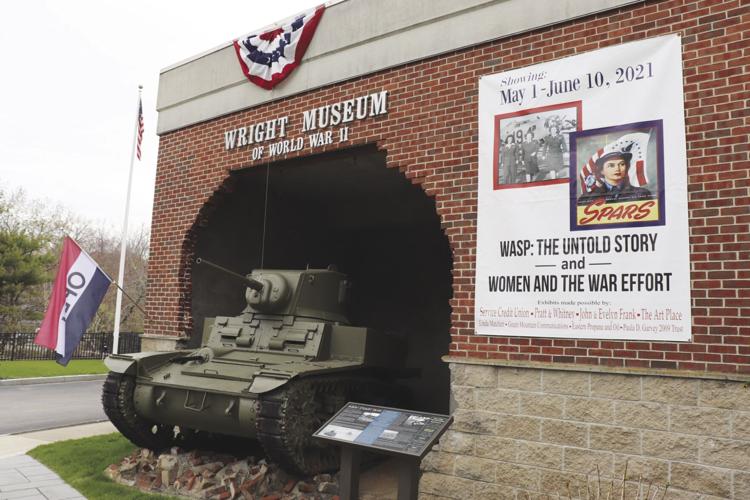
Eventually the war ended, but the years of World War II, however, stayed in the memories of those who lived through it. Many wanted to pass on their stories to future generations of what life was like on the home front and the battlefield. In that effort, David Wright decided to share his collection of vintage World War II vehicles. Thus was the beginning of an effort that led to the creation of the Wright Museum of World War II, located on Center Street.
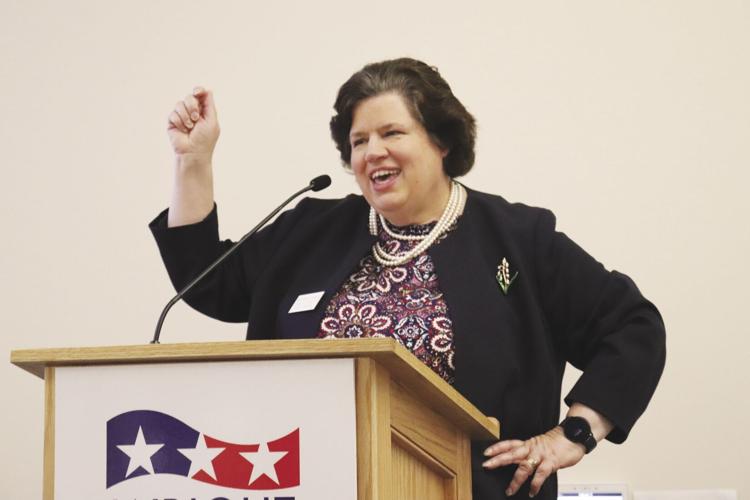
Such a large, historic museum requires a dedicated staff, and this year, Peggy Hennelly-Maniates was appointed new executive director of the Wright Museum.
“I am new to New Hampshire, though I have visited the state previously and found it enchanting," Hennelly-Maniates says. "I grew up in Chicago and my husband and I spent nearly a decade in the Adirondacks. We love small-town living and the mountains. We were delighted when the opportunity at the Wright Museum arose for us to move back east.”
To find the best person to fill the executive director position at the museum takes time, Hennelly-Maniates explains. “The search committee at the Wright Museum worked with a search firm called Museum Search and Reference."
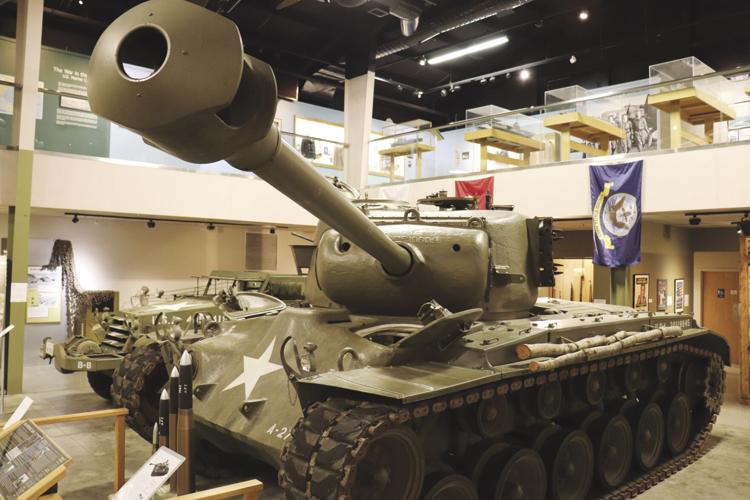
The 30,000-square-foot museum is unique, with a large collection of World War II items. The building is large, spread over two floors, with an extensive permanent collection of 1939 to 1945 items, a lecture room, Time Tunnel, galleries, a vehicle room, and more.
Overseeing such a collection is a big job, but one Hennelly-Maniates relishes. “I am honored to join the Wright Museum of World War II, to be part of its hardworking staff, and to have the opportunity to work with the board and the museum’s talented group of volunteers.
“This museum does wonderful work, and I see potential to reach more students and larger audiences through new exhibitions and expanded access to the museum’s tremendous collections, especially through online programs,” Hennelly-Maniates says.
With a strong background in museum work, Hennelly-Maniates has stepped into the position at the Wright museum with energy.
“I was formerly the executive director of the USS Silversides Submarine Museum in Muskegon, Michigan. I have a long background in leadership and strategic planning from my years as both a director and curator at that previous museum," she says. "While at the Silversides, I integrated the museum’s educational offerings with area school science, technology, engineering and math programs, boosting attendance with hands-on projects that explored submersible, remotely operated vehicles, periscopes and other aspects of submarine technology.
“In 2019, I received the Muskegon Chamber of Commerce's Excellence in Tourism award for cultural leadership in marketing and attracting new audiences to the museum and to Muskegon.”
Hennelly-Maniates reflects on her first summer as executive director of the Wright Museum, saying, “It has been amazing. I am privileged to get to know all the wonderful people of the Lakes Region, as well as the volunteers, staff and board who work so hard to make sure this important part of American history is not forgotten. One of my favorite things to watch is multiple generations of families interacting with each other and discussing the artifacts they see.”
To bring home the realities of World War II and its effects on people around the world, the Wright Museum has on display “Let Me Be Myself: The Life Story of Anne Frank.” The exhibit began on July 1 and will be up until Monday, Oct. 31.
“Using large-size pictures, 'Let Me Be Myself' traces the story of Anne Frank from her birth in 1929 to her death in the Bergen-Belsen concentration camp in 1945. Panels contain images and text about the world around Anne Frank, including the rise of Hitler, the persecution of the Jews, and the Second World War," Hennelly-Maniates explains.
“While the Anne Frank story is one all ages should know, it is essential that young people are aware of her story because it speaks to many societal issues unfortunately pertinent today. With that in mind, ‘Let Me Be Myself’ also relates the stories of young people today.”
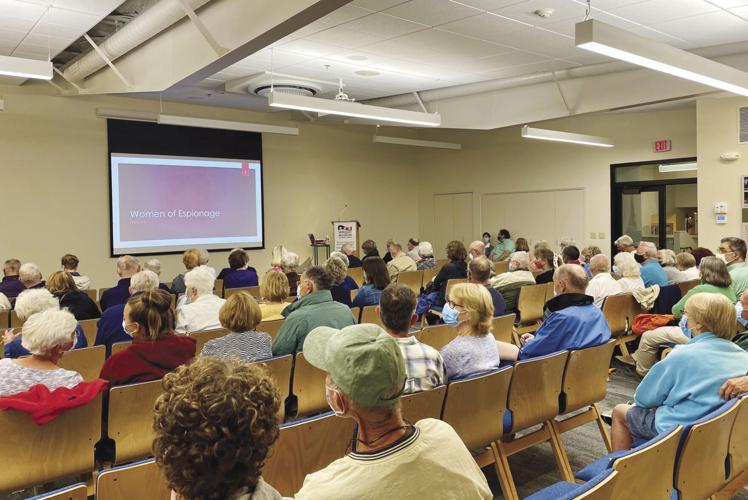
During the winter season, museum staff works on two traveling exhibits for the next summer and prepares a new lecture series. Hennelly-Maniates is involved in the projects and indeed, all aspects of the museum.
“The staff uses wintertime to create exhibits, work on the collection, plan the educational programs and care for the artifacts,” she says. The museum is closed to the public during winter but is open for prearranged groups of 20 or more to visit.
As the new executive director of the museum, Hennelly-Maniates has had a chance to observe visitors and to see their reactions as they browse the exhibits.
“They are often surprised by the complete picture of World War II we offer,” she says. “The museum tells the story of the home front and the battlefield, highlighting how the nation worked to defeat our enemies.” One of the most impressive rooms in the museum is the military gallery with an outstanding collection of vehicles.
Hennelly-Maniates envisions a bright future for the Wright Museum.
“My first goal as director is to let the world know what a wonderful, world-class museum we have in our own backyard. This summer, the museum saw visitors from 49 states and 10 foreign countries, but not as many from our own area.” Her goal is to entice locals to visit and learn about the home front and battlefields of World War II.
She continues, “Wright Museum founder David Wright believed it was imperative to tell the whole story of Americans’ contribution to the war effort. As he began to develop plans for a permanent museum, he felt it necessary to document the great achievements of Americans on the home front, since their commitment played such a crucial role in the Allied victory.”
Hennelly-Maniates will continue the goals of David Wright and to ensure the world never forgets what life was like during World War II.
The Wright Museum of World War II is open from May 1 to Oct. 31, Monday to Saturday from 10 a.m. to 4 p.m., and Sunday, noon-4 p.m. Call 603-569-1212 or visit wrightmuseum.org to learn more.


(0) comments
Welcome to the discussion.
Log In
Keep it Clean. Please avoid obscene, vulgar, lewd, racist or sexually-oriented language.
PLEASE TURN OFF YOUR CAPS LOCK.
Don't Threaten. Threats of harming another person will not be tolerated.
Be Truthful. Don't knowingly lie about anyone or anything.
Be Nice. No racism, sexism or any sort of -ism that is degrading to another person.
Be Proactive. Use the 'Report' link on each comment to let us know of abusive posts.
Share with Us. We'd love to hear eyewitness accounts, the history behind an article.