




Why expensive AI subscriptions provide increasing value
When OpenAI first launched its $200/month ChatGPT Pro subscription back at the end of 2024, it offered so little extra benefit over a $20/month ChatGPT Plus subscription that there wasn't much point in even trying it out.
But over the past six months or so, AI coding tools and AI agents have crossed an important threshold. They've gone from mostly doing what you want most of the time to almost always doing what you want almost all of the time. While the progress to reach this point was incremental, it represents a huge shift in what AI tools are good for, who can get value from them, and how you use them.
Here, Zapier explains why a $200/month subscription for an AI tool can be money well spent.
The November shift
Until late last year, there hadn't yet been a killer standalone AI product capable of generating real revenue. ChatGPT was useful for some things, but OpenAI was (and still is) losing millions of dollars per month because not enough people are prepared to pay for a chatty version of Google. Similarly, AI image generation can be handy, but AI-generated movies and TV shows—or even AI photo shoots—aren't dominating the culture. OpenAI recently announced it was shutting down its video generation tool, Sora, and AI-generated imagery seems to mostly make headlines for all the wrong reasons.
Simon Willison, one of the leading AI bloggers, calls it the November inflection point. Writing in The New York Times, developer Paul Ford pegs November 2025 as the time AI coding tools "suddenly got much better." It's when OpenAI released GPT-5.1 and Anthropic dropped Claude Opus 4.5—and when AI tools became really, really good.
Of course, things had been building for a while. Claude Code was released in February, and its instant success among developers caused an industry-wide shift. In an interview on Lenny Rachitsky's podcast, Willison claimed that for most of 2025, OpenAI and Anthropic were almost exclusively training their models on computer code.
In November, though, Claude Code (and OpenAI's equivalent, Codex) went from being a tool you needed to be a developer to use to a tool anyone comfortable opening a terminal could get some value from. You don't need to have a deep understanding of every line of code to get somewhere; just be comfortable looking at it.
And now, with tools like Cowork and computer use, and the friendly app-based interfaces of Claude Code and Codex, these tools are even easier for more people to use.
Chatbots aren't the only interface anymore
AI chatbots were a great proof of concept. They packaged AI into a friendly and easy-to-use app, but there were inherent limits to the form factor. Because the AI was constrained to its chatty sandbox, there was very little it could do. Features like web browsing and research made them more useful as search competitors, but they were never able to do much.
Coding agents are freed from many of these constraints. By being able to run terminal commands on your computer, they can operate on your files as well as chat back. In simple terms, you can use one to sort your photos into folders by date taken or rename a load of email archives. Of course, this kind of access means they can delete all your backups—but that tends not to happen if you're sensible.

More importantly, though, coding agents can write and run computer code—and they can now write it well. Anyone who even understands the general concepts behind coding—no matter how non-technical they are—can realistically now learn how to use Claude Code or Codex to build apps and automations they can use.


One incredibly important innovation here is Plan Mode. This is where the coding agent looks at what you want it to do and creates a plan for how it would do it—but, crucially, doesn't actually do anything. If you employ a bit of common sense, actually read what the AI is suggesting, and ask it (or Google) any bits you're unsure of, almost anyone can safely use a coding agent.
Agents are adding value
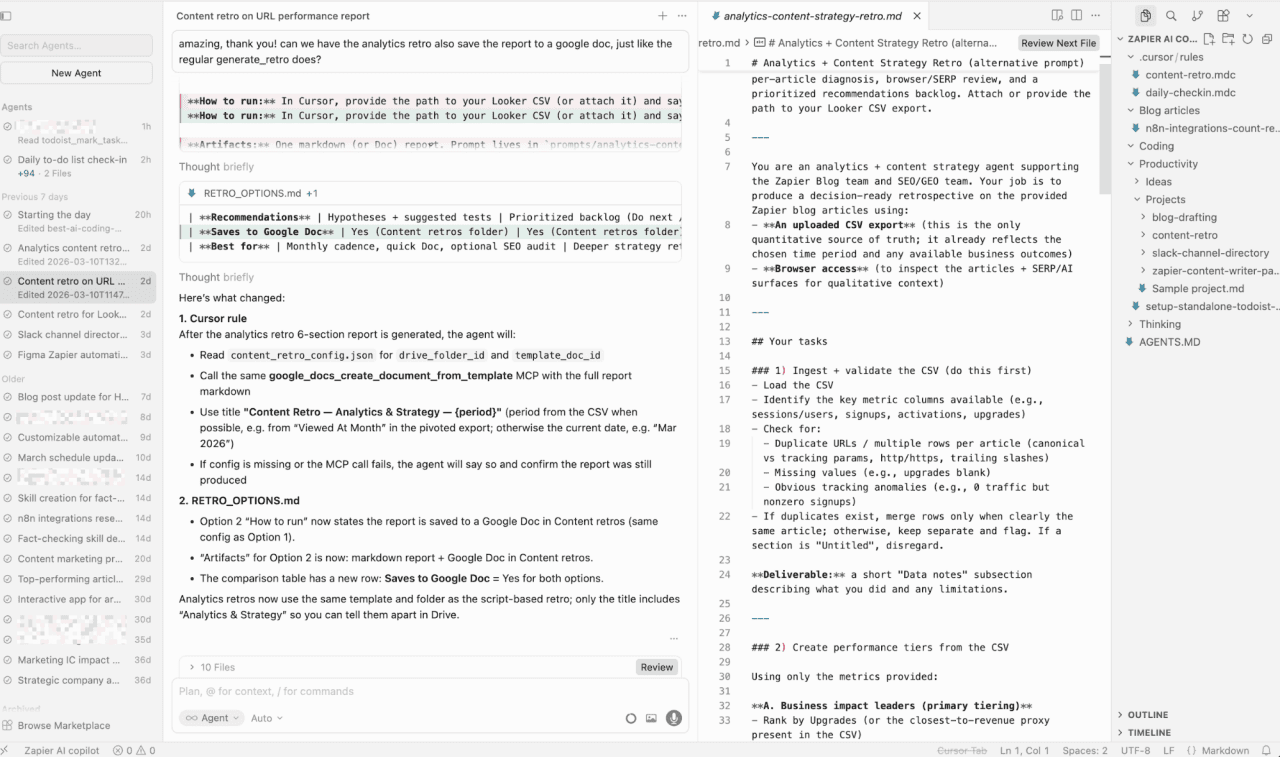
A year or two ago, the economics of all this didn't work. Developers could vibe code for fun, but regular people frequently got themselves into trouble, and building apps that actually worked was a challenge.
Now, if you're motivated and are willing to learn some of the technical details, you can get a huge amount of value from coding tools—and that's before you even look at what's possible with agents that run on a schedule.
You can build tools you'd otherwise have to pay for, unlock opportunities you wouldn't have had before, and move much more quickly.
A few caveats
The big caveat: Use AI coding agents at your own risk. If you don't know what -rm -rf does, you shouldn't give them unfettered access to your system. Even then, the more access they have, the more possible it is for things to go wrong.
This is where the Claude Code and Claude Cowork tabs in the Claude app, as well as the Codex desktop app, really shine. Not only do they give you a friendlier interface for working on your local machine, but you can write and run code on Anthropic and OpenAI's remote servers. It's a safer test-bed for whatever ideas you have.
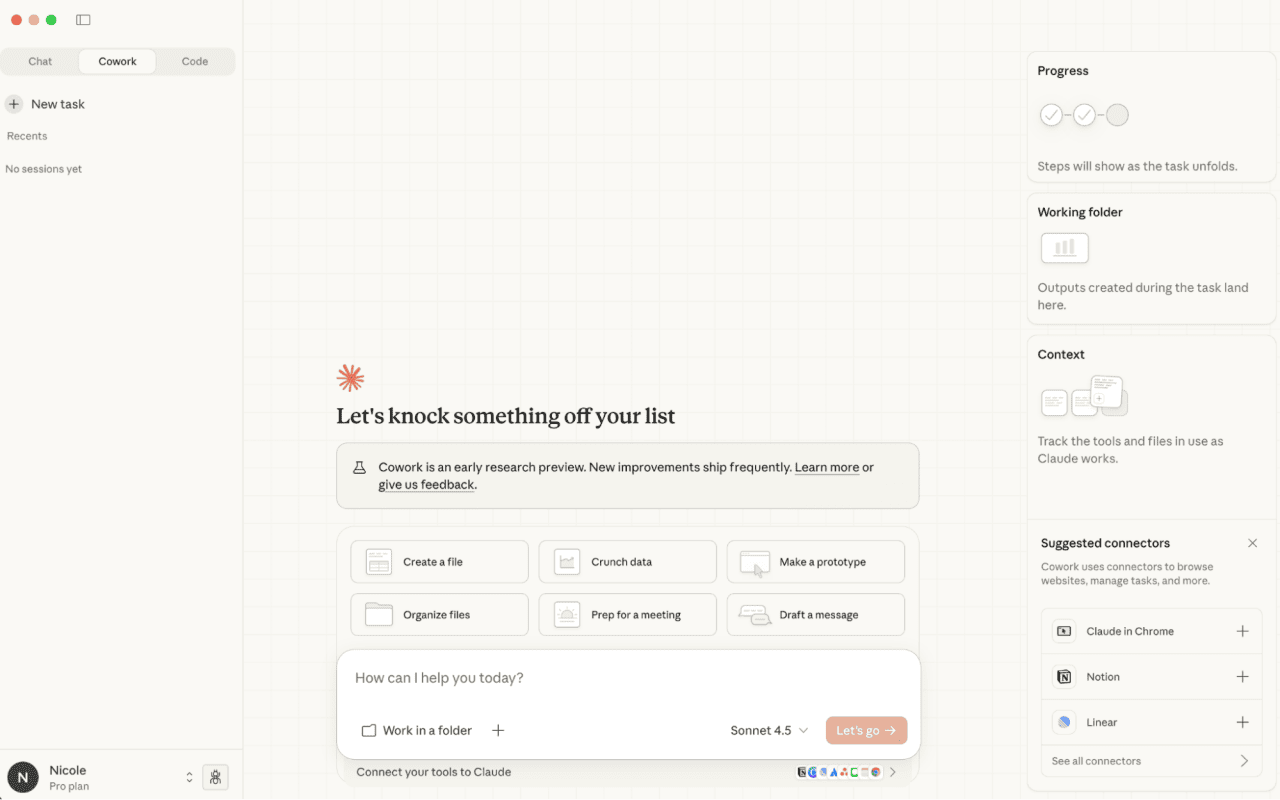
You also have to be very careful with important data. Common sense is key. If you want to use AI coding agents with business data, make sure your company has a service agreement.
The cheaper Claude and ChatGPT plans also include Code and Codex; the limits are just lower. You don't have to go all-in to test it out. Pick something small, and try it on a cheap plan. If the AI agent idea clicks for you, then you can go further. But if you just want a chatty Google, the free ChatGPT plan is all you need.
AI is really having its moment
A lot has changed in the last few months. Claude Code, Codex, Cursor, and other agentic coding tools have shown a real use case for AI. Not only do they enable skilled developers to work much faster, but they also allow almost anyone to create working tools.
Of course, there's a huge danger factor to that. Some people will get in over their heads and accidentally expose financial secrets, personal data, and more. But included guardrails make it easy to safely test out these tools—and they can dramatically change how you work.
This story was produced by Zapier and reviewed and distributed by Stacker.


(0) comments
Welcome to the discussion.
Log In
Keep it Clean. Please avoid obscene, vulgar, lewd, racist or sexually-oriented language.
PLEASE TURN OFF YOUR CAPS LOCK.
Don't Threaten. Threats of harming another person will not be tolerated.
Be Truthful. Don't knowingly lie about anyone or anything.
Be Nice. No racism, sexism or any sort of -ism that is degrading to another person.
Be Proactive. Use the 'Report' link on each comment to let us know of abusive posts.
Share with Us. We'd love to hear eyewitness accounts, the history behind an article.