


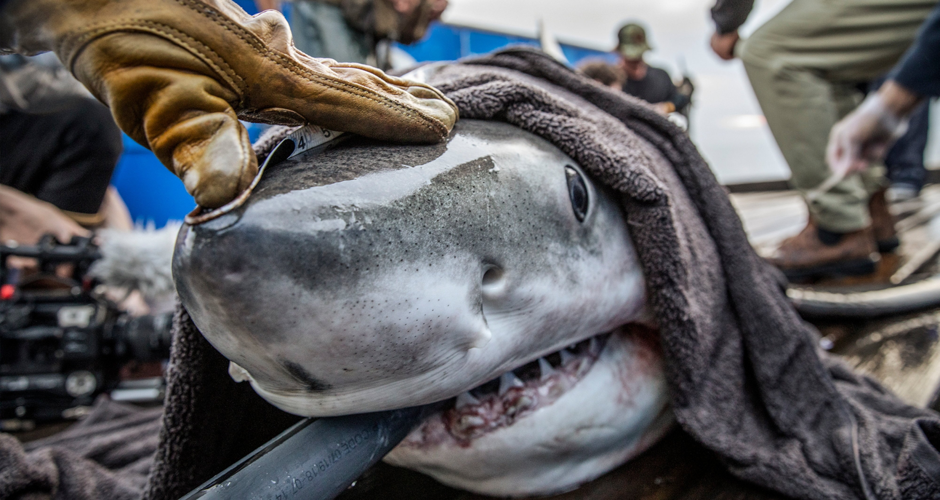
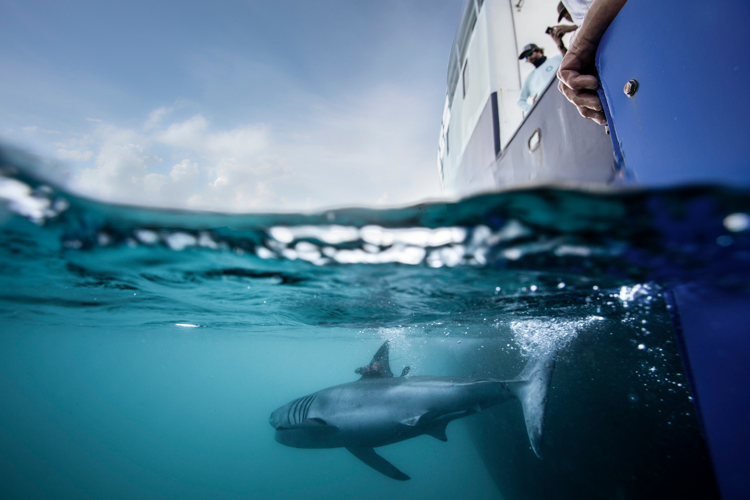


(Chris Ross / OCEARCH via SWNS)
By Michael Lee Simpson
A new study has revealed great white sharks secretly spend their winters in the Gulf of Mexico.
Scientists tracked 92 sharks from Atlantic Canada to Florida between 2012 and 2023 and discovered more than half migrate to the Gulf during the winter months.
Experts say the discovery reshapes what scientists know about great white migration across the western North Atlantic.
Published this week in the journal Wildlife Research, the peer-reviewed study tracked 92 white sharks tagged from Nova Scotia, Canada, to Jacksonville, Florida, as part of a long-term research project by ocean research organization OCEARCH.
Using satellite and acoustic tags, scientists found that more than half of the tagged sharks — 57 across all life stages — spent significant time in the Gulf or the Straits of Florida between December and May.
The finding confirms the Gulf as a key overwintering habitat for white sharks in the western North Atlantic.
“For years we suspected white sharks were using the Gulf more than people realized,” said Chris Fischer, Founder and Expedition Leader of OCEARCH.
“This research confirms the Gulf is a regular winter habitat for this population and highlights how connected the ecosystems of the Atlantic Ocean truly are.”

(Chris Ross / OCEARCH via SWNS)
Since the study period ended, OCEARCH has tagged additional white sharks, including the monstrous 13 feet 9 inch, 17,000-pound Contender.
Each year, white sharks migrate thousands of miles from colder waters off Atlantic Canada and the northeastern United States to warmer regions farther south.
According to the study, many enter the Gulf through the Straits of Florida after traveling south past the Florida Keys.
Researchers most frequently detected sharks along the shelf edge of the West Florida Shelf, though some were tracked across several parts of the Gulf, including waters near Florida’s Panhandle and the western Gulf near Mexico.
Several sharks remained in Gulf waters for weeks or months, and many returned in later years — a behavior known as “site fidelity,” when animals repeatedly return to the same locations.


The study also found sharks tagged at different life stages — from juveniles to adults — eventually used the Gulf during later migrations.
Lead author Cade C. Roach said the findings highlight the extensive reach and connectivity of the region’s white shark population.
“The sharks we tracked were tagged in several locations along the Atlantic coast of the United States and Canada, yet many of them were documented in the Gulf during winter,” Roach said.
“This highlights the extensive range of the western North Atlantic population and the ecological connectivity between the Gulf and the broader Atlantic Ocean.”

(Chris Ross / OCEARCH via SWNS)
Tracking data also showed sharks spent much of their time in upper ocean layers, diving to depths of about 200 meters while moving vertically through the water column.
They were most often found in waters between 70 and 75 degrees Fahrenheit — warmer than Atlantic waters during winter.
For decades, scientists believed white sharks were only occasional visitors to the Gulf.
The new findings suggest they are instead reliable winter residents, a discovery that could influence conservation strategies as the species continues recovering from decades of overfishing.
“These findings demonstrate the remarkable connectivity of the western North Atlantic white shark population,” said John P. Tyminski, Senior Data Scientist at OCEARCH and co-author of the study.
“The Gulf plays an important role in the annual migration of these animals, and continued research will help us better understand the environmental factors that influence where sharks travel and how they use these habitats.”
While the discovery might alarm beachgoers, scientists say there is little reason for concern because most shark activity occurs offshore in deeper waters.
“Florida’s support of this research demonstrates why the state is a world leader in ocean
research, conservation, and management,” Fischer said.
“It ensures we have the capacity to develop thought-leading researchers with the practical skills to win on the water for future generations.”


(0) comments
Welcome to the discussion.
Log In
Keep it Clean. Please avoid obscene, vulgar, lewd, racist or sexually-oriented language.
PLEASE TURN OFF YOUR CAPS LOCK.
Don't Threaten. Threats of harming another person will not be tolerated.
Be Truthful. Don't knowingly lie about anyone or anything.
Be Nice. No racism, sexism or any sort of -ism that is degrading to another person.
Be Proactive. Use the 'Report' link on each comment to let us know of abusive posts.
Share with Us. We'd love to hear eyewitness accounts, the history behind an article.