



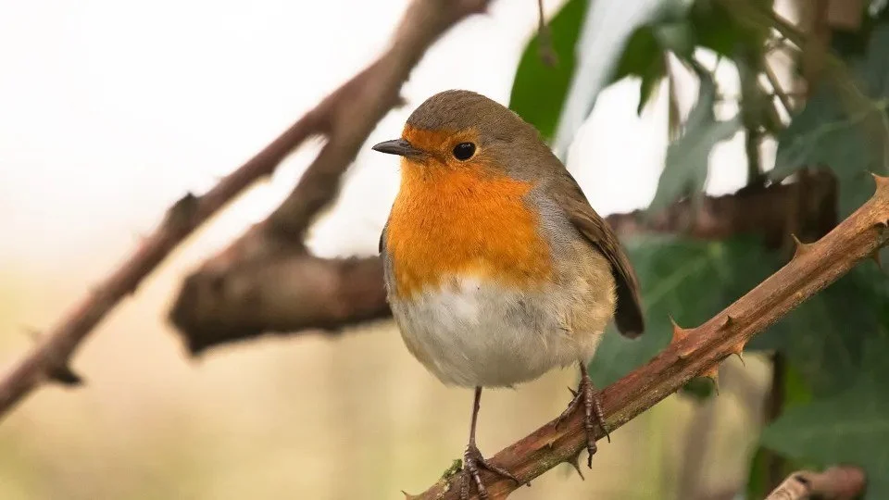

(Johan Nilsson via SWNS)
By Stephen Beech
Hostile owl hoots make robins eat less at night, reveals new research.
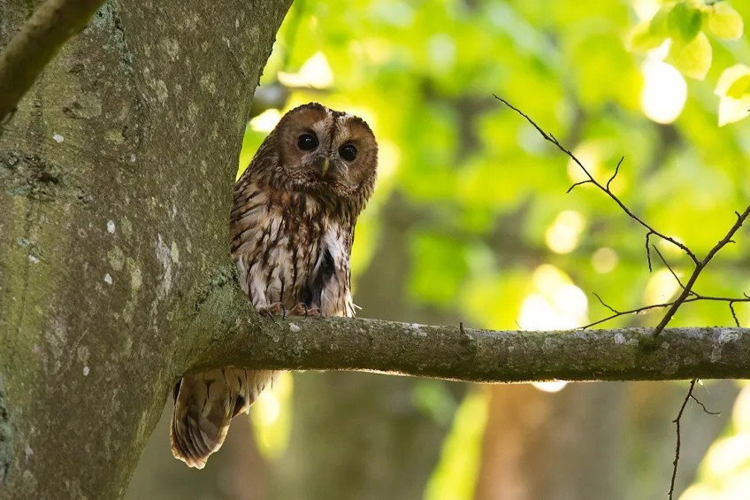
The sound of tawny owls makes the red-breasted birds eat less during their southward migration, according to the findings.
The study by Swedish scientists shows how the threat from nocturnal predators affects the robins’ behavior – and by extension their survival.
The research team explained that when young robins embark on their first southward migration in the autumn, they make regular stops along the way to rest and replenish their energy reserves.
But each stop entails a risk, as predators may be lurking nearby.
The researchers established that migrating birds are not only aware of threats around them, but also adapt their behavior based on which predator calls they hear.
Professor Susanne Åkesson, of Lund University, Sweden, said: “For the first time it has been possible to show that the calls of nocturnal predators affect how birds obtain energy during their migration.
In the study, young robins were exposed to calls from two different birds of prey: the tawny owl and sparrowhawk.

(Johan Nilsson via SWNS)


Prof Åkesson says the results, published in the Journal of Animal Ecology, were "clear".
The call of the diurnal sparrowhawk did not significantly affect the birds’ behavior, whereas they reacted strongly to the call of the nocturnal tawny owl.
The robins became more cautious, reduced their night-time activity and ate less.
That in turn led to a slower build-up of fat reserves and poorer physical condition, according to the findings.
Prof Åkesson said: “There is a clear compromise involved: to dare to eat and build up fuel reserves or steer clear to avoid being eaten."
She says eating less also entails that the birds have to stay longer at their stopovers in order to sufficiently replenish energy reserves.
Andlonger stays increase the risk that they will arrive late at their wintering grounds – where there is tough competition for the best territories.
A late arrival may have consequences for both survival and future reproduction, according to the research.
Prof Åkesson added: “By understanding how migratory birds respond to different threats, we can improve how we plan the design of stopover sites and peri-urban environments.
"If birds have access to calm and protective surroundings during their stopovers, it increases their chances of surviving the long journey."


(0) comments
Welcome to the discussion.
Log In
Keep it Clean. Please avoid obscene, vulgar, lewd, racist or sexually-oriented language.
PLEASE TURN OFF YOUR CAPS LOCK.
Don't Threaten. Threats of harming another person will not be tolerated.
Be Truthful. Don't knowingly lie about anyone or anything.
Be Nice. No racism, sexism or any sort of -ism that is degrading to another person.
Be Proactive. Use the 'Report' link on each comment to let us know of abusive posts.
Share with Us. We'd love to hear eyewitness accounts, the history behind an article.