



(Durham University via SWNS)
By Stephen Beech
Parenting styles shape babies’ willingness to help others, a new study reveals.
The way parents instruct and encourage toddlers to help plays a "key" role in how helping behavior develops, according to the findings.
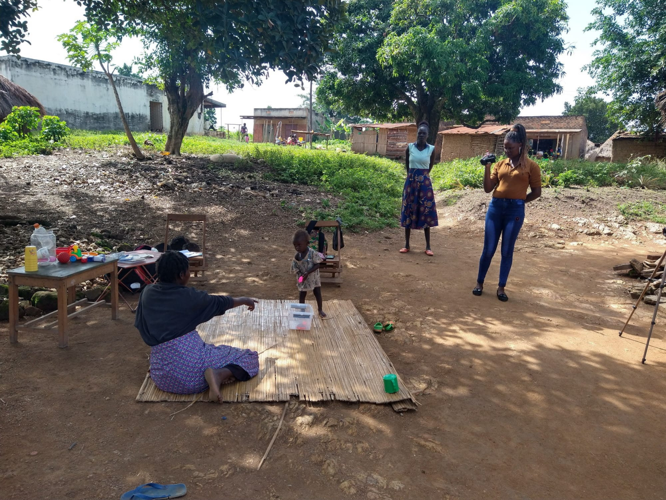
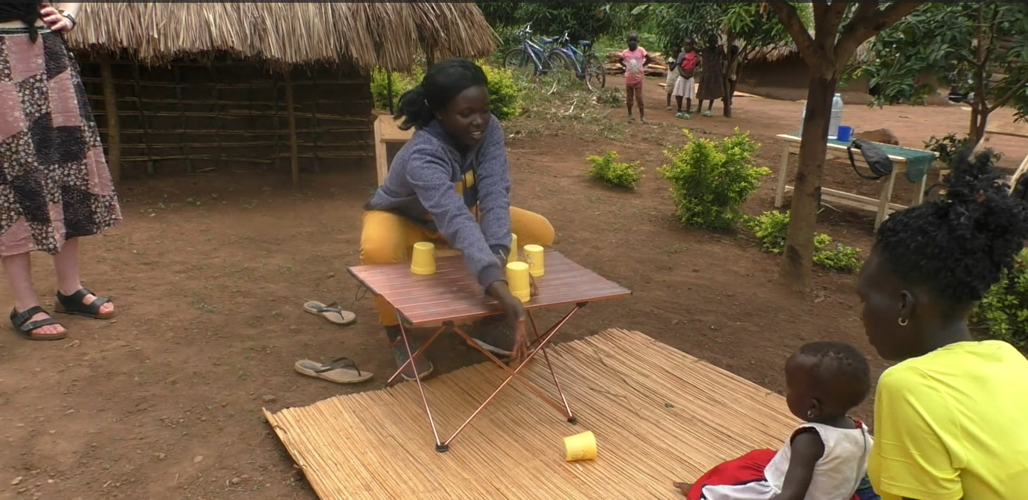
Researchers from Durham University followed 273 babies and their mothers in the U.K., rural Uganda, and urban Uganda.
The study examined how early helping behavior emerges and how moms support it in everyday interactions.
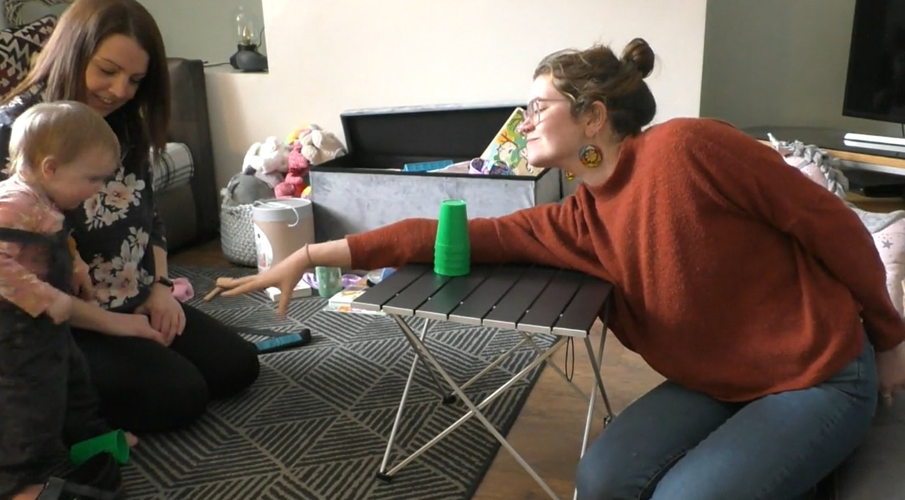
Infants took part in two types of tasks. In one, spontaneous helping was measured without any requests, allowing the research team to see whether babies would help on their own.
In the second task, mothers were observed asking their children to complete simple tasks — such as putting objects away — providing insight into how parents actively guide helping behavior.

(Durham University via SWNS)
The findings, published in the journal Developmental Psychology, showed "clear cultural differences" in parenting styles.
In both Ugandan settings, moms more often used direct and insistent instructions to their infants, referred to as ‘assertive scaffolding.’ For example, "Put the pen in the box now!"
In the U.K., mothers were more likely to use encouragement, explanations, and choice-based language, known as ‘deliberate scaffolding.’


For example, "Mommy needs the pen to go in the box, please, can you help mommy, good girl!"
The findings showed that assertive scaffolding was linked to higher levels of helping.
Youngsters whose mothers used clear and firm instructions were more likely to help both when asked and spontaneously, suggesting that direct guidance is an effective way of supporting early prosocial behavior.
The research team also found differences in parents’ cultural expectations around helping.

(Durham University via SWNS)
In Ugandan contexts, helping is expected from an early age and is closely tied to shared responsibilities in daily life.
In the U.K., helping is more often framed as a matter of personal choice, with greater emphasis on independence.
Study senior author Professor Zanna Clay said: “Research like ours shows that infants have a strong motivation to help from an early age, wherever they grow up."
She says the findings indicate that while youngsters everywhere show a natural capacity to help others, the way that behavior develops is shaped by cultural values and parenting practices.
Dr. Clay, of Durham University, said the findings highlight the importance of looking beyond Western contexts to better understand how cooperation and social behavior develop worldwide.
She added, “While encouragement is thought to support helping in Western cultures, we actually found clear instructions worked better.
"This was more common in Uganda, where children’s help is a necessity in day-to-day life.”


(0) comments
Welcome to the discussion.
Log In
Keep it Clean. Please avoid obscene, vulgar, lewd, racist or sexually-oriented language.
PLEASE TURN OFF YOUR CAPS LOCK.
Don't Threaten. Threats of harming another person will not be tolerated.
Be Truthful. Don't knowingly lie about anyone or anything.
Be Nice. No racism, sexism or any sort of -ism that is degrading to another person.
Be Proactive. Use the 'Report' link on each comment to let us know of abusive posts.
Share with Us. We'd love to hear eyewitness accounts, the history behind an article.