


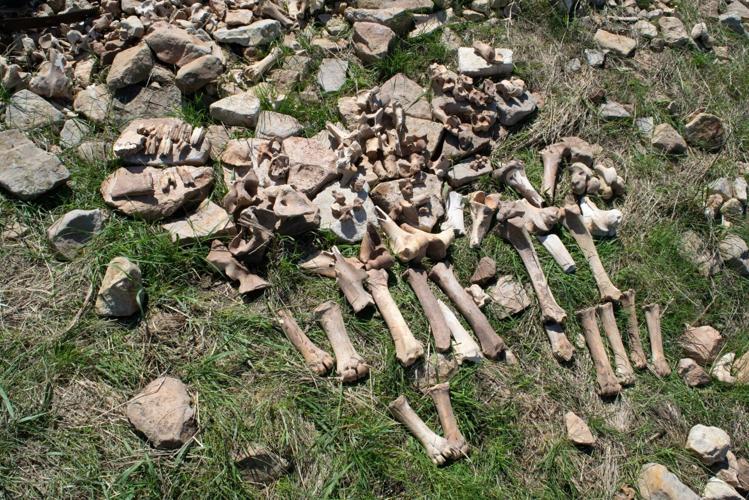

Bison bones are scattered across the site. (John Wendt via SWNS)
By Stephen Beech
Bison hunters abandoned a long-used site over 1,000 years ago due to climate change, suggests a new study.
Severe drought forced early Americans to ditch the popular hunting ground in present day Montana, say scientists.
They explained that bison were hunted for thousands of years on the Great Plains before populations collapsed to near extinction due to overexploitation in the late 1800s.
But hundreds of years before then, bison hunters used various tactics and different types of sites, sometimes switching between hunting grounds.
Researchers sought to understand why hunting stopped when bison continued to be present at the Bergstrom site in central Montana.

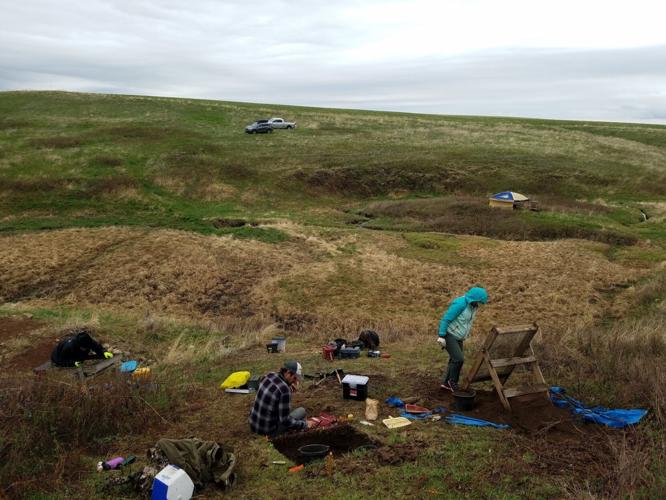
Excavation area at the Bergstrom Site in what today is Montana. (John Wendt via SWNS)
The largest land mammal in North America were hunted intermittently for around 700 years before the site fell into disuse, according to the study published in the journal Frontiers in Conservation Science.
First author Dr. John Wendt, a paleoecologist at New Mexico State University, said: “We found that bison hunters ceased using a kill site in central Montana around 1,100 years ago.
“It appears that hunters stopped using it because severe, recurring droughts reduced the water available for processing animals at a small nearby creek.
"Site abandonment was a response to environmental stressors and changing social and economic pressures.”

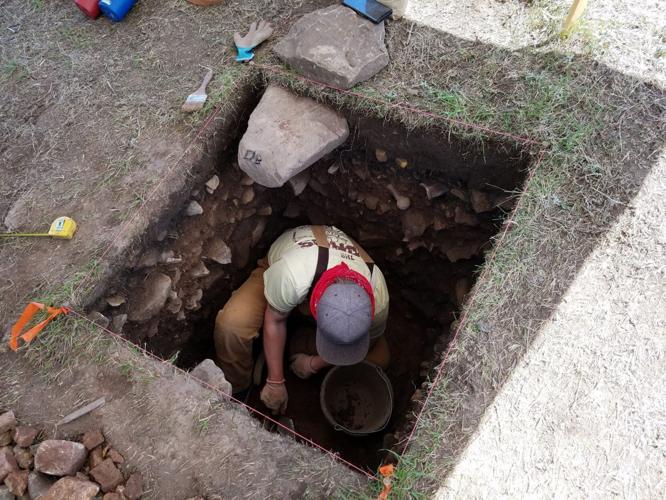
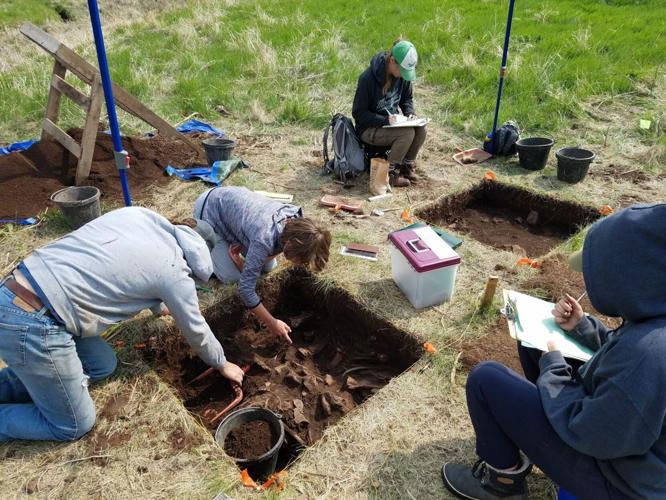
Students conducting archaeological excavations. (John Wendt via SWNS)
To understand what shaped the choice of hunting sites and organisation, the research team combined archaeological excavation, sediment coring, and lab analysis.
Dr. Wendt said: “The Bergstrom site presented a puzzle because it was used intermittently and abandoned when bison were common throughout the region and hunting was intense.
“Why would hunters stop using a site that had worked for so long?”
To get to the mystery’s core, the researchers dug nine excavation pits in the spring of 2019.
Excavated materials were documented and photographed, while charcoal fragments were sent for radiocarbon analysis.


Two sediment cores were collected directly next to the excavation area, which researchers analysed for pollen and charcoal fragments.
The team also tracked the presence of large herbivores and analyzed climate reconstructions.

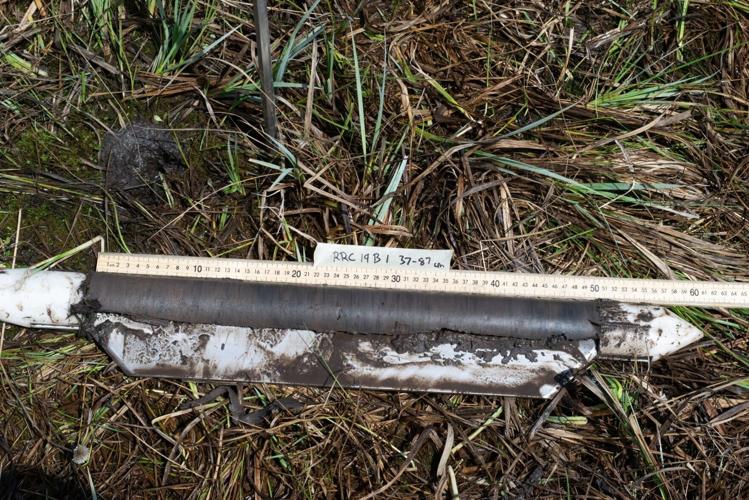
Sediment cores were collected directly next to the excavation area and analyzed these for pollen and charcoal fragments. (John Wendt via SWNS)
Based on that, the team was able to see if ecological changes explained why Bergstrom was abandoned, or if something else had driven hunters away.
Dr. Wendt said: “Abandonment wasn’t because the site became ecologically unsuitable in any absolute sense.
"Bison were still around, vegetation hadn’t changed, and there was no substantive shift in fire activities.
“Bison hunting activity was not simply following prey populations.”
Instead, he says severe droughts stretching decades hit the region before and after the final abandonment of the site.
Dr. Wendt said such droughts not only limited how much water was available, but also made locations where water wasn’t a given less attractive to hunter groups.
At the same time, he says many hunters reorganized themselves from small mobile groups working opportunistically to more coordinated, larger groups who used constructed infrastructure and occupied sites for longer time periods.

Students conducting archaeological excavations. (John Wendt via SWNS)
Dr. Wendt said: “These larger operations were based on large kills and could produce surplus for trade and winter storage, but they also meant more dependence on specific resources like water, forage for larger herds, and fuel for processing fires."
He says sites meeting those criteria were more scarce, as they also needed topographic features suited to large bison drives, such as cliffs for jumps and features to contain herds.
If those characteristics were given, such sites often saw repeated, large-scale use over centuries.
But Dr. Wendt explained that favouring larger sites meant greater dependency on everything going right, as such sites were harder to replace.
He said hunters worked at those sites over generations and could reorganize as conditions changed.
The researchers said their conclusions may not hold true for other bison hunting sites, while it is also possible that after abandonment, the Bergstrom site saw infrequent, low-impact use that left minimal traces that could not be detected.
Dr. Wendt added: “While people have been adapting to the climate for much longer, Bergstrom’s abandonment shows that people reorganized in response to recurring droughts in the last 2,000 years."


(0) comments
Welcome to the discussion.
Log In
Keep it Clean. Please avoid obscene, vulgar, lewd, racist or sexually-oriented language.
PLEASE TURN OFF YOUR CAPS LOCK.
Don't Threaten. Threats of harming another person will not be tolerated.
Be Truthful. Don't knowingly lie about anyone or anything.
Be Nice. No racism, sexism or any sort of -ism that is degrading to another person.
Be Proactive. Use the 'Report' link on each comment to let us know of abusive posts.
Share with Us. We'd love to hear eyewitness accounts, the history behind an article.