


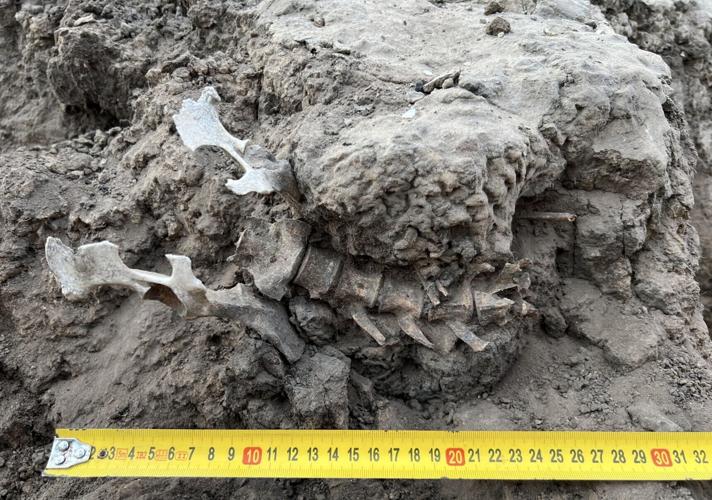
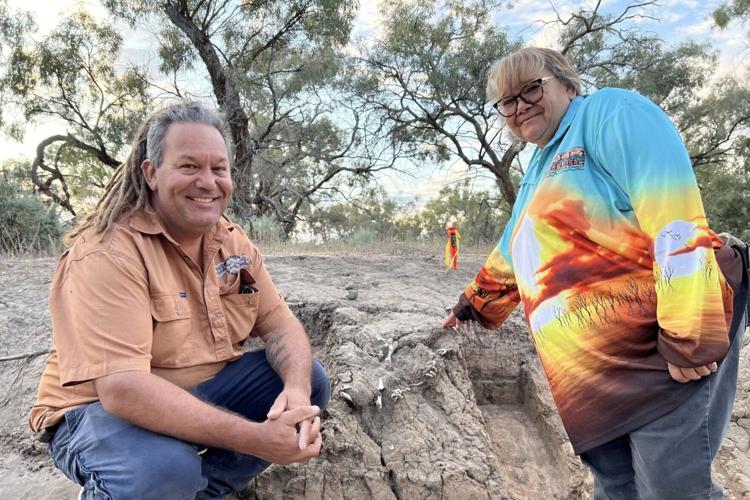

The skeleton of the dingo (garli) in the soil. (Dr. Amy Way / Australian Museum via SWNS)
By Stephen Beech
The discovery of a dingo ritual burial 1,000 years ago has offered rare insight into ancient Australian cultures.
The burial site reveals the depth of relationships between Barkindji ancestors living along the Darling River and wild canines, say scientists.
Archaeologists said the dingo appears to have been buried with "great care" in a purpose-built midden, which continued to be tended and "fed" with river mussel shells for centuries.
The team believe it suggests an ongoing relationship between the buried dingo and local people.

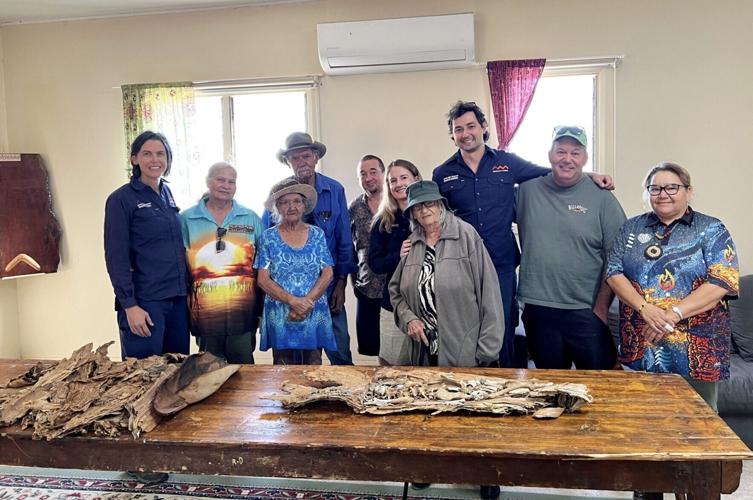
Return to country of the garli, which can be seen lying on paperbark on the table. Left to Right: Dr. Amy Way, Aunty Cheryl Blore, Aunty Patsy Quayle, Uncle Badger Bates, Dr. Sam Player, Dr. Rebecca Jones, Aunty Evelyn Bates, Dr. Loukas Koungoulos, Dave Doyle and Aunty Barb Quayle. (Australian Museum via SWNS)
The discovery, made by local man Badger Bates in 2000, is believed to be the first time the "feeding" practice has been observed archaeologically anywhere in the world.
Project lead Dr. Amy Way said: "While Barkindji people have always known about this cultural practice, this discovery is really powerful because it provides new details on the depth of that relationship between Barkindji people and dingoes."
Way, an archaeologist at the Australian Museum and lecturer in Archaeology at the University of Sydney, has been working closely with Barkindji custodians over the past five years, dating and recording Barkindji cultural heritage in Kinchega National Park, New South Wales.
The dingo, known as garli in Barkindji language, was discovered in a road cutting.
Its skeleton emerged due to erosion at a site in Kinchega National Park, according to the study published in the journal Australian Archaeology.
The site is near the Menindee Lakes along the Darling River, around 60 miles southeast of Broken Hill.
The male dingo was deliberately buried between 963 and 916 years ago within a riverside midden, as determined by radiocarbon dating.

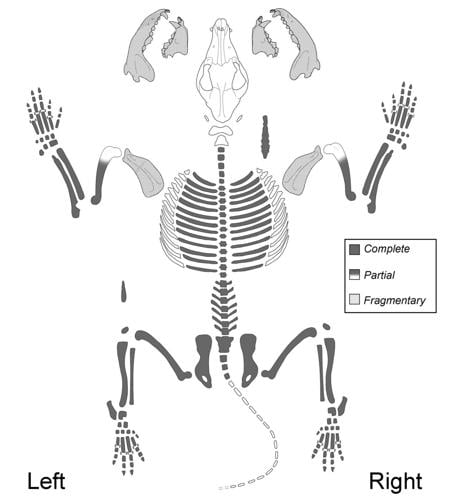
Layout of the bones unearthed. (Dr. Amy Way / Australian Museum via SWNS)
Way said: "If garli were buried with the same care and respect we see for human ancestors, including mothers and elders, it tells us these animals were profoundly valued and loved."
Lead author and dingo specialist Dr. Loukas Koungoulos, from the University of Western Australia, said: "We know dingoes were tamed and lived alongside people as part of the community.


"This analysis details the depth of this relationship."
Analysis of the dingo's remains shows that he was male and lived to an advanced age for a dingo of four to seven years.
His teeth were heavily worn, suggesting a long life and extensive use, and he had healed traumatic injuries, including broken ribs and a broken lower leg, indicating prolonged care.

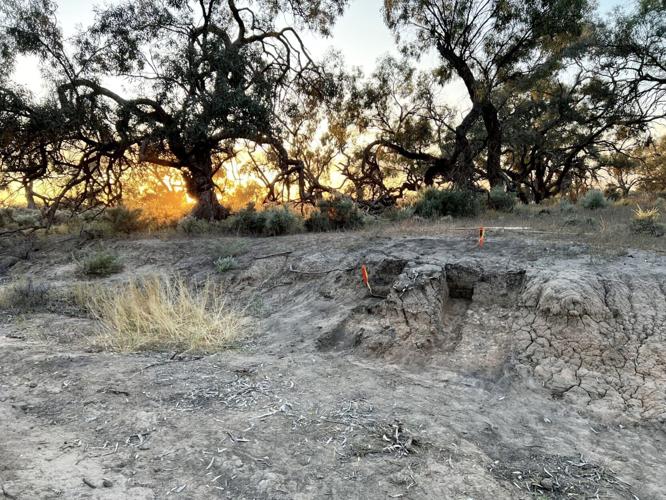
The garli skeleton site before excavation at Kinchega National Park. (Dr. Amy Way / Australian Museum via SWNS)
The research team believe the dingo may have been out hunting and sustained severe injuries, consistent with being kicked by a kangaroo. He survived due to the care of the Barkindji people.
At the time of his death, the dingo was buried in a midden that appears to have been newly initiated either shortly before or alongside the burial.
The site continued to be added to for centuries after his death.
Barkindji Elders propose that the ongoing additions formed part of a "feeding" ritual that honored the dingo as an ancestor and was maintained across multiple generations.

Dave Doyle (Barkindji custodian, research partner, and co-excavator of the Garli) and local custodian and artist Barb Quayle. (Dr. Amy Way / Australian Museum via SWNS)
Koungoulos said: "What stands out about Garli is that he was old and well cared for.
"The healed injuries, worn teeth and careful burial tell us this animal lived a long life alongside people, and that his death was marked intentionally and with respect."
Koungoulos added: "This confirms these traditions were much more widespread than we once thought.
"Dingoes like this garli weren't simply tolerated around camps.
"They were tamed, lived with people and were embedded in daily life."
Way said: "This research reinforces what Barkindji people have always known.
"These relationships with animals, ancestors and country were deep, deliberate and ongoing."


(0) comments
Welcome to the discussion.
Log In
Keep it Clean. Please avoid obscene, vulgar, lewd, racist or sexually-oriented language.
PLEASE TURN OFF YOUR CAPS LOCK.
Don't Threaten. Threats of harming another person will not be tolerated.
Be Truthful. Don't knowingly lie about anyone or anything.
Be Nice. No racism, sexism or any sort of -ism that is degrading to another person.
Be Proactive. Use the 'Report' link on each comment to let us know of abusive posts.
Share with Us. We'd love to hear eyewitness accounts, the history behind an article.