


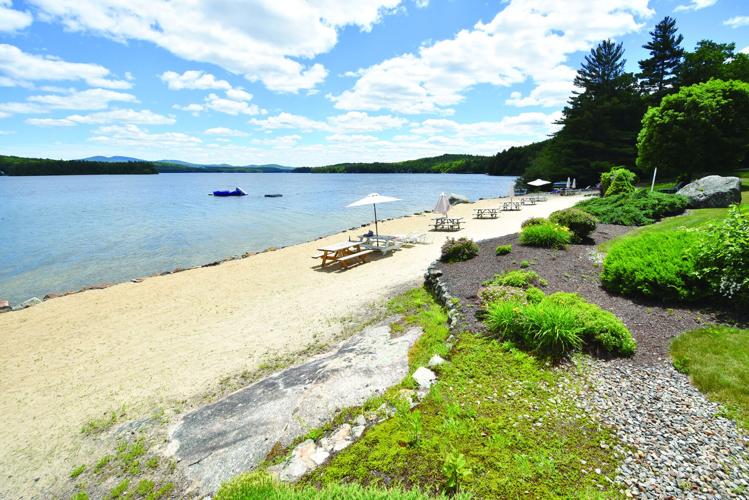


For generations of New Hampshire families, summer camp has been more than just a childhood memory — it’s often been the first step toward owning a home in the Lakes Region.
The scent of pine needles and woodsmoke, the slap of a screen door on a bunkhouse, the nervous thrill of that first swim test ... these memories have stayed with thousands of children long after they left camp. And for many families, those summer visits planted the seeds for something more permanent. What started as a drive to drop the kids off often became the reason they eventually bought a home here.
New Hampshire’s lakeside camps have played a quiet but powerful role in local real estate for over a century. Since Camp Chocorua first opened on Squam Lake in 1881, generations of families have fallen in love with these lakes and woodlands during their children’s camp years. Many later returned as buyers, searching for vacation homes, waterfront lots, or year-round residences in the very areas their children once called home for a few weeks each summer.
For over a century, lakeside camps in New Hampshire have shaped more than childhood memories — they have sparked lifelong dreams, connecting families to the region’s natural beauty. But as the pressures of rising costs and declining enrollment mount, many beloved camps have closed their doors, quietly transforming into residential communities. But this transition isn’t new.
One of the earlier examples is Camp Wyanoke on Wolfeboro Neck. Founded in 1909, it was one of the largest and most successful private boys’ camps on Lake Winnipesaukee. When it closed in 1975, the property was sold and developed into a residential subdivision. Many of the new homeowners reportedly took care to preserve the original landscaping and much of the camp’s natural character as they built their homes.
A similar transition happened at Camp Alton. This longtime boys’ camp operated from the late 1930s, until it closed in 1992. The 60-acre property, with over 4,000 feet of shoreline, was purchased by local businessman Bob Bahre and developed into a compound of high-end luxury waterfront homes at what is now known as Clay Point — some of the most exclusive residences on the lake today.
On Lake Winnisquam in Meredith, Camp Waldron served generations of boys and girls from the early 1900s, through the 1970s, originally run by the Boston Missionary School Society to provide outdoor experiences for underprivileged children from the city. Today, the property is home to Waldron Bay, a private waterfront homeowners association that was marketed by Frank Roche in the 1980s, featuring 334 acres with only 65 single-family homes, a large sandy beach, clubhouse, tennis courts, and a significant amount of conserved open land. It remains one of the lower-density water-access communities in the region.
In Gilford, the site of the former Camp Samoset has become the Samoset Condominium community, which was sold by Roche to the developer, General Investment and Development, in the 1980s. Samoset offers lakefront townhomes on the 28-acre site on Lake Winnipesaukee with 850 feet of shorefront.
In Tuftonboro, on Cow Island, a historic, long-running boys camp, Camp Idlewild, was operated from 1891 to 1975. It operated on a 250-acre parcel of Cow Island, and the land was later divided into large island lots, and summer homes were constructed. Some of the former camp structures have been retained as a common area for the Idlewild Association.
Camp Kuwiyan was a traditional summer camp for girls on Lake Winnipesaukee in Meredith, operating from 1927 to 1956.
Camp Belknap, on Lake Winnipesaukee in Tuftonboro, has been operating since 1903, originally as a YMCA camp and now operates as an independent nonprofit affiliated with the national YMCA.
Sandy Island, on Lake Winnipesaukee, is another large summer camp still operating and includes 67 acres and is southeast of Long Island. This camp is part of the YMCA organization, accommodating approximately 150 campers and 65 staffers.
Camp Lawrence, on Bear Island on Lake Winnipesaukee, is a 70-acre boys' overnight summer camp with a number of activities for boys aged 8-16. It is affiliated as part of the YMCA camp system and was established in 1907.
Camp Kehonka, which was located on Roberts Cove Road between the Alton and Wolfeboro town lines on Lake Winnipesaukee, was a prominent summer camp for girls from 1902 to 1985. Roche remembers showing that gorgeous property to a developer in the 1980s. The 150-acre parcel, with extensive shorefront, was subdivided into luxury, residential, and waterfront homesites.
There are many other boys' and girls' camps with a rich history scattered around our area's lakes, including Newfound Lake and others I have not touched on in this article.
Today, the trend continues. One of the most notable current cases is the former Camp Menotomy on Meredith Neck. This 95-acre property with nearly a mile of pristine Lake Winnipesaukee shoreline has a proposed sale to a developer after the camp closed. Plans call for a small number of luxury waterfront homes on one of the last large, undeveloped stretches of shoreline on the lake. But the proposed sale has generated significant discussion about the future of former camp properties and, in this case, deed restrictions.
For real estate professionals and buyers alike, these transitions represent both opportunity and loss. Waterfront camp properties are increasingly rare and highly valuable, often commanding premium prices when they reach the market. While some buyers seek the lifestyle these new developments offer, others worry that every camp converted into housing means one fewer place for the next generation to experience the very summers that first brought them to New Hampshire.
The truth is, New Hampshire’s summer camps have long served as unofficial ambassadors for Lakes Region real estate. They introduced families to the beauty of these lakes, creating emotional connections that often turned into property purchases years later.
As more historic camp properties transition from children’s voices to homeowners’ addresses, the Lakes Region continues to evolve. The question for buyers, sellers, and communities is how to honor that rich history while meeting today’s demand for waterfront and view properties. At Roche Realty Group, I have been involved in residential land sales and development over the years, and I have sold many large parcels of land throughout the region.
The echoes from the dock are still there ... they’re just beginning to blend with the sounds of new homeowners making memories of their own.
•••
This article was written by Randy Miller. Randy is a Realtor at Roche Realty Group in Meredith, and can be reached at 603-279-7046. Data was compiled by a PrimeMLS search and is subject to change. Visit rocherealty.com to learn more about the Lakes Region and its real estate market.


(0) comments
Welcome to the discussion.
Log In
Keep it Clean. Please avoid obscene, vulgar, lewd, racist or sexually-oriented language.
PLEASE TURN OFF YOUR CAPS LOCK.
Don't Threaten. Threats of harming another person will not be tolerated.
Be Truthful. Don't knowingly lie about anyone or anything.
Be Nice. No racism, sexism or any sort of -ism that is degrading to another person.
Be Proactive. Use the 'Report' link on each comment to let us know of abusive posts.
Share with Us. We'd love to hear eyewitness accounts, the history behind an article.