



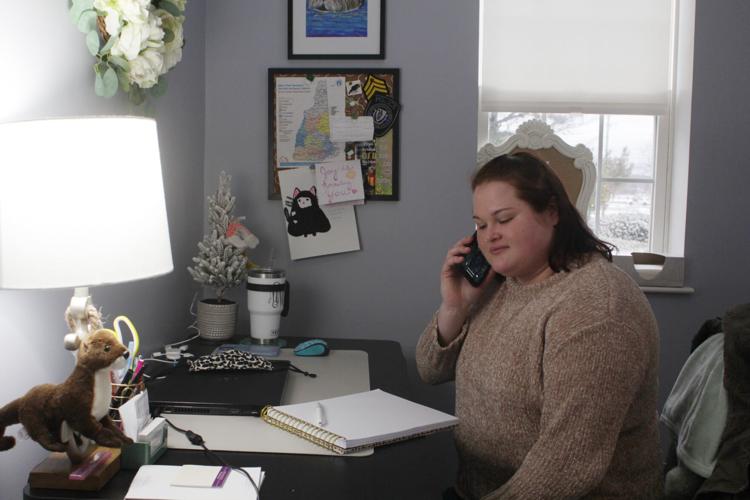
LACONIA — In 10 years of working the crisis hotline at New Beginnings, the local the women’s shelter, its executive director Shauna Foster has fielded calls fraught with raw emotion, pent-up anger, grief and guilt — as well as pleas for a haven out of harm’s way.
It’s a heady role, but also a calling for people who have experienced abuse and others who care deeply and are willing to be trained to help.
Now the call is going out for more crisis line volunteers.
“Stress levels are running much higher than before COVID,” said Foster, and callers’ needs are more complex. Those needs can include shelter, financial assistance, legal advice and mental health counseling. “Everything that stresses us is going to stress a survivor and make their situation much more difficult.”
Since its start 30 years ago, New Beginnings – Without Violence and Abuse has been the Lakes Region’s main provider of crisis services, resources and referrals to individuals and families who are experiencing violence and abuse — situations that often go unnoticed, but cause challenges that last a lifetime, especially if untreated. The aftershocks can include depression, anxiety, PTSD and substance misuse. Shelter staff and crisis line volunteers act as first responders for people whose needs have exploded during COVID’s isolation and sheltering at home with abusers.
According to data collected by the New Hampshire Coalition Against Domestic and Sexual Violence, crisis center calls statewide have risen by 15% over the last two years, while volunteers supporting crisis lines and survivor needs have declined during the past five years. Between January and September 2021, crisis centers had fewer volunteers on hand than in 2020. Now, call volume remains high, volunteers are in shorter supply, and the help needed is more comprehensive.
Since July, New Beginnings’ crisis line has received roughly 50 calls after hours when the office is closed from survivors of sexual assault or domestic abuse who need advice or just to unload.
“Survivors need to talk,” said Foster. “We hope to provide peer support that comes from lived experience. But it’s not a requirement to get involved. We’re looking for people with a passion for our work.”
Currently roughly seven volunteers cover after-hours shifts, providing support by phone or in person at the emergency room, offering compassion and concrete tips on what to do next. It’s remote work, mostly, that requires being available overnight, privacy to talk, plus a sensitive heart. Training is provided by New Beginnings.
“Crisis line volunteers are a lifeline throughout New Hampshire," said Lyn Schollett, executive director of NHCADSV. Their value can’t be overstated.
“Everyone usually knows someone who’s gone through domestic abuse,” Foster said. “We’re often the first person that someone talks to about their situation. If they’re getting support, encouragement and resources, their outcome can look very different.”
The statistics on domestic and sexual abuse are sobering. According to data from NHCADSV, one in four men nationally report being assaulted by an intimate partner. In New Hampshire 33.4% of women have experienced violence from an intimate partner. Abuse can take the form of physical or sexual violence, psychological, emotional or verbal abuse, isolation or financial mistreatment or control.
“A common thread among survivors is to feel it’s their fault” — and if they change the treatment will stop, which is typically a false hope. “The abuser will say, ‘It’s your fault. I’m only doing this because you made me do it,’” Foster said.
In her tenure, Foster has taken calls from middle-aged women who have stifled past experiences for years, with trauma that still affects their lives.
“Something in the news brought it back and she’s reaching out for the first time,” Foster said. Something, however fleeting, can summon paralysis, pain or fear as if the abuse just happened, as well as a flood of haunting memories.
Some callers are experiencing ongoing or immediate abuse, which has culminated in a visit to a hospital emergency room.
“Our job is to listen to what they have to say,” said Foster. “This violence takes away someone’s sense of control. We don’t want to add to that loss of control. If they say I just want to talk, I just let them talk. They’ll often have questions about their rights and next steps.”
Calls come from people of all ages. “Some ask, ‘Am I crazy or is this abusive?’” It often starts with emotional abuse, and can escalate to physical violence over time, Foster said.
Stay-at-home life during COVID intensified the risk for intimate partners and children, who were sequestered with abusive family members. Parents juggled challenges with remote and hybrid learning and childcare. Family financial needs intensified with rising costs such as food and fuel. Those become reasons why someone chooses to stay in a destructive relationship, or has trouble leaving, Foster said.
During the pandemic’s peak between March and September 2020, when stay-at-home mandate were in effect, the state’s crisis center hotlines received 66,685 calls — a 63% increase from 2019. During that time, 15% of all individuals who received any services related to domestic or sexual abuse were younger than age 18, according to NHCADSV.
Between July 1 and September 30 of 2019, New Beginnings served 201 individuals. That number dropped to 155 in 2020 during pandemic shutdowns. Between July and September 2021, it rose to 250, according to center data.
Now, as families and individuals remain in toxic or volatile situations, the stakes remain high and there’s a greater potential for lethal violence, Schollett said.
The trend has been reflected in the demand for shelter. For the last three years, there’s been a steady uptick in the average number of days that a guest stays in a New Hampshire crisis shelter, according to NHCADSV. Last year the average stay reached 76 days.
In the decade since Foster started at New Beginnings, she said the biggest change she’s noted is shelter guests with fewer options, especially for follow-up places to live. “They’re staying longer and a have a much harder time moving forward,” she said.
A recent assessment by the NH Department of Justice found that leading unmet victim needs remain housing, mental health care, and legal services. When these resources aren’t available, crisis centers are stretched to fill in the gaps.
During COVID, prosecutions were delayed, said Schollett, sometimes by 18 months from the last hearing. The drawn-out process is hard on victims. “The longer a trial or plea bargain is delayed, the longer the victim relives the trauma of a crime,” Schollett said.
The good news is that during the pandemic, providers evolved ways to deliver key services remotely. Crisis centers started using text messages and secure online chat platforms to communicate privately with victims. Those options are available now.
New Hampshire courts introduced remote filing for restraining orders, which made the process more accessible and less time consuming. Victims can work with shelter advocates without hiring a lawyer, Schollett said.
For information about services or how to become a crisis line volunteer, call New Beginnings at 603-528-6511 or visit newbeginningsnh.org. The crisis line number is 866-841-6427.


(0) comments
Welcome to the discussion.
Log In
Keep it Clean. Please avoid obscene, vulgar, lewd, racist or sexually-oriented language.
PLEASE TURN OFF YOUR CAPS LOCK.
Don't Threaten. Threats of harming another person will not be tolerated.
Be Truthful. Don't knowingly lie about anyone or anything.
Be Nice. No racism, sexism or any sort of -ism that is degrading to another person.
Be Proactive. Use the 'Report' link on each comment to let us know of abusive posts.
Share with Us. We'd love to hear eyewitness accounts, the history behind an article.