


While Gilford and Belmont high schools may have taken diverging approaches to student career days, they worked toward similar goals: encouraging students to learn more about their own interests by exploring careers through local businesses and to build soft skills by engaging with professionals face to face.
In Gilford, an effort to revamp career day across the district drew an animated response from local businesses, and Belmont High used its XELLO software to help direct students toward potential interests and corresponding discussions with local professionals.
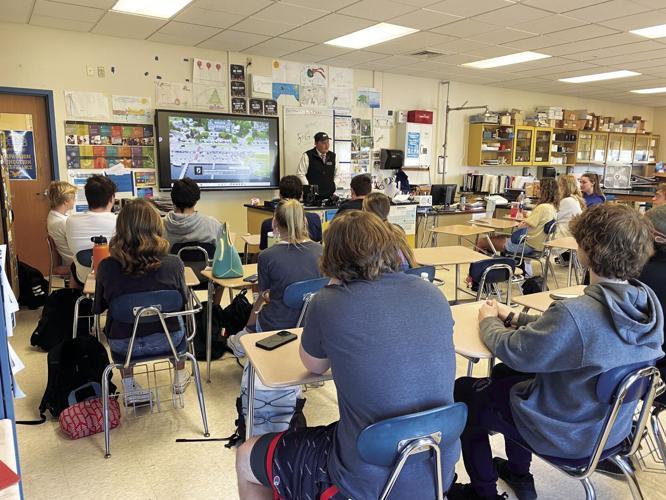
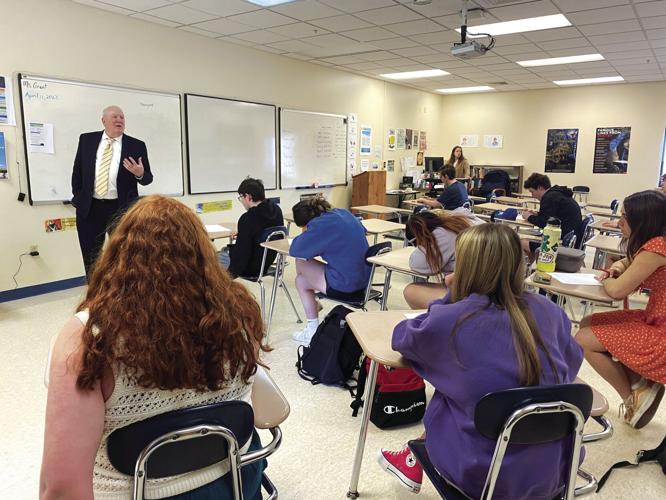
Gilford students registered for two, 45-minute presentations by local professionals based on their interests, facilitating a deep dive into each field and making a solid connection with presenters. Their career day was held April 13.
“We wanted to have students specifically design and focus on their future career path,” said Principal Anthony Sperazzo. Really grasping whether a field of interest is right for them, he continued, takes a time investment.
“We want to make sure that when they do choose their career paths, when they're leaving us at the end of high school, they've had internships, they've had opportunities to explore those interests.”
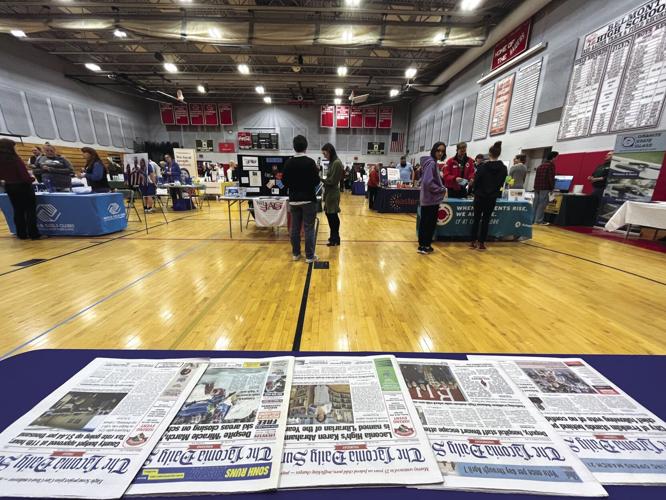
In a different model, Belmont High students mingled with around 50 employers in a more traditional career fair style in the gymnasium on April 19. Business participants were asked to give any student who approached them and initiated substantive conversation a sticker, and the students who had the most stickers were awarded with gift certificates.
Students were also armed with analysis about their aptitudes and interests from an online career and college profile the school has been using for the last two years, XELLO. Students could use what they learned about themselves from their profile as a way to engage with employers, or allow their curiosities to guide discussion.
The goal was not only to introduce students to figures in their targeted path but to support forming soft skills and open their eyes to the many fields in which their interests could lead them.
“It's always interesting to watch students interact with adults that they've never seen before, have conversations that they didn't anticipate having and kind of see them be on the fly,” said Principal Matt Finch.
“It’s an important growing edge for students,” said Polly Ingraham, school to career coordinator at Belmont High School. “All teenagers need to be able to have some sense of who they are and what they're willing to express about themselves to other people. Either things they've actually accomplished or things that they're interested in, things that they might want to do in the future.” This skill, she added, is especially important to foster at school because not all kids have equal opportunity to interact with adults in their community.
For Gilford, the event was the capstone of a district initiative to invigorate career exploration programs in each of its schools. Sperazzo said the district was shocked by the outpouring of interest they received from local businesses.
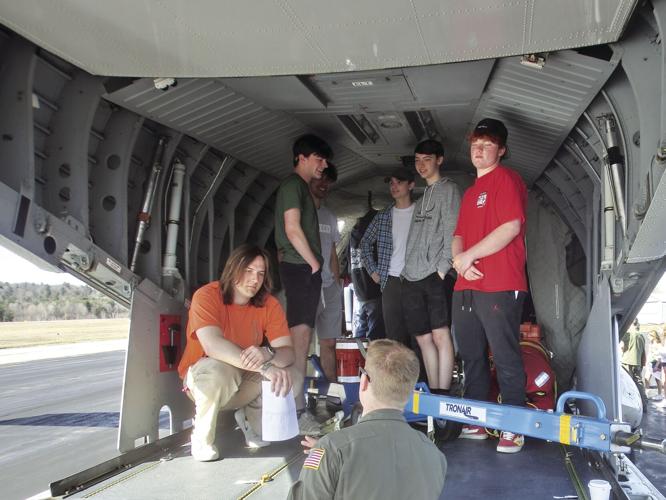
“It just ballooned and snowballed into this massive outpouring of support from community members and the community partners to say, ‘We'd love to come in and work with your students, offer them some insight,’” Sperazzo said. There were about 35 presenters at the school, and another 35 who presented on STEM-specific fields at Laconia Municipal Airport. More have already reached out about getting involved next year, according to Sperazzo.
For Belmont, the day was the second year of the school using its online software to guide student career exploration.
“XELLO might have pointed [students] in one direction, and they might have pursued that a little bit,” Finch said. “But giving them some freedom to chat with whomever and having such a diverse group of businesses here is ... another open door for kids.”
The Daily Sun was one of the local business participants at both events. Students at Gilford unpacked what goes into information-gathering for a story and what makes a good headline, asking questions about writing on a deadline and where to get story ideas. At Belmont, students — many of whom were not considering journalism — asked questions about what it’s like to be a journalist on a local level, what work besides reporting goes into publishing a print newspaper and how to respond to criticism about coverage.


(0) comments
Welcome to the discussion.
Log In
Keep it Clean. Please avoid obscene, vulgar, lewd, racist or sexually-oriented language.
PLEASE TURN OFF YOUR CAPS LOCK.
Don't Threaten. Threats of harming another person will not be tolerated.
Be Truthful. Don't knowingly lie about anyone or anything.
Be Nice. No racism, sexism or any sort of -ism that is degrading to another person.
Be Proactive. Use the 'Report' link on each comment to let us know of abusive posts.
Share with Us. We'd love to hear eyewitness accounts, the history behind an article.