


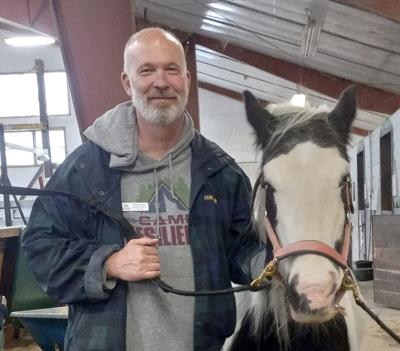
GILFORD — Matt Dubois of Dover, a U.S. Navy captain who worked at the Pentagon after serving a quarter-century as a Navy pilot, never imagined he would find this calling when he retired from military life.
He had vague hopes of making a difference for veterans – and what happens to them when they suddenly become civilians.
The job he found in February has been a strategic fit: Dubois, who comes from an Army family, assumed command of the Patriot Resilient Leader Institute and Camp Resilience – taking over from Gilford resident Kurt Webber, a West Point graduate and Army officer who started this mental health and outdoor program in 2014. Webber will continue as board president, a position he's held since the start. Since 2014, Camp Resilience has served 799 veterans, service members, family members and first-responders who come for mental health programming, bonding and outdoor activities to regain fortitude and purpose – and reassemble their lives.
“I did not think I’d get picked. I thought they’d be looking for a mental health expert,” said Dubois, whose Defense Department post put him in charge of helping service members transition to civilian life – a number that hovers at 250,000 each year.
“I worked in the ecosystem of whatever vets need” helping discharged service members find jobs or figure out what they want to do next, Dubois said. It’s a heady and heavy challenge for a population that finds itself at an overwhelming crossroads, frequently without plans for what to do or how to operate without the structure of military life.
“It’s not just the struggling vet with mental health issues,” said Dubois, although many suffer lingering trauma from what they experienced or witnessed during their career – similar to the images and ills that can plague police and firefighters who respond to incidents where lives are lost.
“I wanted to catch these folks so they knew about veterans reserve opportunities,” said Dubois. His Pentagon role “planted the seed and when this job came up, it seemed like a logical place to go.”
Now it’s full steam ahead. Since its beginnings, and because US service members have fought in wars for the last 20 years, an expanding population needs a widening range of restorative services – including women who have suffered sexual trauma while in the military. Camp Resilience programs serve police, firefighters and EMTs who still reel from life and death experiences, the haunting of attempts that did not succeed and violent interactions they still can hear and see.
“Both veterans and first responders, everyone has different experiences,” said Dubois. “But they all have similar reactions to these experiences, whether it’s from war atrocities or rescuing someone from a burning car. The body’s reaction to trauma is pretty universal, regardless of the event.”
When Dubois describes the trauma state that can grip military members and first-responders in the wake of violence or tragedy, he quotes what veterans report: “It’s been described to me as a constant state of fight or flight. Everything becomes a trigger. You don’t know which to do – fight or flight. When people get this way, they don’t react to normal things the way most of us do.”
Healing becomes a process, and bonding with others who have experienced similar things or existed for lengthy periods in identical high tension becomes a way to find a path forward to a productive and rewarding life. When many World War II soldiers, pilots and sailors returned, nightmares were a fact, and there was little help for intrusive thoughts that prevented sleep, said Dubois.
“Now you can get it taken care of” and Camp Resilience provides a follow-up. “In southern New Hampshire in particular, police departments have done a very good job of forming supporting teams around individuals and families, making sure they get what they need.”
Officer-involved shootings have occurred every week for the last three or four months, said Dubois, and Critical Incident Stress Management Teams try to respond to officers who have been in a critical incident. “Mental injury or moral injury, these things are treatable,” he said. “When you work through them, you get better. Not all can be fixed but most can be fixed. We try to be part of that recovery plan.”
Camp Resilience serves military and civilian personnel throughout New England.
After a three- to four-day retreat, Camp Resilience follows up for another six months. “People can leave very changed after a couple of days,” said Dubois. “We don’t want that to be lost. We try to get them to stay in touch and support each other. Sometimes they schedule reunions. Some stay in touch in person.”
PRLI is holding a fundraiser July 15 in Bristol called “Green Beret with a Mission” to support and expand Camp Resilience’s offerings. Teams will compete in specials forces challenges including throwing fake grenades and crawling through mud, he said.
“Our alumni are some of our biggest supporters and they become volunteers,” said Dubois.
Camp Resilience is currently working with UNH’s "Northeast Passage" adaptive sports program to run retreats for veterans with physical challenges, and with university staff to pioneer sessions for veterans who are attending college on the GI Bill to help them learn to navigate the VA system and adapt to college life, which can be daunting. Their counseling covers uncomfortable situations for veteran-students, said Dubois, including “what do you do if everyone goes home for spring break and you have no place to go.”
For more information and to volunteer at Camp Resilience, go to www.camp-resilience.org/volunteer.


(0) comments
Welcome to the discussion.
Log In
Keep it Clean. Please avoid obscene, vulgar, lewd, racist or sexually-oriented language.
PLEASE TURN OFF YOUR CAPS LOCK.
Don't Threaten. Threats of harming another person will not be tolerated.
Be Truthful. Don't knowingly lie about anyone or anything.
Be Nice. No racism, sexism or any sort of -ism that is degrading to another person.
Be Proactive. Use the 'Report' link on each comment to let us know of abusive posts.
Share with Us. We'd love to hear eyewitness accounts, the history behind an article.