


A new guide is available to birdwatchers in the Granite State: New Hampshire Audubon's recently released online guide, which lists birds often found in New Hampshire, called "Birds A-Z." It contains 210 birds, and includes most of the species that nest in the state, except for some of the rarest birds, according to Senior Biologist for Avian Conservation Pamela Hunt, who made the guide. It also includes species that are only in New Hampshire during the winter or migration.
“Right now, it covers some of the more familiar and more common ones,” Hunt said. “Most of the familiar birds people will find in their yards or hear about are going to be in there now.”
For each bird in the guide, there is information like habitat, migration and range maps, NH conservation status, population trends and threats, seasonal abundance, a detailed description and photographs. But Hunt specified this is not for bird identification, but rather a way to learn about the variety of birds in the state.
“It's not a field guide at all, it's not supposed to be. It's meant to complement identification guides,” she said. “It's not going to help you identify things unless you want to look through every single picture and try to match something up. It's mostly there as a reference to more specific information.”
A notable time to use the guide is during spring migration, when birds traveling to their breeding area brings an increase in species which aren’t in the Granite State year-round. While some birds can come as early as February, other birds won't arrive until July. For New Hampshire, this includes birds who winter as far south as Central and South America. For example, one easily recognizable bird that migrates from Central America for the summer is the ruby-throated hummingbird, which can be found across the entire state during the breeding season.
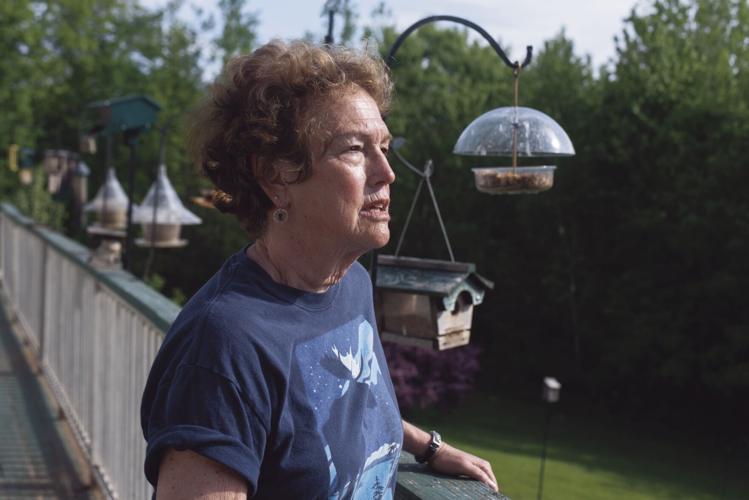
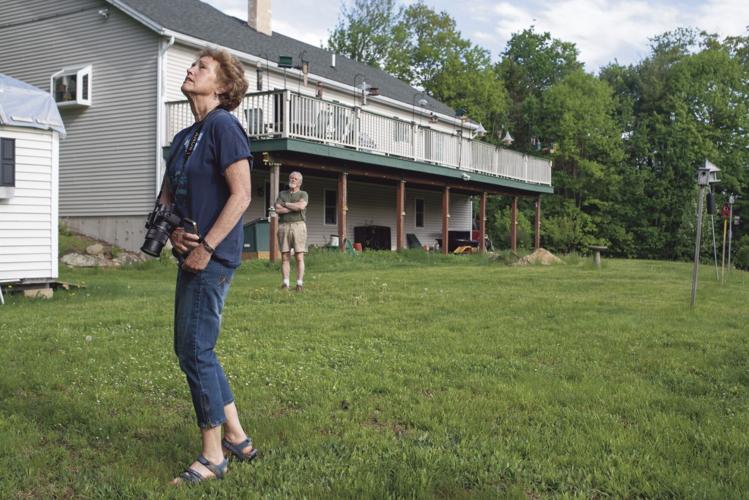
Wendy Oellers-Fulmer, 71, from Gilford, is an avid birdwatcher and writes a weekly piece called Nature Corner for the Gilford Public Library. She says anyone who wants to see these unique birds should get outside now, as the birds are doing everything they can to attract a mate.
“Right now with the birds that are coming north, they are in their plumage. They are bright and beautiful and they are at their best looking,” she said. “By fall, a lot of them have lost all the beautiful, vibrant feathers.”
She also described something called the dawn chorus, where during the migration and breeding season, you will hear many more birds singing than usual, even before the sun comes up. This serves two purposes: To establish territory for breeding, and to attract a mate.
“As they start raising their broods, and as the summer goes on, it's going to get quiet. You won't have this wonderful chorus that we have everyday now,” Oellers-Fulmer said. “That's going to kind of quiet down.”
For some birds like the eastern meadowlark, considered a threatened species, the guide can be particularly handy. The eastern meadowlark migrates up to New Hampshire from Central and South America, and can be found more often in the Connecticut Valley and the Seacoast. But in April 2021, the meadowlark, like the loggerhead shrike in April of this year, found its way to Laconia at the former Laconia State School and Hunt was there to see it.
“The eastern meadowlark, that's a species that I'm looking for and doing surveys for. There’s very few of them left in the state,” Hunt said. “If people see meadowlarks, especially now, they're probably nesting, and it'd be great to know about them and people can let Audubon know somehow or another.”
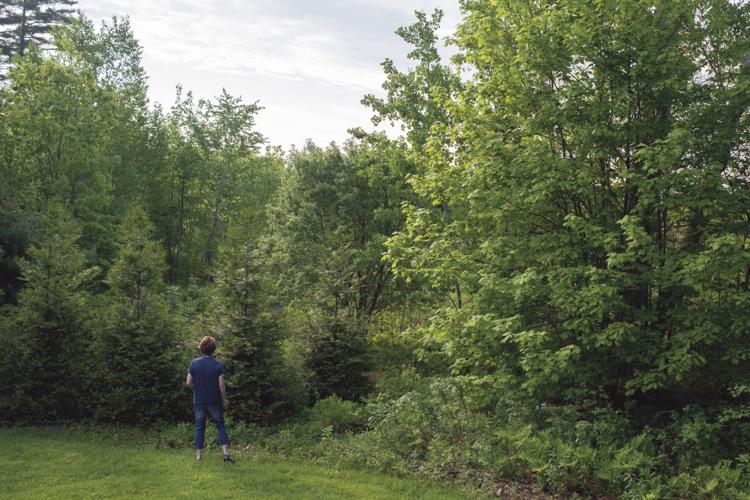
An important thing to consider while bird watching is to be respectful of nature, birds and people. Do not search for birds on private property without express permission. Wildlife biologist Brett Hillman, who works for the White Mountain National Forest Service in Campton, said a major issue during bird migration this time of year is people getting too close and flushing out birds or making them fly away, causing them to use energy to escape.
“Don't get so close to them that they're going to flush. A lot of people, it's more important to them to get this perfect photograph of a bird than it is to be respectful of the bird, so they will purposefully try to get the bird to fly away or flush. And that's not something you ever want to do,” Hillman said. “When birds are migrating, they're using a ton of energy to get from point A to point B. And then any extra energy they have to expend trying to get away from people adds more stress to them on their long journeys.”
To view the guide, visit stateofthebirds.nhaudubon.org/birds-a-z.
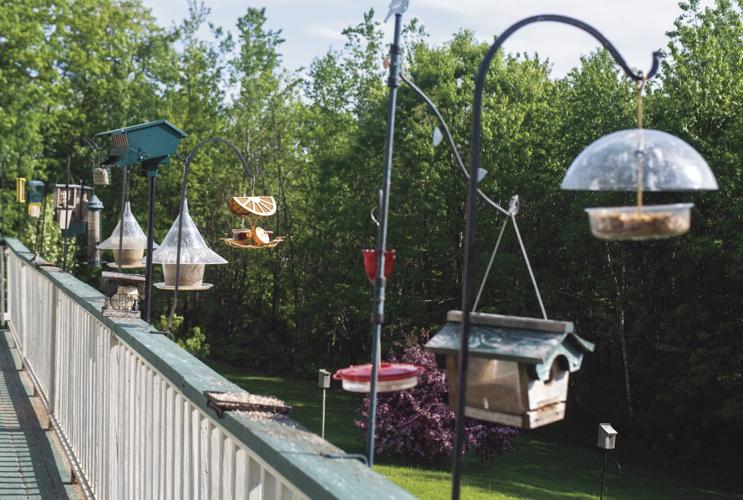
But birdwatching can be done from the comfort of one’s own backyard. Oellers-Fulmer said this is the best way to start appreciating birds, especially when it can be overwhelming on where to go to see more niche birds during the migration.
But learning about common birds first will allow watchers to appreciate the other species during the migration a little more. Oellers-Fulmer was also an elementary school teacher in Gilford, where she often weaved environmental lessons into her teachings to help kids learn about the importance of nature. She noticed while kids would be outside for activities like sports, very rarely did her students have deeper appreciation for nature. Tools like the NH Audubon’s online A-Z guide can help people learn and appreciate these birds more.
Oellers-Fulmer paraphrased a quote by lepidopterist and writer Robert Pyle that encapsulates her teachings: “How can we get kids to care about the fate of the condor when they haven't made the acquaintance of the wren in the backyard?”


(0) comments
Welcome to the discussion.
Log In
Keep it Clean. Please avoid obscene, vulgar, lewd, racist or sexually-oriented language.
PLEASE TURN OFF YOUR CAPS LOCK.
Don't Threaten. Threats of harming another person will not be tolerated.
Be Truthful. Don't knowingly lie about anyone or anything.
Be Nice. No racism, sexism or any sort of -ism that is degrading to another person.
Be Proactive. Use the 'Report' link on each comment to let us know of abusive posts.
Share with Us. We'd love to hear eyewitness accounts, the history behind an article.