


LACONIA — No matter the time of day or night, people can begin their path to recovery from drug addiction under a new statewide “hub and spoke” system.
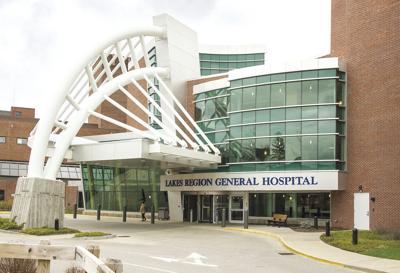
Lakes Region General Hospital will be one of nine regional "hubs" connecting people to “spokes,” or service providers to help them kick their addiction.
Those seeking assistance can access the system by calling 2-1-1, said Kevin Donovan, president and chief executive officer of LRGHealthcare.
“The most basic expectation is that every New Hampshire resident at any moment in time – any day, any night – can call the 211 system and they will be transferred to a live clinician who will be able to connect them to resources to get clean and sober at that time,” he said.
“Right now, they may decide in the middle of the night that they need help and it can be hard to navigate the system," he said. "Where do you start? Is someone available?”
Donovan said that, during working hours, there will also be a location where people can go for help. After hours, those in a drug overdose or crisis situation could also come to the hospital’s emergency room.
“Certified recovery workers will be available to the emergency room at Lakes Region General Hospital and Franklin Regional Hospital,” Donovan said. “We will have a 24-7 certified recovery worker to meet with you face to face and get you the help you need.”
In some respects, LRGH may be ahead of the curve on drug treatment. It has treated hundreds of people in a recovery clinic. Therapy can include medication such as Suboxone that can help with recovery.
“The need is as great as it has ever been,” Donovan said. “We’ve been doing a good job. This will allow us to do a better job.”
The hubs in the new 24-7 system are situated so that nobody has to travel more than 60 minutes to begin the process toward recovery.
A total of $45.8 million in federal grants are available to the state over two years to fight the opioid crisis.
The other eight hubs will be at Androscoggin Valley Hospital in Berlin; Concord Hospital; Wentworth-Douglass Hospital in Dover; Dartmouth-Hitchcock in Hanover and Keene; Cheshire Medical Center in Keene; Littleton Regional Health Care; and Granite Pathways in Manchester and Nashua.
The hubs, which are to open by Jan. 1, will share $8.8 million in federal money. The agreements with LRGH and the other hubs are to be ratified at a meeting of the governor and New Hampshire Executive Council on Oct. 31.
New Hampshire had 395 opioid-related deaths last year, 2,774 emergency naloxone administrations and 6,684 emergency room visits related to opioids, according to the state. Naloxone can reverse the effects of opioid overdose.
The state is trying to decrease overdose deaths by 10 to 15 percent by August 2020.
Jacqui Abikoff, executive director of Horizons Counseling in Laconia and Gilford, said the hubs in the new system will facilitate the patient getting an assessment of what help is needed.
“One size does not fit all,” she said. “What is the appropriate level of care that you need?”
Medication-assisted treatment with Suboxone and Vivitrol have been helpful for people who have been caught up in the opioid epidemic.
“This can cut down on cravings and inhibit the use of opioids so that people can engage in community-based treatments,” she said.
Residential treatment is appropriate for some people, while others may benefit from regular outpatient treatments.
Abikoff said that, with all the attention the opioid epidemic has received, people sometimes forget there is a full range of substance misuse that should be considered.
“The thing that worries me is that Belknap County also has significant problems with methamphetamine and alcohol,” she said. “The immediate impact is not as dramatic, but it is present.”
She said the cost of recovery services can be covered by medical insurance, Medicaid, or on a sliding scale, depending on ability to pay.
Manchester and Nashua have a “Safe Station” program where people who need a safe place to seek assistance with drug dependency problems can go to a local fire station, but such an approach is more difficult in smaller communities where firehouses can empty when there is an emergency call.
That’s why the 24-7 approach with the hub and spoke system should be particularly helpful in the Lakes Region.
Laconia Fire Chief Kirk Beattie said the department does have firefighter/paramedic Brian Keyes, who is a “recovery coordinator” and available to facilitate help for people with drug problems.
“The goal is to get help for people,” he said.
One thing that has been helpful in reducing fatal drug overdoses is the medication Narcan, which, if administered in time, can reverse the effects of opioids. Navigating Recovery (603-524-5939) provides free Narcan trainings every other month and provides free Narcan kits to anyone who comes to the center to ask for one. The group's next Narcan training session will be Nov. 5 from 6 p.m. to 7 p.m.
How to get help:
Call 2-1-1, which is New Hampshire’s statewide, comprehensive, information and referral service.
The New Hampshire Statewide Addiction Crisis Line 1-844-711-HELP (4357).
The National Suicide Prevention Lifeline 1-800-273-TALK (8255).
Horizons Counseling Center, 603-524-8005
Lakes Region General Hospital, 603-524-3211


(0) comments
Welcome to the discussion.
Log In
Keep it Clean. Please avoid obscene, vulgar, lewd, racist or sexually-oriented language.
PLEASE TURN OFF YOUR CAPS LOCK.
Don't Threaten. Threats of harming another person will not be tolerated.
Be Truthful. Don't knowingly lie about anyone or anything.
Be Nice. No racism, sexism or any sort of -ism that is degrading to another person.
Be Proactive. Use the 'Report' link on each comment to let us know of abusive posts.
Share with Us. We'd love to hear eyewitness accounts, the history behind an article.