


Laconia city councilors gave City Manager Kirk Beattie the go-ahead to appeal to state and federal leaders regarding soil and water contamination at a Gilford property during their meeting on Feb. 23.
“I’m very concerned about this. Any time we have petroleum leaking so close to our main water supply in Paugus Bay, there is an issue, so I really think we need to approach this head-on,” Mayor Mike Bordes said.
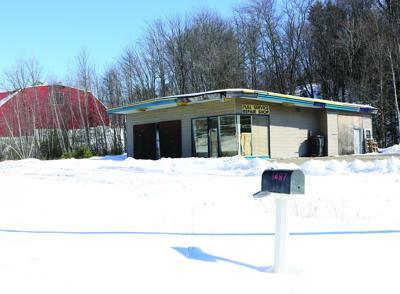
The former Getty station, located on a half-acre lot at 1467 Lake Shore Road in Gilford, is known to have soil and groundwater that’s been contaminated by petroleum-related substances. The soil is located in close proximity to Black Brook, which runs through the property and, ultimately, terminates when it reaches Paugus Bay.
“The gas station that is over in the Walmart area, in Gilford, has been vacant for a number of years now. They did have some leaking in there, we are concerned about that eventually filtering its way toward Laconia, and getting into our water system,” Beattie said.
Paugus Bay is the source of drinking water in the City of Laconia. It provides water to the city’s treatment plant and, in turn, to residents of Laconia, and parts of Gilford and Belmont.
The city received a letter from the Gilford Conservation Commission on Oct. 27, informing leaders at the state and local levels of the petroleum contamination at the site, and the “potential catastrophic event” which could occur if those soils entered Black Brook. On Feb. 23, city leaders worried a significant flood could cause just that to happen.
A letter, written in response from staff of the New Hampshire Department of Environmental Services, dated Jan. 5, states up to $1.04 million is available for soil remediation at the site from the NH Petroleum Reimbursement Fund. But because of the proximity of the contaminated soils to a failing culvert on private property, state staff won’t do the work until funding is secured from other parties to replace the culvert concurrently with the remediation.
That site is identified as having a leaking underground storage tank by NH DES staff. There are funds available through the state Petroleum Reimbursement Fund to remove contaminated soils and groundwater, but there’s also a failing culvert which Black Brook flows through and needs to be replaced at the same time as the remediation.
NH DES staff said they will not contribute to the cost of the culvert repair, and will also not perform the required remediation until the culvert is replaced. The culvert is located on private property and its replacement is therefore, ultimately, the property owner’s responsibility.
According to Gilford’s property records, 1467 Lake Shore is owned by WJK Realty, which lists a post office box in Winnisquam as its address of record. Its registered agent and vice president is Kevin Hutchinson, who also owns a new laundry facility in downtown Laconia, and recently purchased the property in Belmont where the China Garden restaurant, which is independently owned, is located at auction. Janet Hutchinson is listed as its director. Kevin Hutchinson declined to comment on the matter.
The letter councilors approved on Feb. 23, was drafted by the city's Water Board of Commissioners, and requests the state Department of Environmental Services staff prioritize the site for remediation, to prevent any contamination of the city’s drinking water supply.
“With the amount of funds available, a culvert replacement and soil remediation could potentially be performed,” the letter reads, in part. “If additional funding is needed, the property owner should be required to come up with those funds, or the town in which the property falls.
“This is a known contaminated site with multiple harmful contaminants that are far exceeding the limits that they can be present at in groundwater and soils,” the letter continues. “We know that it abuts a direct tributary to our water supply. We cannot sit back and wait for the negative impacts of the contaminants being released, action needs to be taken now.”
Ben Crawford, Water Department superintendent, said the station is decades old and was decommissioned in 2002, and old pumps and tanks were removed. In 2018, more contaminated soil was discovered when work to replace the culvert was started. The state won’t put any money forward until the culvert is replaced, and the property owner doesn’t want to replace it, Crawford said.
“Their stance right now is they’re not putting more funds forward until the culvert is replaced,” Crawford said. “That’s on private property, so that would be the owner’s responsibility to take care.”
Testing for contamination occurs twice a year. The city has requested more frequent testing, but has been denied, Crawford said.
“As far as the testing, they have, I think, eight monitoring wells onsite, and the contamination levels have dropped significantly — 70%. But, even though if you look at a graph, it looks great, they’re coming down, they’re still 90 times what they should be, they were thousands of times what they should be originally,” Crawford said. “There’s still contaminants in that soil and if it were ever to flood, which there has been flooding in that area recently, that could release into Black Brook, and eventually Paugus Bay.”


(0) comments
Welcome to the discussion.
Log In
Keep it Clean. Please avoid obscene, vulgar, lewd, racist or sexually-oriented language.
PLEASE TURN OFF YOUR CAPS LOCK.
Don't Threaten. Threats of harming another person will not be tolerated.
Be Truthful. Don't knowingly lie about anyone or anything.
Be Nice. No racism, sexism or any sort of -ism that is degrading to another person.
Be Proactive. Use the 'Report' link on each comment to let us know of abusive posts.
Share with Us. We'd love to hear eyewitness accounts, the history behind an article.