


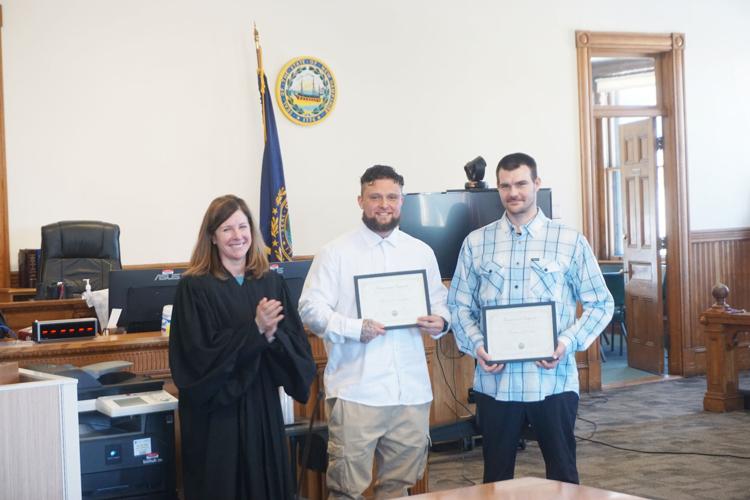
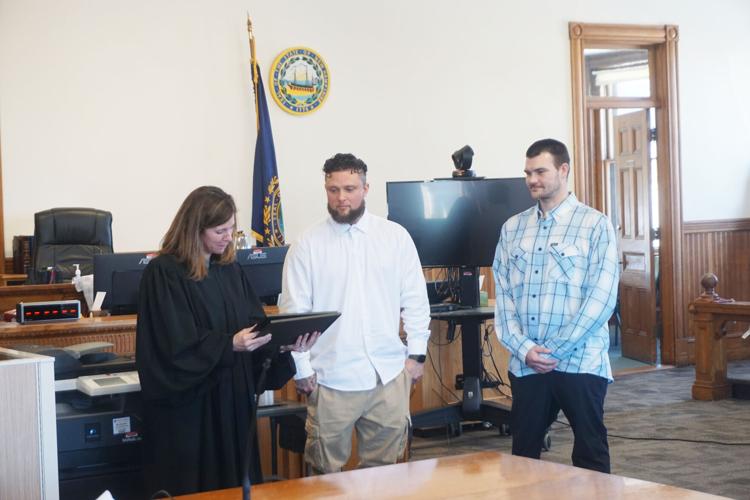
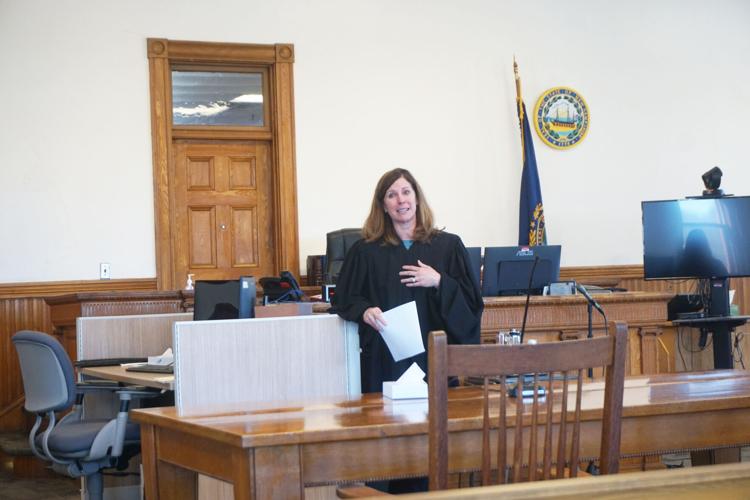
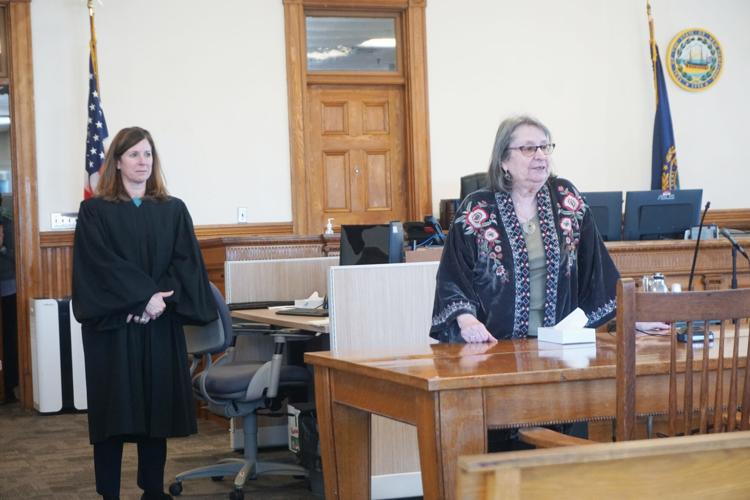
LACONIA — Jeremy Drake and Justin Franquie graduated from the Belknap County Adult Recovery Court Program in a ceremony at the Superior Courthouse Tuesday afternoon.
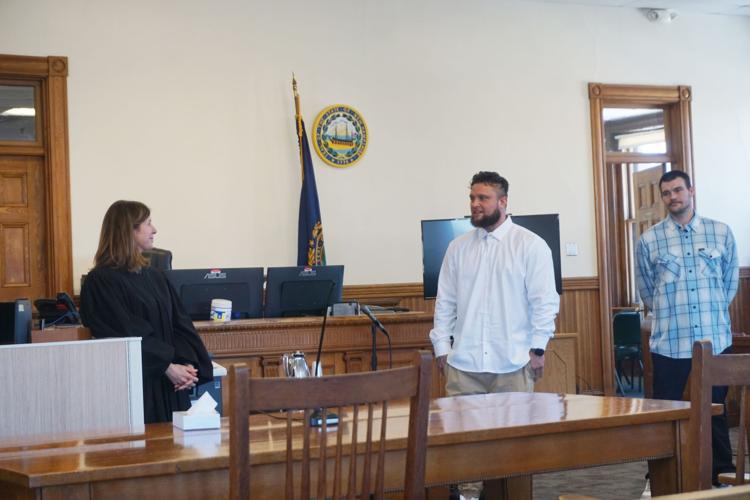
“I’m grateful for this program itself, because it gave me a second chance when my decisions could have permanently defined me,” Drake said. “My biggest motivator has been my daughter, Emily. Every decision I make today is filtered through one question: does this move me closer to being the father she deserves? My want to be present, consistent and trustworthy has pushed me to do the uncomfortable work of recovery.”
“God gave me purpose. There was a lot of unseen stuff that happened before I started this program, and since the very first day I started this program, I said that I’d complete it,” Franquie said.
Drake and Franquie received diplomas from Superior Court Justice Elizabeth Leonard, who congratulated them on their achievement and commended their hard work in navigating, and ultimately succeeding in, the program.
There were around 50 people in attendance in courtroom 1 Tuesday, many of whom graduates of the recovery program themselves. The atmosphere was jovial as those in attendance applauded the accomplishments of Drake and Franquie, who received their diplomas with distinction and gratitude.
Franquie said county staff helped him along the way.
“This program really just helped me through it and taught me a lot of things,” he said.
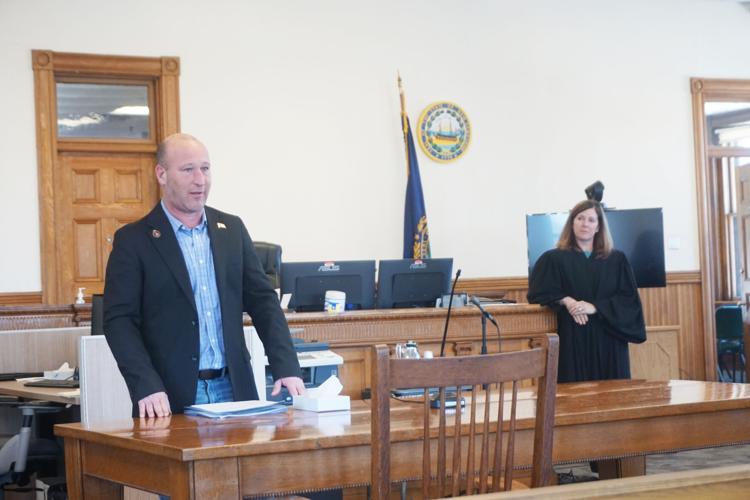
Mayor Mike Bordes congratulated the graduates.
“This is a reminder why our community matters, why accountability matters, and why believing in people, even if they’re struggling, matters,” Bordes said during the ceremony’s keynote address. “Today, we recognize and congratulate Justin Franquie and Jeremy Drake, two individuals who have walked one of the hardest paths a person can walk: the path of honesty, the path of rebuilding your life from the ground up.
“Recovery court is not an easy program, in fact, it's one of the most demanding commitments an individual can make.”
Jacqui Abikoff, executive director of Horizons Counseling Center, said recovery court started in Belknap in 2012.
“That was a labor of love among a group of stakeholders that came together, because we recognized that there was an issue that was not simply being solved by arresting people and hoping they got better in jail,” Abikoff said.
It was Judge James Carroll, former county attorney, who stressed the importance of getting such a program off the ground. Since its inception, the program has graduated more than 50 people.
“He said, ‘If we build it, the funding will come,’” Abikoff said. “I never expected it would take five years to get there, and that’s why I say it was a labor of love: every participant, from probation, to the jail, to the county attorney’s office, to the public defenders office, to Horizons, we all donated time to make sure that this happened.
“What we learned over the years is that what we knew then is not what we know now — the people that we work with are not one-size-fits-all, and that means they don’t need one-size-fits-all. And we have to individualize and tailor and recognize, at each stage of recovery, what they need to stay on the path,” Abikoff said. “Recovery is a journey, it is not a moment in time. It is not a single event that changes your life, and some people need more building blocks than others, some people take two steps back before they take one step forward.”
The Belknap adult recovery program is an intensive, non-traditional approach to the prosecution of people abusing alcohol or other drugs. Rather than focusing solely on their crimes, the program seeks to address underlying issues leading to substance abuse, and includes treatment, supervision, sanctions and incentives.
It's a five-step program, followed by a period of reduced supervision and recovery support, and intended for adults who have pleaded guilty to non-violent crimes and have difficulty stopping use of alcohol or other drugs. The program includes frequent court appearances, random drug testing, check-ins with a case manager, probation or parole officer, group and individual counseling and community-based sobriety support.
Horizons Counseling Center, the Belknap County Attorney’s Office, New Hampshire Public Defender, the District and Superior courts, the county jail, the Department of Corrections and the sheriff’s office all play their roles in shepherding individuals through the program.
For Drake and Franquie, it took over a year to complete the program, satisfying the requirements and overcoming hurdles along the way.
“This is a special day for both of you to reach this significant milestone,” said Leonard, who is the presiding judge over the program, on Tuesday. “As we know, you are successfully completing the five steps of recovery, and you are now moving on to our after care program. Most importantly, you have done tremendous work to transform your lives into sober, productive members of the community. You have demonstrated resilience, hard work, commitment to yourselves and dedication to your recovery.”


(0) comments
Welcome to the discussion.
Log In
Keep it Clean. Please avoid obscene, vulgar, lewd, racist or sexually-oriented language.
PLEASE TURN OFF YOUR CAPS LOCK.
Don't Threaten. Threats of harming another person will not be tolerated.
Be Truthful. Don't knowingly lie about anyone or anything.
Be Nice. No racism, sexism or any sort of -ism that is degrading to another person.
Be Proactive. Use the 'Report' link on each comment to let us know of abusive posts.
Share with Us. We'd love to hear eyewitness accounts, the history behind an article.