


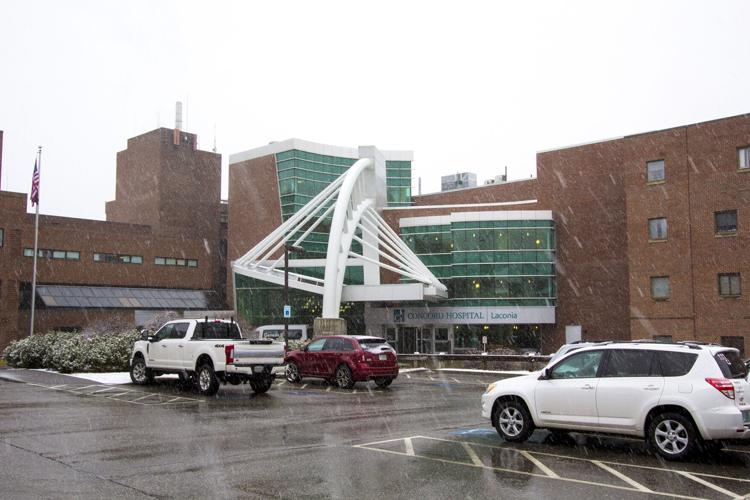
LACONIA — The emergency departments are holding patients who need hospital beds as the in-patient beds are full, with staff improvising to make room for as many as they can fit. Health care workers are giving as much as they can without, everyone hopes, burning themselves out. This isn’t a scene from the middle of the pandemic, it’s what every hospital in the state looked like just last week, and for the past several weeks.
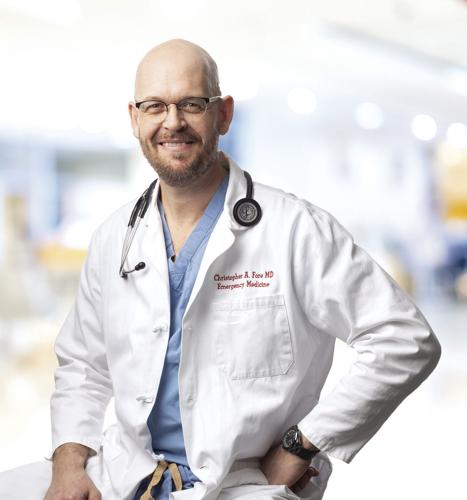
“Health care in general in the entire state is over capacity. It actually has been for more than a month, in a way that feels even more challenging than during the worst of the COVID pandemic,” said Dr. Christopher Fore, chief quality officer for the Concord Hospital health system, which includes the hospitals in Concord, Franklin and Laconia.
“Most beds are continuously filled, most emergency departments are full, the vast majority, including our three, are holding people almost constantly.”
What’s driving the need for care? It isn’t necessarily COVID. Fore, speaking on Tuesday, said Concord has been caring for between 10 and 20 patients with COVID, and between five and 10 in Laconia, at any given time, levels which have been stable for months.
It also isn’t the so-called “triple-demic” of viruses, COVID plus seasonal influenza and respiratory syncytial virus — know as RSV — which have spiked concurrently in other parts of the country.
“It just seems to be everything,” Fore said. “The patients that need care seem to be sicker, need care for longer.”
A report by the New Hampshire Hospital Association, issued Jan. 3, showed that the state’s hospitals have been at 90% capacity or greater, with people being held in emergency departments for lack of in-patient space, since July. That occupancy increased to 94.9% for the month of December.
Fore said that figure can paint the picture as rosier than the reality, because it compares the number of patients to licensed beds. However, the staffing shortage, of registered nurses and licensed nursing assistants particularly, means that not every licensed bed is even available. In Laconia, for example, there is a unit of 20 beds that has been dark, dating back to when the facility was operated by now-defunct LRGHealthcare, for lack of nursing staff.
Throughout the hospital system, Fore said that Laconia has 48 available beds, Franklin has 20, and Concord 242.
“All of those beds, as we speak today, are full,” Fore said. Because those beds are full, there are sometimes more than 10 patients in emergency departments, waiting for an in-patient space to open for them.
The crunch exists at the other end as well, Fore said. Patients who are well enough to move on to a rehabilitation facility or nursing home might have to stay at the hospital for days more than necessary, because there isn’t a room at one of those places. He called that a “back-door” problem.
“The ability to get patients to the next most appropriate care [facility] seems to be challenging," he said. "Long-term care facilities are having the same issues we are having with staffing.”
Fore estimated that the Concord Hospital system is currently operating at 10% over its available capacity.
Important work
The current situation is indicative of a system that was already operating near capacity before it was hit by a novel virus.
“Even prior to the pandemic, it was very typical for hospitals in the state to be pretty full,” Fore said.
“Since COVID, we have been continuously full. I cannot recall the last time we weren’t holding a patient in the emergency room that needed an in-patient bed.”
He said he doesn’t have the data to support it, but he theorizes that the state’s older population, which typically requires more and longer acute care, has grown. What is definitely clear, though, is that the shortage of nursing staff has only gotten worse as the stress of the pandemic has led to early retirements, or of qualified workers choosing positions outside of acute care settings.
Wages and benefits for nurses are better than they ever have been, he said, but that hasn’t been enough to change the situation on the ground.
“It has been harder and harder to recruit and retain folks. On the backside of the pandemic, the workforce has been pretty tired, there are some people who have self-selected out of that high pressure environment to do other things,” Fore said.
In some ways, he said, it was actually easier for hospitals when COVID was surging. Then, regulations were relaxed to allow hospitals to set up surge capacity in spaces such as cafeterias, which they can’t do now. There was also federal funding available for the hiring of temporary workers, sometimes called “traveling nurses,” which are sometimes twice as expensive or more than hiring a regular employee.
Lastly, during the pandemic, Fore said there was a spirit of cooperation and understanding among the public, which made it a little easier for those working to provide care during a stressful time.
“Now that we’re through the pandemic, people just want what they want, and I don’t blame them at all,” Fore said.
“Naturally, the community is expecting the service that they used to get, and it’s hard to provide that all the time.”
Those who are working to provide that care are doing so commendably, Fore said, and have stayed on the job, in a stressful situation, even while they have had options to leave.
“People are going above and beyond to do what they can, everybody is working as hard as they can,” Fore said.
“The thing about health care is, even though it’s hard work, it’s important work.”
Seeking care
There are things the public can do to protect themselves and to reduce the strain on the system, according to the report from the NH Hospital Association.
Emergency departments are still the best place to seek care for serious concerns, such as a suspected stroke, fainting or difficulty breathing, for allergic reactions or for traumatic injuries.
Patients with moderate concerns, such as back pain, cold and flu symptoms, minor cuts and burns, even broken bones and sprains, should first visit an urgent care or walk-in center, the report said.
“Hospitals exist to serve New Hampshire residents when they need it most, particularly in emergencies,” said Steve Ahnen, president of the hospital association.
“Our capacity to provide emergency care must be protected for those who need it most.”
Further steps the public can take include getting vaccinated against COVID-19 and the seasonal flu, staying home when feeling ill, practicing good hand hygiene, and staying in touch with primary care providers when symptoms first appear, and if they worsen.
Lastly, both the hospital association and Fore said patients who think they might need acute care should go to their local emergency department, and that they should be considerate of the people working there.
“Have faith, we’re doing everything we can,” Fore said.
“We really do want them to seek services, because that’s what we’re here for.”


(2) comments
It starts where it always starts, poor management and a toxic work environment.
Loosing good people while retaining the problem managers. Morning huddle refered to as the "fight club". When they figure it out, it's too late. Closing floors. Then they start reopening but add patient load to already struggling Nurses.
Then they quit. Problem continues.
Glad they spent all that money on the facade.
I had the misfortune to go to the ER three months ago. Luckily, I wasn't sick enough to have to stay, but after a day of agony waiting to be seen I realized that the majority of the people seeking medical help were obese, very old or very young. At least two appeared to have psychiatric problems.
If we are really serious about having accessible medical care in the ER's and hospitals we need to address the lifestyle choices that are putting people there. Obesity, smoking, drug and alcohol abuse, poor diets and lack of exercise contribute heavily to our strained hospital systems. Our aging population is obviously an issue (and not reversible) but Medicare's mandatory 3 day hospital stay to qualify for payment is .
Sadly, my day in the ER didn't diagnose my problem which turned out to be Shingles. After numerous tests I was told I "probably" had a muscular/skeletal problem. I finally diagnosed it myself researching on WebMD and the Mayo Clinic website.
Welcome to the discussion.
Log In
Keep it Clean. Please avoid obscene, vulgar, lewd, racist or sexually-oriented language.
PLEASE TURN OFF YOUR CAPS LOCK.
Don't Threaten. Threats of harming another person will not be tolerated.
Be Truthful. Don't knowingly lie about anyone or anything.
Be Nice. No racism, sexism or any sort of -ism that is degrading to another person.
Be Proactive. Use the 'Report' link on each comment to let us know of abusive posts.
Share with Us. We'd love to hear eyewitness accounts, the history behind an article.