


Doctors see encouraging results with medication-assisted drug treatment
By THOMAS P. CALDWELL, LACONIA DAILY SUN
While some people have expressed concerns about treating drug problems with other drugs, doctors say there is a clear scientific consensus that medication-assisted treatment works well in dealing with opioid addiction.
The treatment combines the use of medication with counseling services that offer coping skills and referrals to other agencies that can handle specific issues.
Doctors Paul Racicot and Paul Friend, who are associated with LRGHealthcare’s recovery center, have been treating patients with Suboxone, a formulation of buprenorphine, for nearly two years, and Racicot says the results have been better than expected.
“Dr. Friend and I went into this and were surprised,” he said. “We didn’t have a lot of great tools for dealing with these addictions until Suboxone came on the scene.”
In the past, methadone was the drug of preference for dealing with opioid addiction, but the problem, said Racicot, is that it requires high doses.
“It’s a long-acting, dangerous narcotic, and those trying to use methadone for treatment had to go in every day, which made it hard to hold a job. There was also a certain amount of euphoria with it, causing disorientation.
“Then Suboxone came along, and patients don’t gain a tolerance and don’t have to have dose increases. It’s a very potent blocker of opioid receptors, and also brings a fair amount of pain relief with it. It’s a legitimate pain medicine people do well on,” he said. “The other fallout I never expected was almost all of our patients are able to work. Most are very excited to be working for the first time in years. It stops the cycle: They’re not committing crimes, and not going to jail.”
The recovery clinic, which includes a partnership with Horizons Counseling, of Gilford, initially operated out of the basement of Franklin Regional Hospital, but now also has a Gilford branch at LRGH Occupational Health.
“The clinic was one of the first not-for-profit medication-assisted treatment centers in the state run by a hospital system,” Racicot said. “That meant a lot more access, especially with expanded Medicaid.”
He said, “One of the reasons Dr. Friend and I became interested in this is because, as ER and family physicians, we were seeing kids we knew, we were taking care of mother and son patients together. The big push is to break the cycle. If a child grows up in an addicted family, it’s hard for parents to be parents, and they are looking at drug and alcohol use by their children. Show me a child that’s hungry, and I’ll show you a family where there’s addiction, because with the cost of drugs, often times there is neglect.”
The two doctors have relied on studies by Dartmouth-Hitchcock Medical Center in Lebanon, which found changes in brain chemistry as a result of the use of opioids. With chronic opioid addiction, Racicot said, the receptors get damaged and people need more of the drug to get the same effect.
“But there’s a certain healing with Suboxone,” Racicot said.
The drug helps to overcome the chemical deficit that develops in the brain of a person with an opioid addiction and can prevent the symptoms of withdrawal and drug craving without the feeling of euphoria that methadone produces.
Rick Silverberg of HealthFirst Family Care Center said that agency had been offering medication-assisted treatment, as well, until the doctor in charge, Steven Youngs, died in a house fire in January.
“We have sent three nurse practitioners for training,” Silverberg said, adding that they are waiting for the state to issue their certifications. Meanwhile, HealthFirst is referring clients to the LRGHealthcare Recovery Center.
“When we do Suboxone treatment, it’s always with medication and counseling together,” Silverberg said. “It’s very important to give people thorough counseling in alternative methods and seeing what contributes to addition, and see that they have ongoing support.
“There is a lot of discussion about whether Suboxone works, and our experience is that it doesn’t work for everybody. And Suboxone is not forever; we usually do not prescribe it for more than a year. Counseling is the most critical piece.”
He noted that clients also must agree to urine and blood testing to make sure they are not taking other drugs during treatment.
Daisy Pierce of Navigating Recovery of the Lakes Region said her agency supports multiple pathways to recovery.
“If it’s the right fit, we’re more than happy to link them to that resource,” she said. “When we encourage them to go to that type of clinic, it’s with counseling, blood tests, etc.”
She agreed that medication-assisted treatment does not work for everyone, and said they have a licensed alcohol and drug counselor make the determination of the best treatment.
“We refer clients back and forth to get a wrap-around, multi-pathway to provide the most skilled and best support,” she said.
For decades, there was a common concern that medication-assisted therapies merely replaced one addiction with another, and the use of methadone confirmed that view. Because the brain was requiring higher doses, and providers often prescribed inadequate doses, many patients returned to opioid use.
The more positive results from Suboxone have not totally removed that concern.
Randy Bartlett, who operates Riverbank House, said he is “emphatically opposed” to medication in the treatment of opioid addiction. His approach is to require abstinence while offering a long-term residential program.
“While our program is founded upon the Twelve Steps of Alcoholics Anonymous, we honor the many-pathways-to-recovery approach endorsed by experts,” Bartlett states on his website. “We stay mindful of our recovery through exploration into the principles of Buddhism; the daily practice of meditation and Yoga; a community code of non-aggression, collaboration, accountability, and mutual respect; self-reflection; and the pursuit of constructive passions.”
Racicot conceded there are unknowns with Suboxone, such as how long to stay on the medication. “Not for life in most cases,” he said, “but if the drug is working well and doesn’t have side effects, and we’re also treating hypertension or diabetes, we’re not uncomfortable using it a long time. This is a drug I’ve been excited about, and I’ve been doing addiction medicine for 25 years. It’s a godsend.”
Racicot said patients do much better with medication-assisted treatment than with counseling alone. “At one month, a much higher percentage remains in treatment,” he said, “and they will stay and absorb a lot more. The hardest thing is getting through the first few weeks of counseling and structured treatment programs.”
The drug also appears to help with alcohol and other areas of addiction, he said, but he conceded that Suboxone does not work in the treatment of crystal methamphetamine addiction. “There’s no good medical treatment for crystal meth,” he said.
As to negative effects from Suboxone, Racicot said, “We haven’t found any patients that can’t tolerate it. And when a medication-assisted treatment center comes into an area, overdose deaths drop by 50 percent. We’ve seen that in Laconia and Franklin, where overdose deaths have been halved in the last couple of years. That statistic holds up.”
As to counseling, Racicot said the dropout rate for treatment is 50 percent at the halfway mark nationally, but 60 percent are still in treatment when assisted by medication.
“We communicate closely with Horizons and other agencies and counselors, but also have drug screenings to be sure that they are free from all other drugs. It has to be seamless between medication and counseling. One is not more effective than the other, but together they are highly effective.”
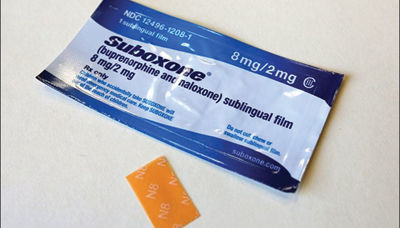
Suboxone is proving helpful in treating opioid addiction, according to LRGHealth care doctors Paul Racicot and Paul Friend. (Courtesy Step One Rehab)


(0) comments
Welcome to the discussion.
Log In
Keep it Clean. Please avoid obscene, vulgar, lewd, racist or sexually-oriented language.
PLEASE TURN OFF YOUR CAPS LOCK.
Don't Threaten. Threats of harming another person will not be tolerated.
Be Truthful. Don't knowingly lie about anyone or anything.
Be Nice. No racism, sexism or any sort of -ism that is degrading to another person.
Be Proactive. Use the 'Report' link on each comment to let us know of abusive posts.
Share with Us. We'd love to hear eyewitness accounts, the history behind an article.