


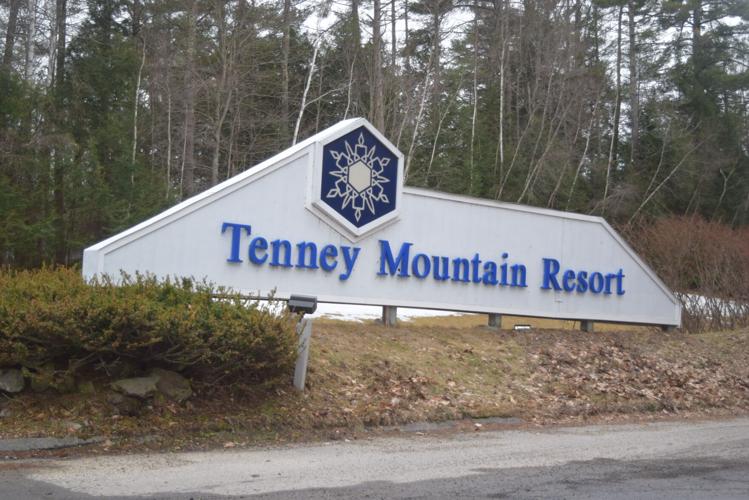
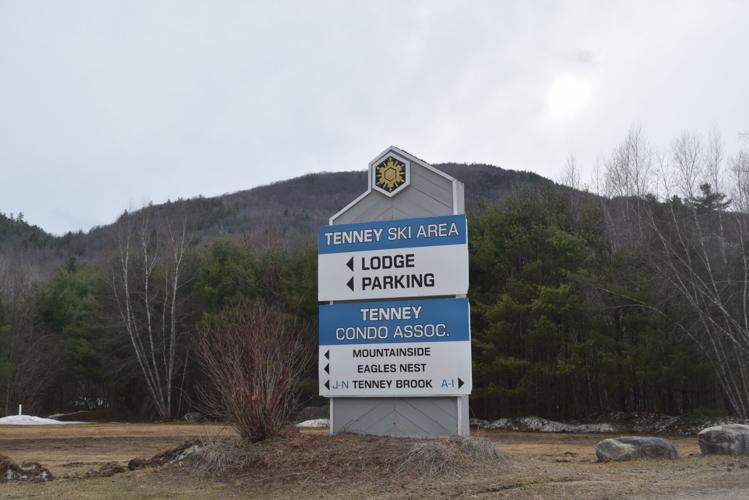
PLYMOUTH — There are big plans for decades to come at Tenney Mountain Resort, following an overwhelming vote at Town Meeting to amend a zoning ordinance to create an overlay district in the west side of town.
“Without that vote, we couldn’t expand Tenney Mountain,” said owner Steve Kelly, who runs North Country Development Group. “We need to be able to add residential areas, hospitality with hotels, to compete with other mountains. The plan is to be one of the economic drivers of New Hampshire.”
Kelly gave examples of mountains north of Tenney, like Loon and Waterville Valley, saying they bring ample revenue to their regions.
“We plan to do the same with Plymouth.”
The amendment, known as Tenney Mountain Overlay District, also called TMOD, was approved by voters 530-160 in Article 3 on the ballot. According to Planning and Economic Development Director Joseph Perez, the overlay district includes land west of Route 3A, also known as Mayhew Turnpike, and Rumney Route 25. It will also include land within 500 feet east of the road.
The district allows for various recreational and commercial uses, and according to information provided by the town, it can be used as an optional alternative to the underlying zoning district for the promotion of recreational and commercial development.
Property owners are now able to apply for conditional use permits from the planning board for a planned unit development. In a PUD, a wider variety of uses are allowed, and any PUD more than 250 acres can propose to be included in a “village core."
“The village core could help centralize the most intensive part of the development to an area with a village feel,” Perez said. “Rather than having a mountain that is one type of building, there could be a village.”
Perez related the change to what is currently in place in the Town of Waterville Valley, and allows for a greater density of commercial, residential, recreational, and other uses. It also increases height allowance in the area.
“It is a pretty big change for the zoning in that area,” Perez said. “It’s been an area that the town has been interested in seeing more development in for quite some time.”
Perez said the 2018 Master Plan outlines the area commonly referred to as West Plymouth for future growth, and calls for the town to promote mixed use, recreational and housing expansion. However, this vision has long predated the plan, even though the amendment proposal was fairly new.
These zoning changes came up in 2023, when the town was working on a housing needs study and assessment. Perez said a Housing Opportunities Planning Grant program was created, and the town was assisted by the Barrett Planning Group.
Perez said the housing committee held meetings, conducted surveys, and assessed the needs for housing.
“One thing that came up again and again was the desire to see development in this area of town,” Perez said. “The people really supported that."
In 2024, the planning board and the Barrett Group began working on zoning amendments, but waited to add it to the ballot. This year, the board decided unanimously to bring it before voters.
The largest change, he said, is to allow for PUD. He said there were somewhat similar tools in zoning, including cluster or open space developments, but Plymouth didn’t have “PUD proper.”
“The town had a strong interest in making it an area of a wide mix of uses, where the town wasn’t standing in the way of creativity, and maintaining this mix of recreation, housing a commercial development,” Perez said.
He said it allows for a “bigger picture view” of developments that could be on a larger tract of land, and dimensional standards could be waived to allow more flexibility for the developer.
Perez said there haven’t been any specific applications in the district yet, but he knows North Country Development has strong interest in proposing large-scale ideas.
“North Country Development is a key property owner and player in that area, and owns the ski area,” Perez said. “But the zoning amendment itself is not intended to be for any particular project or person. It could be for anyone who falls in the district.”
The amendment, he said, would allow for recreational ski area uses.
“The ski area is really valued by a lot of people here in town, and this is something people would want to see continue to operate.”
Tenney Mountain has gone through a series of owners, and had ups and downs over the years. Under Kelly’s ownership, the ski mountain has been open for skiing, has dining options, and has hosted live music and entertainment at the lodge.
The town held a public hearing regarding the amendment in November, and on March 4, Kelly held a meeting of his own to quell any concerns. He wanted people to come ask questions, and also show them he isn’t just another Boston businessman coming to the area.
While that connotation is technically factual, Kelly said he has long had ties to New Hampshire, with homes in Wolfeboro, then Meredith. He and his now-wife got engaged at the Woodstock Inn, have vacationed on Lake Winnipesaukee, and have been doing business in New Hampshire since 2008. He also wanted people to know how dedicated he was to the success and future of Tenney Mountain.
“I want to do something good for the world, and here is a place where we are going to create a lot of good jobs,” Kelly said. “It will be really important for multiple generations.”
Kelly said Tenney Mountain Overlay District allows development of commercial buildings, builds housing, and also creates jobs.
“Those are fundamental factors to start economic growth,” Kelly said. “We want to build an economic ecosystem where people can live and work. It’s going to be a huge benefit to the community.”
Kelly said it was always part of the plan when he purchased the resort, knowing this was bigger than just skiing. He said Tenney Mountain needs to be going all four seasons to generate revenue, otherwise they won’t be able to afford things like snowmaking, or building new lifts.
He is looking at the long-term — 20 to 25 years out — and said the goal is to continue working with the town, Plymouth State University, and engineers to design this ecosystem. Kelly said it took almost two years of due diligence of engineering the mountain, including a wetland analysis and devising where roads can and can’t go, and also where to locate new buildings.
By working with the town’s planning board, Kelly said they cannot only promote growth, but now with overlay district, protect the environment of the area.
With the change, Kelly can start talking to investors to get the ball rolling on the first phase: residential development in a variety of scales. He envisions apartments for the workforce, which include snowmakers, lift crew, and food and beverage staff. He said this would involve single-family homes, and also condominiums to touch on the luxury market.
“There is demand for all of those, but central New Hampshire is also lacking in quality housing,” Kelly said.
Also in the first stage will be direct attention to the ski area, including replacing The Hornet. The lift is from 1964, and while it operates well after being rebuilt, it is a slow, double lift. It is a fixed grip lift, which was the custom 60 years ago, but the top-of-the-line ski areas all have high-speed lifts now.
“For us to be competitive, we need a high-speed, detachable lift,” Kelly said. “The ski community is going to want to see us step up and do this.”
Kelly also has plans to build another retention pond to expand snowmaking capabilities. He plans to look at developing parts of the property for an industrial park to attract businesses to the region, as well.
There is no true timetable, as Kelly said every aspect to make the plan a reality takes time, through finding investors and gaining planning approvals.
Another big win for the local community, Kelly said, is the ability to tend to the area’s road infrastructure, which he said has been in “serious disrepair.” Not only will this make skiers and local residents happy, but it will be good for public safety vehicles responding to emergencies.
He was especially excited about the village core, saying it could create a “dynamic live, work, play environment." With the concept allowing for added density around the village core, it will create a potential location for businesses to come for a retail component, as well.
“Village cores and PUDs are really important, because they become hub of the wheel of development,” Kelly said.
Over the next year, Kelly said he and his management group will be meeting with investors so they can make a push toward the design, permit and construction stages.
“There will be multiple phases over the next 25 years,” Kelly said. “We plan on developing out Tenney Mountain, and will be in constant production mode during that time.”


(0) comments
Welcome to the discussion.
Log In
Keep it Clean. Please avoid obscene, vulgar, lewd, racist or sexually-oriented language.
PLEASE TURN OFF YOUR CAPS LOCK.
Don't Threaten. Threats of harming another person will not be tolerated.
Be Truthful. Don't knowingly lie about anyone or anything.
Be Nice. No racism, sexism or any sort of -ism that is degrading to another person.
Be Proactive. Use the 'Report' link on each comment to let us know of abusive posts.
Share with Us. We'd love to hear eyewitness accounts, the history behind an article.