


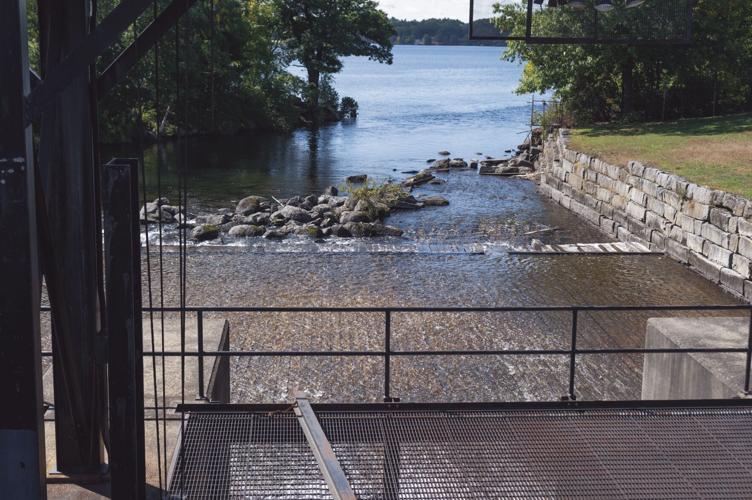
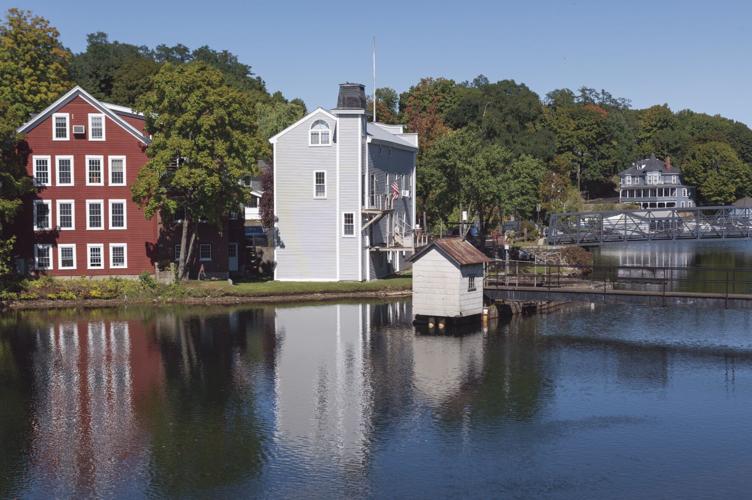
New Hampshire's lakes have some preparation to do before fall comes. While Lake Winnipesaukee isn't included in the state's annual schedule of drawdowns, Opechee and Winnisquam, its downstream neighbors, are on the schedule every other year and this year, it’s their turn.
The New Hampshire Department of Environmental Services started lake drawdowns in September and Lakes Region water bodies were beginning to be drawn down this week.
Drawdowns are controlled releases of water through dams, conducted each year to prevent winter ice damage to shoreline properties and reduce flooding in the spring. Drawdowns also give shoreline property owners an opportunity to perform maintenance, according to NHDES.
Lake Opechee in Laconia was set to be drawn down 5 feet from full starting on Oct. 14, Lake Winnisquam in Belmont was drawn down 2 feet on Oct. 14, drawdown on Webster Lake in Franklin began the same day and will reduce the water level to 2 feet below full. Lake Kanasatka in Moultonborough, which feeds into Winnipesaukee, will be drawn down Nov. 4 to 1.5 feet below full.
It was expected to take about two days to pass the water from Opechee downstream through Winnisquam. Flows will be increased at the Lakeport Dam to refill Opechee Lake on Monday, Oct. 28, and the level on Winnisquam is expected to rise late in the day on Tuesday, Oct. 29.
Lake Winnipesaukee is notably absent from the list, and is not included because it’s not purposefully drawn down in the fall. After Columbus Day, releases from the Lakeport Dam are reduced from 250 cubic feet per second to between 30 and 50 cubic feet per second for up to two weeks to allow opportunity for maintenance of the dams and hydropower facilities on the Winnipesaukee River, according to NHDES.
“It’s a pretty standard drawdown this year,” NHDES Chief Operations and Maintenance Engineer Dan Mattaini said. “It’s been very dry the last couple of months.”
While in years past New Hampshire has faced flooding resulting from high water levels and rainfall, this year that isn’t a concern during the drawdown period, Mattaini said. When the ground is dry, as is the case this year, more water is absorbed and the risk of widespread flooding is greatly reduced.
The purpose of drawdowns is largely to create space in bodies of water to contain spring runoff, when snow and ice melts. Additionally, the risk of ice damage from high water levels is abated by drawing down the lakes. That risk is present for both retaining walls and for docks. When ice breaks on the surface, wind can move large chunks around and cause structural damage to those features on the lake.
“Those are two examples of that,” Mattaini said.
On average, Lake Winnipesaukee stays 15 inches below its spring full level because of evaporation and releases from the lake, which occur throughout the summer. Those factors, combined with the reduced amount of water released through the Lakeport Dam after Columbus Day, make it so the lake level generally remains the same level through December.
“In July and August in particular, it really dried up,” he said. “The rainfall really dropped off in early June.”
The big lake may be lowered again in January to 2 feet below full depending on the amount of snow on the ground this winter. If the lake’s level is too low, large boats run the risk of hitting rocks.
“Our goal is to fill that lake before June 1,” he said.
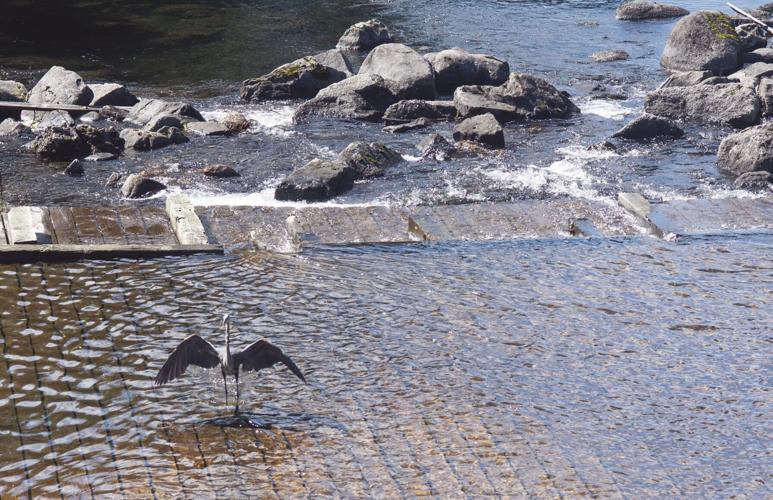
Some lakes are lowered through a more primitive but effective method than through the use of mechanical dams, like in Lakeport. In some parts of the state, stop-log bays control the outflow of water. Stop-log bays are beaver dam-like piles of logs — state dam operators slowly remove logs from the top of the pile, week by week, in order to allow a controlled amount of water to leave the waterbody.
Other water bodies through the Lakes Region that experienced drawdown this week include Suncook Lakes and Barnstead Parde in Barnstead, and Crystal Lake and Shellcamp Pond in Gilmanton, both on Oct. 14.
The waterbodies to be drawn down are all controlled by dams owned by NHDES and larger lakes generally don’t reach their complete drawdown level until mid- to late March.
For the full drawdown schedule, visit des.nh.gov/news-and-media/state-announces-its-2024-fall-drawdown-lakes.


(0) comments
Welcome to the discussion.
Log In
Keep it Clean. Please avoid obscene, vulgar, lewd, racist or sexually-oriented language.
PLEASE TURN OFF YOUR CAPS LOCK.
Don't Threaten. Threats of harming another person will not be tolerated.
Be Truthful. Don't knowingly lie about anyone or anything.
Be Nice. No racism, sexism or any sort of -ism that is degrading to another person.
Be Proactive. Use the 'Report' link on each comment to let us know of abusive posts.
Share with Us. We'd love to hear eyewitness accounts, the history behind an article.