


LAKES REGION — People in Gilford and Meredith celebrated Earth Day on Saturday by making environmental crafts at the Gilford Public Library and participating in interpretive dance at Hesky Park.
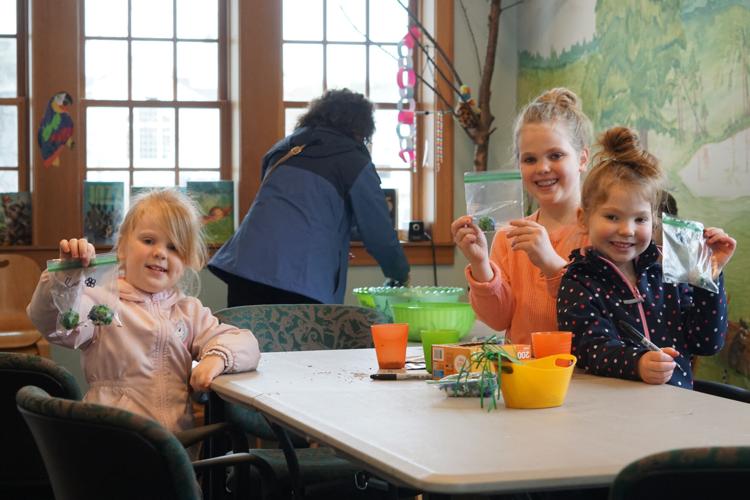
Gilford Public Library children’s librarian J’Lillian Mello hosted an event in the children’s room where young conservationists created what she dubbed "seed bombs." The bombs, created using strips of paper, were constructed around packets of seeds to be later planted.
The materials used to construct the bombs are biodegradable so there would be no detrimental impact to the environment when planting.
Mello came across the idea while searching on the website Pinterest and thought it would be the perfect craft to celebrate Earth Day for young children. Lots of young children filed in and out of the library with their parents on Saturday morning to construct bombs for themselves.
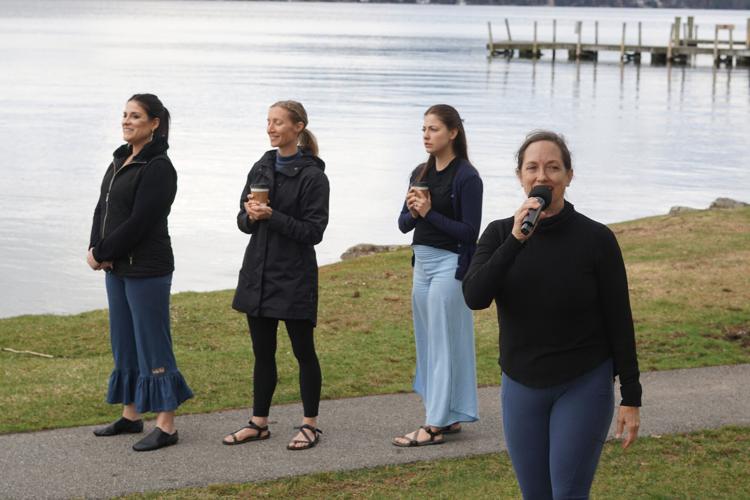
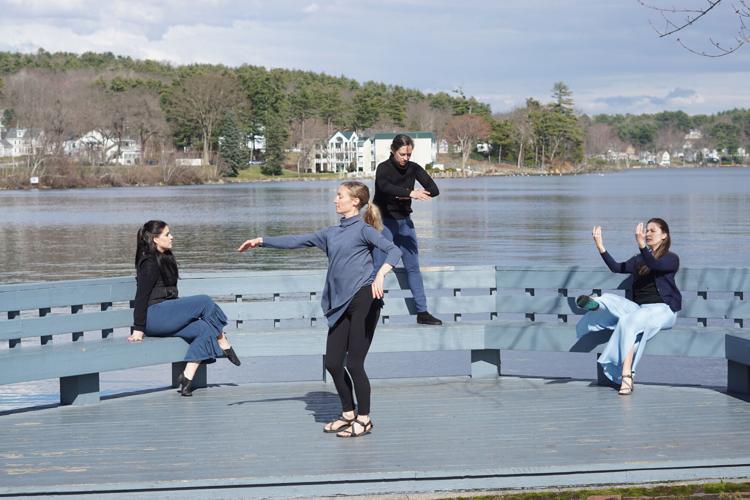
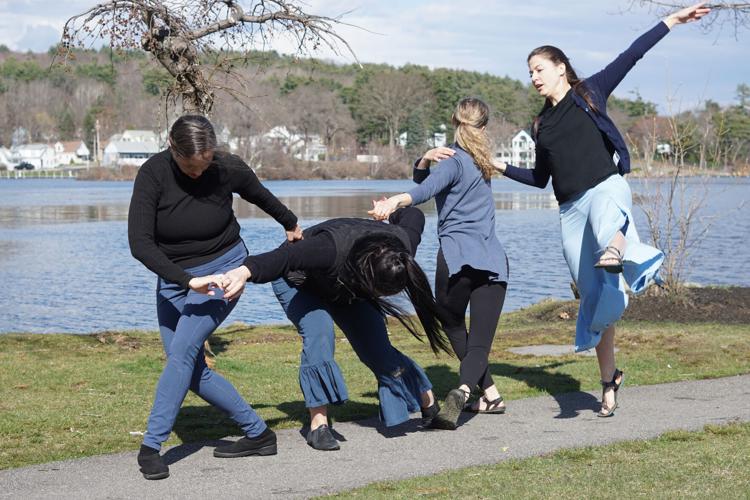
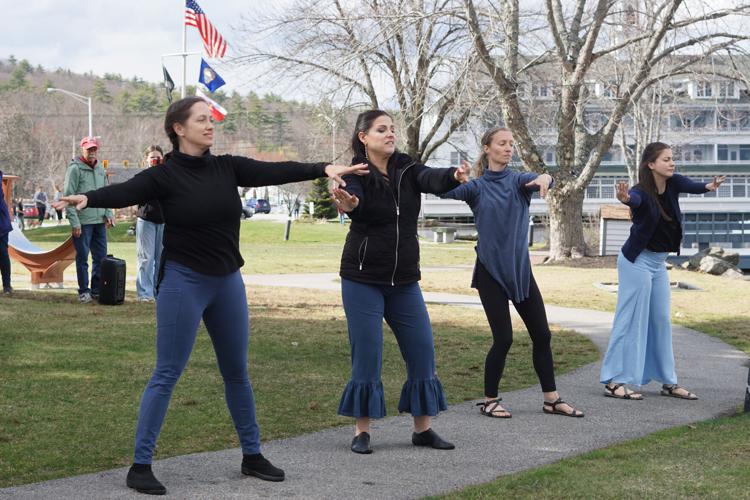
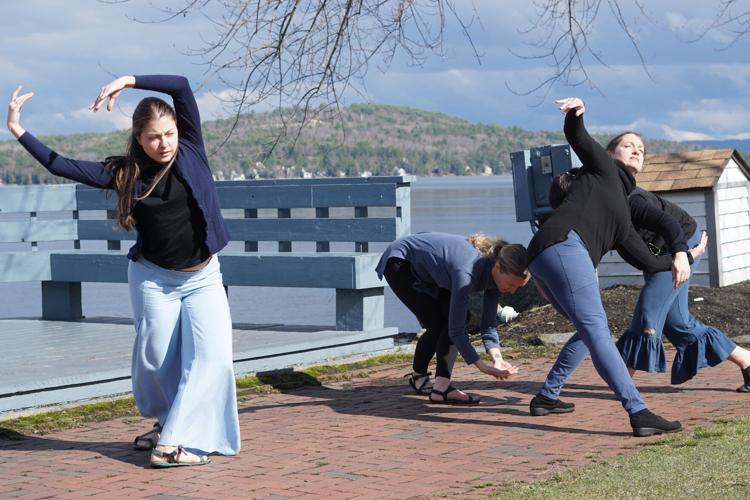
And then on Saturday afternoon at Hesky Park in Meredith, dancer Gaynelle Gosselin of Florida led a crowd through an interpretive dance routine to draw attention to the environment and to the waterways of the Lakes Region.
Dancing alongside Gosselin were Stephanie Whitney, Alyssa Desruisseaux and Kelly Diamond. The dance routine was live-streamed simultaneously across 33 states and Puerto Rico, which also streamed their own similar performances for the special day. Gosselin led women in the crowd through a traditional Algonquin water song in honor of the environment.
This water dance, which originated in Florida 12 years ago, occurs every two years, Gosselin said. The event in Meredith was the first one to ever be held in New Hampshire.
Following the water blessing and a quick dance lesson, the dancers were off, moving through the park throughout their dance and ending at the park pavilion. The beginning and ending of the dances were synchronized across all the 33 states and Puerto Rico, but all of the dance moves in the middle were up to each group to create.
“I’m just thrilled that we can use dance and creative movement to bring attention to our waterways,” Gosselin said.
“I think that it's important for us to honor the people who stewarded this land for thousands of years,” Gosselin said.
Lake Winnipesaukee Association President Patricia Tarpey spoke regarding the importance of protecting the waterways of the Lakes Region at the end of the event.
“We are seeing more cyanobacteria blooms happening in our water bodies; having warmer summers isn’t going to help,” Tarpey said. “That contributes to what cyanobacteria like, they like it hot.”
Tarpey said the changing climate through the winter is having an effect on the environment and local waterways.
“But on the other end, with the winters having less snow, less ice cover, and we’re seeing more rain events than snow,” Tarpey said. “So the issue with that is if you have the rain hitting frozen ground, it’s running off into the lake and bringing everything with it.”
Tarpey noted that this year represented the earliest ice-out in the history of the Lakes Region, adding that actions taken outside of the water also impact local water quality.
“Basically, we all live in a watershed,” she said. “If you know the term you can look on Winnipesaukee, see all of your high points and the rain hits there and it flows this way and it eventually makes its way into the lake. Everything we do on the land impacts our waters.”
She noted that excrement from dogs and geese can have a harmful effect on bacteria growth in Lake Winnipesaukee and in other local water bodies.
“The geese love the open areas, the grassy areas, they can see any predators coming. They’ve got a quick, easy access for escape,” she said. “It’s been recommended if you have even three foot shrubs and a nice, vegetated buffer, [so you] don’t make it so easy for the geese.”
Lakes Region Conservation Trust Conservation Easement and Data Specialist Matt Morris said keeping regional lands as wild as possible helps to ensure better water quality.
“At the Lakes Region Conservation Trust, we work to conserve the natural areas in the Lake Winnipesaukee watershed and in any other nearby watersheds,” Morris said. “By preserving land and keeping it wild, it really helps filter rainwater and runoff as it comes down, and so it can collect in the soil and the lands before rushing all toward the one central place.”


(0) comments
Welcome to the discussion.
Log In
Keep it Clean. Please avoid obscene, vulgar, lewd, racist or sexually-oriented language.
PLEASE TURN OFF YOUR CAPS LOCK.
Don't Threaten. Threats of harming another person will not be tolerated.
Be Truthful. Don't knowingly lie about anyone or anything.
Be Nice. No racism, sexism or any sort of -ism that is degrading to another person.
Be Proactive. Use the 'Report' link on each comment to let us know of abusive posts.
Share with Us. We'd love to hear eyewitness accounts, the history behind an article.