


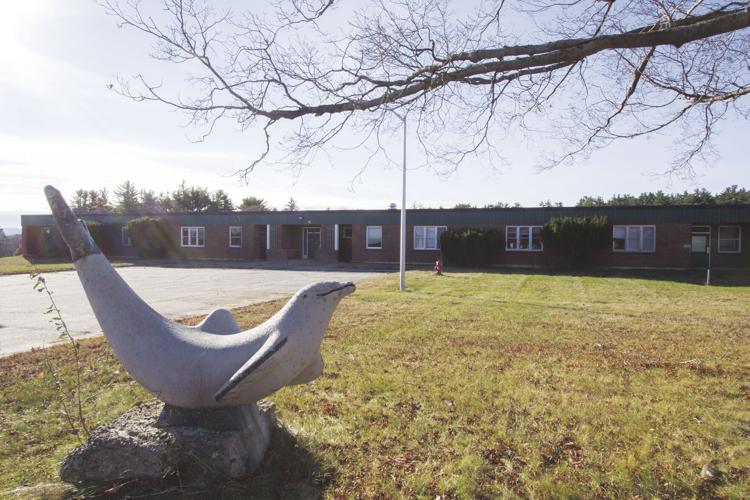
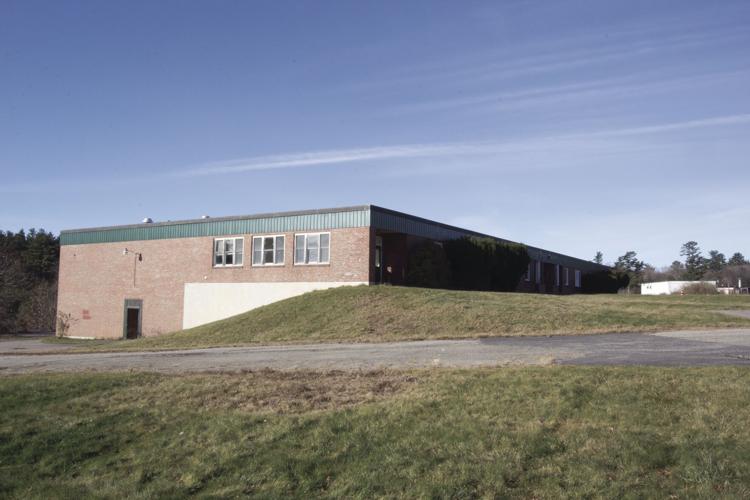
LACONIA — A one-season, low-barrier, cold weather emergency shelter with 30 beds, operated by Lakes Region Mental Health Center, will open Thursday in vacant space on the Laconia State School property, thanks to a one-time federal grant.
Located in the now-empty Dube building, the shelter will supplement the 30 beds currently offered by Isaiah 61 Cafe on the coldest nights of the year, and serve the same population, according to Lakes Region Mental Health Center.
The funding of $95,000 comes through the New Hampshire Department of Health and Human Services Homeless Assistance and Prevention program. It will serve unsheltered people across Belknap County when outdoor temperatures hover between 25 and 30 degrees and below, or when rain, ice and snow jeopardize outdoor safety, said Det. Eric Adams, prevention, enforcement and treatment coordinator for the Laconia Police Department.
“If it’s 32 degrees, rain and windy, we’d open the shelter,” Adams said.
Beth Vachon, director of public relations and development for LRMHC, said it will function as overflow capacity when Isaiah 61 Cafe’s dormitory is full, and a bus will transport individuals to and from the auxiliary shelter in the city’s north end from a pick-up point near the soup kitchen on New Salem Street.
“It’s important because of the dramatic increase of people experiencing homelessness in the city, and the lack of beds during extreme weather conditions,” Mayor Andrew Hosmer said Tuesday. Some estimates put the population of individuals currently experiencing homelessness in Laconia at 300 to 400, he said, and there are fewer than 100 beds available.
“We’ve seen a huge increase in our shelter population” since before the pandemic, and safety concerns are peaking as winter approaches and temperatures drop, Adams said.
“We’re trying to do what we can to have a strategic plan for the city. It’s not just Laconia,” he said. As a hub for the Lakes Region, “We have to make sure it includes the surrounding communities.”
If there’s a bad winter, “I’m nervous and I think the community should be, too,” Adams said. “The last thing we’d ever want is for someone to die of hypothermia or exposure.”
This one-season shelter will be open from 7 p.m. to 8 a.m. on the coldest nights and during extreme conditions from Dec. 1 through April 1, 2023. The temporary use of state property was approved Nov. 22 at meeting of the governor and Executive Council.
“We have a need and I appreciate the governor’s action on this,” Hosmer said.
Belknap County was the last county to mount a stand-up emergency shelter to handle increased statewide demand this winter, or to apply for available federal funds funds for this purpose, according to state and local experts on homelessness. The use of the state school property, which is expected to be sold to a developer this spring, was approved by Commissioner Charles Arlinghouse of the New Hampshire Department of Administrative Services, which manages state-owned real estate.
Throughout this fall, patrol officers in Laconia have witnessed an alarming uptick in people seeking shelter space and living in cars and outdoors, often clustered in encampments that shift location.
Though the use of the Dube building is not permanent, it’s a step in the right direction, Hosmer said. The city ultimately will be tasked with finding a location that can be used each year from December through early spring. The city’s present options, including the Salvation Army’s Carey House, Belknap House and the 30-bed space at Isaiah 61 Cafe, are not enough to meet climbing numbers, Adams said.
“This is a short-term solution to a long-term issue,” Hosmer said. Money to operate the shelter, which will be open to individuals who are actively using substances but are not allowed to use them on site, will come from American Rescue Plan funds channeled through the New Hampshire Department of Health and Human Services.
Lakes Region Mental Health Center is well positioned to operate the shelter because of successfully managing a homeless shelter during COVID, Vachon said. The community mental health agency has hired a manager and is adding overnight staff who will maintain “eyes on the room,” she said.
LRMHC’s housing program currently works with chronically unhoused individuals with co-occurring mental illness, including addiction.
“Our goal is always to provide them with resources to be successful and independent long term,” Vachon said. “Our community doesn’t want to turn anyone away.”


(1) comment
This is a problem that will be with us forever and a day. The subject population for whatever ever reason does not participate in a solution. That problem has to be corrected and you cannot do that.
Welcome to the discussion.
Log In
Keep it Clean. Please avoid obscene, vulgar, lewd, racist or sexually-oriented language.
PLEASE TURN OFF YOUR CAPS LOCK.
Don't Threaten. Threats of harming another person will not be tolerated.
Be Truthful. Don't knowingly lie about anyone or anything.
Be Nice. No racism, sexism or any sort of -ism that is degrading to another person.
Be Proactive. Use the 'Report' link on each comment to let us know of abusive posts.
Share with Us. We'd love to hear eyewitness accounts, the history behind an article.