


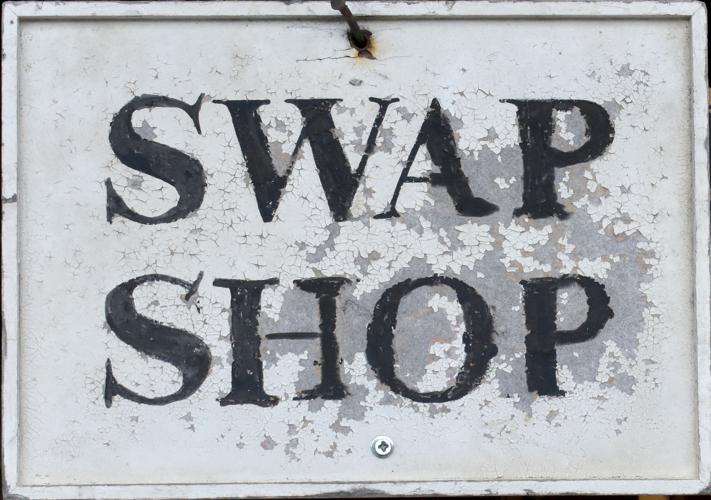
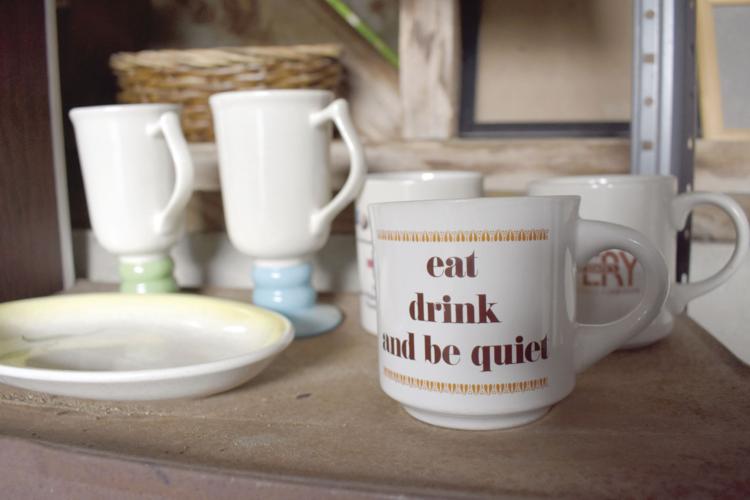
Yankee frugality dictates that one should never throw away something that might be of value in the future. Combine that with the New England tradition of gathering at “the dump” on a Saturday to discuss the issues of the day, and there are the makings of a social phenomenon that has led to the creation of swap shops at some local transfer stations. People drop off items they no longer want, that others may want to take home.
The Bristol Boutique, in a small building by the burn piles and demolition containers, is something of an anomaly – people pay for the items they want. The attendants won’t accept items that are not in working condition, so people know what they buy will not have to be thrown away — although they are told, “Bristol has an excellent return policy.”
That is, until town selectmen recently decided to phase out the facility.
Not everyone is pleased with that move. There are regulars who show up each week to see what’s there in hopes of finding an overlooked treasure.
“There are a couple of reasons,” Town Administrator Nik Coates said in an email, when asked what prompted the decision.
“The first is employee safety. When an employee handles money, there’s a risk that something could happen to him/her. With [the] boutique at the lower portion of the transfer station, the employee down there is on an island, so to speak. God forbid, anything could happen to him/her and no one be aware until many hours later.
“Another reason is space. When we move operations to the top” — Bristol is reconfiguring and improving its transfer station — “there just isn’t going to be room for the items. With space at a premium, the priority will be to make sure the customers have the ability to navigate the Transfer Station safely and there is enough room to handle the highest priority items like [municipal solid waste] and recycling.”
Bristol, like many towns that had relied upon single-stream recycling, decided after the recycling market collapsed that it made no sense to continue recycling under current conditions. The reconfigured transfer station will have bins for separating the recylables, making them marketable so recycling can return.
“We will continue to consult with Superintendent Mark Bucklin in deciding how best to operate the Transfer Station,” Coates wrote.
Gilford also is upgrading its transfer station, and Town Administrator Scott Dunn says it will reopen its swap shop when it becomes fully operational.
Before closing the old swap shop, Dunn said the town’s only concern was making sure it didn’t get abused. “People were grabbing stuff and then selling it on eBay,” Dunn said, “so we had to limit it to five items a day.”
Gilford has no screening process and does not charge for the items people take. “If it’s pure junk, we’d end up throwing it out,” he said.
Meredith Town Manager Phil Warren said his town has a successful swap shop at the transfer station, which is open every hour the station itself is open. They used to take voluntary donations from people wanting books, but now there is no charge for anything, he said.
“The only issue we’ve had is, occasionally, we have gotten a lot of stuff and it gets cluttered,” Warren said. “We’ve had requests not to throw anything away, but we don’t throw away anything that hasn’t been hanging around for less than 24 hours.”
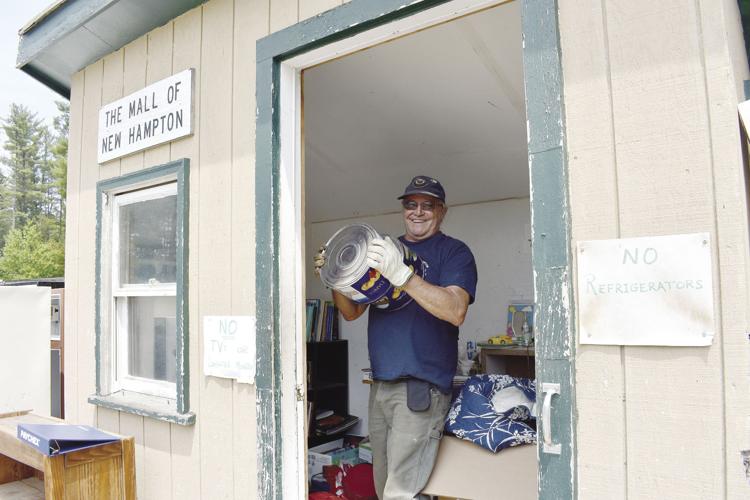
Perhaps the most formal transfer station swap shop is the Mall of New Hampton – a tongue-in-cheek name coined by someone with a sense of humor. There is a town policy, posted on its website, governing what can and cannot be dropped off. The rules prohibit mattresses, couches, stuffed chairs, televisions, and computers, for instance. Clothing cannot be left there, but there is a Planet Aid container for those items.
The policy states that items must be separated and placed in a storage area, and the attendant has a right to refuse anything. The town also stipulates that items taken must be for personal use and not resold.
“The policy was put in place because we were having problems,” Town Administrator Barbara Lucas said. “But we believe it works pretty well now.”
She said they do dispose of items “if they are there for a time and it is left up to the judgment of the Public Works Director, Jim Boucher, and the facility supervisor. Our ‘Mall’ is not very large because we have limited space under cover. The residents support having a place for items that can be reused and have a value for someone else.”


(0) comments
Welcome to the discussion.
Log In
Keep it Clean. Please avoid obscene, vulgar, lewd, racist or sexually-oriented language.
PLEASE TURN OFF YOUR CAPS LOCK.
Don't Threaten. Threats of harming another person will not be tolerated.
Be Truthful. Don't knowingly lie about anyone or anything.
Be Nice. No racism, sexism or any sort of -ism that is degrading to another person.
Be Proactive. Use the 'Report' link on each comment to let us know of abusive posts.
Share with Us. We'd love to hear eyewitness accounts, the history behind an article.