


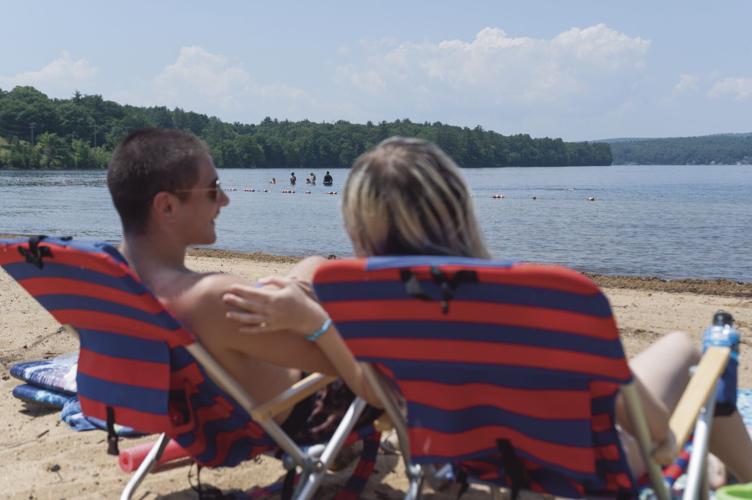
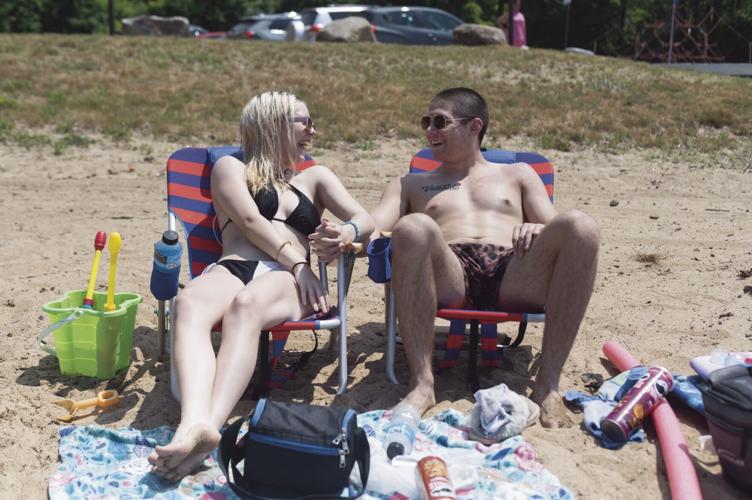
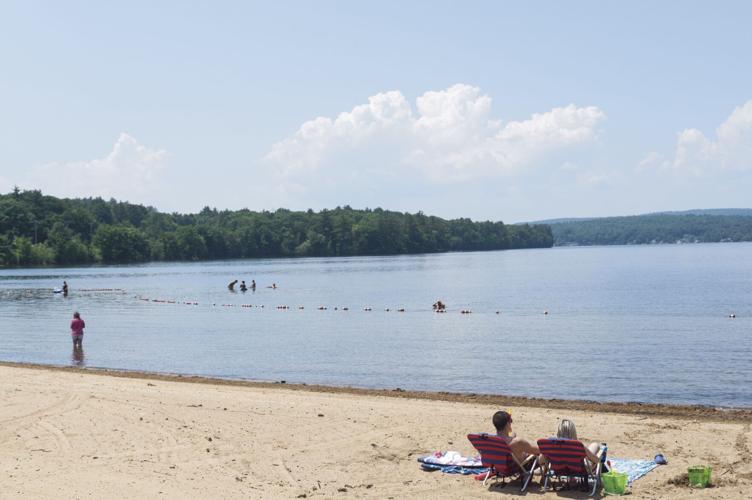
It's hot, and getting hotter in the Lakes Region. Laconia Fire Chief Tim Joubert does not want people to take the heat lightly.
A heat wave that started Tuesday will continue through Thursday. Laconia is expected to experience high humidity and temperatures in the mid 90s
“Be cognizant of the fact the weather that we're going to be dealing with over the next three days is pretty bad,” Joubert said Tuesday. “Even though it might only be 90 degrees, it's going to feel like it's 110 degrees because of the heat index. So just be cautious and take your time when you're doing things outside.”
The National Weather Service issued a heat advisory on Tuesday.
“This is a relatively uncommon phenomena. The last time we saw triple digit temperatures in the area was in July of 2011,” NWS Meteorologist Jon Palmer said. “It's been over 12 years since the last time this happened.”
Cooling centers will be available at the Weirs Community Center and Laconia Public Library from 9 a.m. to 5 p.m. through Thursday.
In Franklin, the parks & recreation department set up a cooling center at the Bessie Rowell Community Center from 11 a.m. to 7 p.m. through Thursday. Parks & Rec Director Krystal Alpers said people should come if they need a cool space to relax.
“It's just a service that we're offering to the community in hopes that if anybody needs it, they'll utilize it,” she said.
The Meredith Community Center is open as a cooling center for those who need it. Residents should call 603-279-8197 for access. The Belmont Fire Department has a plan in place if there is a need. Gilford does not currently have a cooling center.
Joubert said other Lakes Region residents should call their local fire or police departments to find out if there is a cooling center in their town. Joubert also said if there's a lot of demand for cooling center use regionally, Laconia Middle School could be used as an overnight shelter.
Franklin schools will also be shortening their schedules this week. The elementary school will dismiss students at 11 a.m., the middle school at noon and the high school at 12:15 p.m.
Joubert also gave advice on how to stay safe.
“My recommendation is, if possible, try to stay indoors. Try to stay out of the sun. If you need to work outside, make sure that you have plenty of breaks, and hydrate hydrate, hydrate. If you feel like you're thirsty, it's already too late. You're already dehydrated, you're playing catch up,” Joubert said. “Try to try to wear light colored clothes if you're outside, and try to limit the time that you're alone outside. Always try to have a buddy when you're working outside in this type of heat so you can watch over each other.”
Advice given by the state Department of Health and Human Services includes:
- Don’t leave young children or pets alone in unattended vehicles
- Check on your neighbors
- Know the signs of heat-related illness
- Be safe around water, and avoid swimming alone or leaving children unattended as even shallow water and pools are a risk for drowning.
Additional tips include staying on the lowest floor out of the sun if air conditioning is not available, as heat rises, and cover windows that receive morning or afternoon sun with drapes, shades, awnings or louvers.
Palmer offered his opinion about why the region is getting hit by this intense heat: it's a combination of two things. The first is a strong Southwest air flow moving in, bringing hot air into the Northeast. That, and combined with building high pressure offshore, keeps the heat settled in this area. This is also known as a heat dome.
Palmer also said while coastal areas and those high in elevation usually stay comparatively cooler, these topographical regions will not escape the heat. What will make the heat a lot more dangerous is the humidity, he added. Looking at some heat indices, temperatures can be over 100 degrees.
“Humidity does play a role in how hot it feels outside, and we are looking at a pretty humid environment over the next few days. That will definitely contribute to the air feeling particularly soupy,” he said.
While Joubert said the humidity will likely increase medical-related calls, the increased humidity lowers fire hazards.
“Believe it or not, humidity helps us when we're dealing with outside fires. Things are saturated with moisture, so they're not igniting as easily,” he said. “I think we're going to be dealing with a lot of medical calls. When you have hot, humid days, especially people that have existing medical conditions struggle with breathing.”
Palmer also said he expects more heat-related phenomena to occur.
“I would say that it's possible that extreme events or impactful events like this one that we're expecting in a few days could occur more often with climate change,” he said.


(1) comment
Hopefully everyone receives this information 👍
Welcome to the discussion.
Log In
Keep it Clean. Please avoid obscene, vulgar, lewd, racist or sexually-oriented language.
PLEASE TURN OFF YOUR CAPS LOCK.
Don't Threaten. Threats of harming another person will not be tolerated.
Be Truthful. Don't knowingly lie about anyone or anything.
Be Nice. No racism, sexism or any sort of -ism that is degrading to another person.
Be Proactive. Use the 'Report' link on each comment to let us know of abusive posts.
Share with Us. We'd love to hear eyewitness accounts, the history behind an article.