


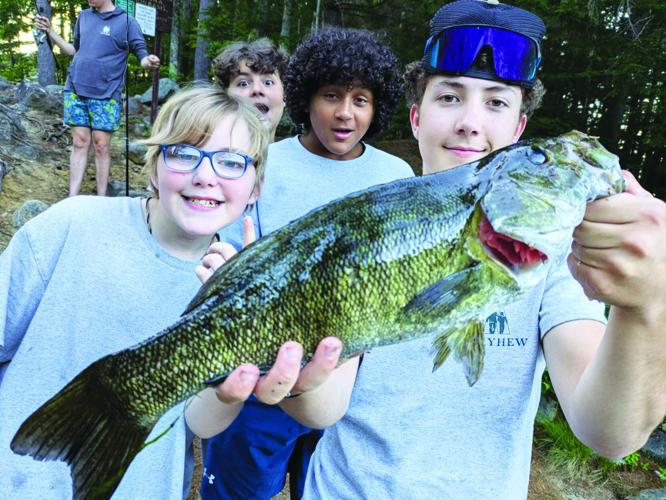
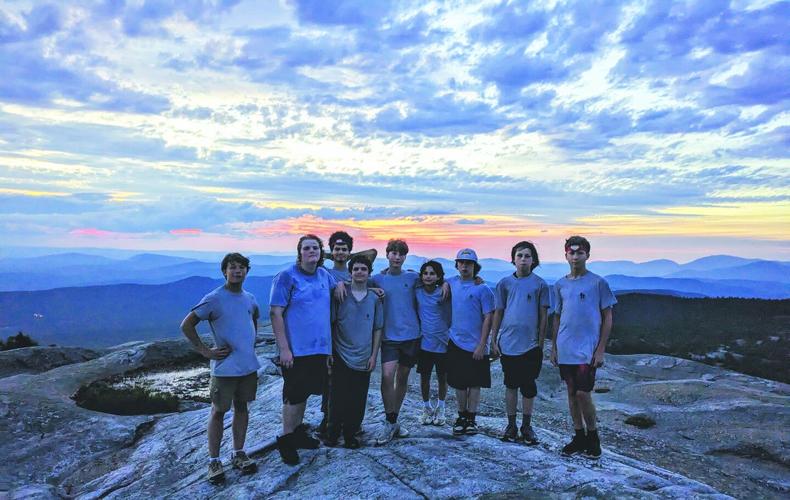
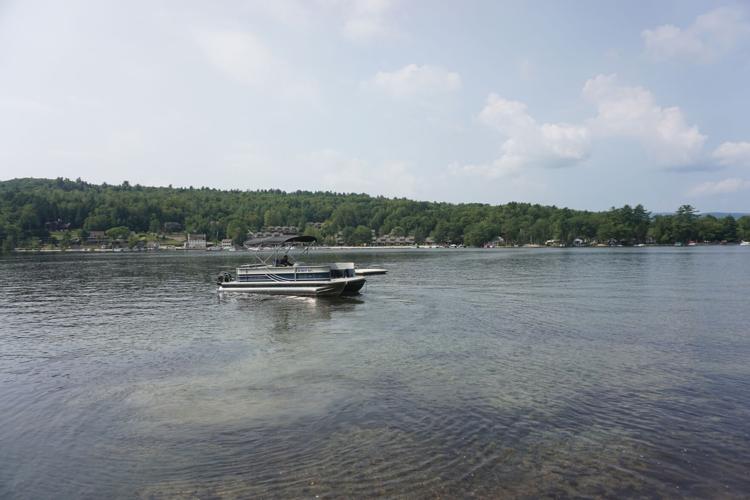
BRISTOL — In a serene town, amidst tall rustling pine trees, nestled near Newfound Lake, mentorship takes place. From fishing and kayaking, to financial literacy courses and life advice, hands-on role modeling for boys is happening in real time.
One of the few programs of its type to exist in the nation, The Mayhew Program is one of the Lakes Region’s little-known secrets.
“Very simply stated, Mayhew believes in boys, so they believe in themselves,” said Peter Saliba, executive director. “We choose to work with boys because boys are the most likely to be expelled from school. They're all higher risk. They're most likely to commit suicide. Be unhoused. Be food insecure. While we have talked about becoming a co-ed program, we have firmly landed on staying focused on boys, because we believe that population deserves some special attention.”
The Mayhew Program challenges and helps at-risk New Hampshire boys ages 10 to 18, in an approach that combines school-year mentoring and a residential summer program, tuition-free, through high school graduation.
“People see Mayhew as the camp for troubled boys. Our boys are not troubled. They're a group of deserving kids who have a bunch of strikes against them,” Saliba said. “Part of the stigma that we face is that we have low expectations for these kids. And we do not do that. We have high expectations. We have four cornerstone virtues that comprise the core of our program: responsibility for yourself, respect for others, challenge yourself to do more and being a vibrant member of your community.”
Adverse childhood experiences, or ACEs, is a scoring system used to determine how traumatic events in one’s life could impact the ability to thrive in adulthood. According to the Center for Disease Control, “ACEs that were most common among high school students were emotional abuse, physical abuse, and living in a household affected by poor mental health or substance use.”
The ACEs scoring system is used to help identify boys who could benefit from the program.
“The things that are different about Mayhew are first, all of our boys are what we call deserving New Hampshire boys. Kids with high ACEs scores are identified to us by school counselors. They go through the interview process and, again, what makes our summer camp experience is all of these kids, all 42 boys on the island for each session, they are surrounded by boys just like them.”
The Mayhew Program uses a unique, three-phased approach to help boys secure a stable transition into adulthood.
The first phase — the Island Challenge, or as Saliba says, “the island phase” — begins with the youngest of boys, often between ages 10 and 12, heading to sleep-away camp — usually for the first time ever. Think bunk rooms, early morning breakfast and a day outside on the lake, surrounded by new friends.
Boys must complete the summer island experience.
“There's this moment on the island where you get 42 boys being goofy together, because they are secure and they're comfortable, and they see there's other people in the world like them who have their same challenges. So this island experience is magical, to see these sometimes withdrawn, shy, a little anxious, nervous, away-from-home boys for the first time seeing stars covering the sky for the first time in their lives, hearing the call of the loon, learning how to swim,” Saliba said.
“It is this magical island experience.”
For 22 nights, the boys work together in tight-knit groups, tackling steep physical, social and emotional challenges.
“For many of the boys, Mayhew is their first opportunity to find out who they can be and how much they can do in a setting away from outside influences,” according to information on the website.
Phase two — Link-Up Expeditions — begins during a boy’s third year with the program, which is for ages 13-16. It was added to the curriculum in 1994.
At this stage, boys participate in a five-day, adventure-based summer program. Trips include canoeing, backpacking, biking, and nature and wilderness skills training. Since the boys’ priorities are school, extra-curricular activities, after-school sports and part-time jobs, there’s more of a leadership component than the island stage.
“That particular curriculum is oriented toward leadership and preparing boys, so that they can become counselors on the island,” Saliba said.
During this phase, 14-year-olds — or Links, as they are called — are eligible to apply to work for Mayhew, earning a salary. However, the nonprofit ups the ante. All participating boys who work for Mayhew receive a dollar-for-dollar matching scholarship for post-secondary education.
This can include a “four-year college, two-year trade school, certificate program; the boys can draw on the money that was matched to them for those expenses,” Saliba said. “We have Mayhew graduates who complete their vocational training at no cost to them, because they worked on the island for the summer for four or five years.”
The third and final phase — Program Extender — focuses on getting the boys to graduation, “assisting them in establishing goals for their lives beyond high school, brainstorming ways to overcome barriers to success, and emphasizing the importance of giving back to Mayhew and the broader community.”
Special events are held for Extenders, but can be difficult to organize, given scheduling conflicts.
Mentoring occurs all year, with conversations and check-ins held with each involved boy. Called the Community Year, the conversations are geared toward age-appropriate matters. Sixteen-year-olds are going to be asked how they’re doing in school, whereas a younger boy may be asked how their friends are.
In other words, The Mayhew Program offers boys an individualized plan for success.
The Mayhew Program is funded solely by private donations, an amazing feat for any nonprofit, and relies on little through private foundations and grants. No government funding is used.
According to the 2025 annual report, a staggering $1.8 million was donated to The Mayhew Program by individuals, of the $2.7 million operating income the nonprofit fundraised.
“Our model works. Mayhew was preventative for our boys, and it's independent of financial handouts from the government,” Saliba said. “That's very New Hampshire.”
The staff is lean, but passionate, and includes a few former Mayhew boys. Many alumni donate for the future of the program.
“Our boys do a great job giving back to those who are less fortunate than them,” Saliba said.
This year’s Mayhew season kicks off on Saturday, June 20, and runs through Saturday, July 11. And for those getting the opportunity to experience the Mayhew Program, it’s “a good start on the future,” according to the annual report.
For those looking to get involved, The Mayhew Program staff will host the 27th annual Fore the Boys Golf Tournament on Monday, June 1, at Montcalm Golf Club, in Enfield.
For more information about the event, as well as referrals, visit mayhew.org.
•••
Katlyn Proctor can be reached at katlyn@laconiadailysun.com or by calling 603-524-0150.


(0) comments
Welcome to the discussion.
Log In
Keep it Clean. Please avoid obscene, vulgar, lewd, racist or sexually-oriented language.
PLEASE TURN OFF YOUR CAPS LOCK.
Don't Threaten. Threats of harming another person will not be tolerated.
Be Truthful. Don't knowingly lie about anyone or anything.
Be Nice. No racism, sexism or any sort of -ism that is degrading to another person.
Be Proactive. Use the 'Report' link on each comment to let us know of abusive posts.
Share with Us. We'd love to hear eyewitness accounts, the history behind an article.