


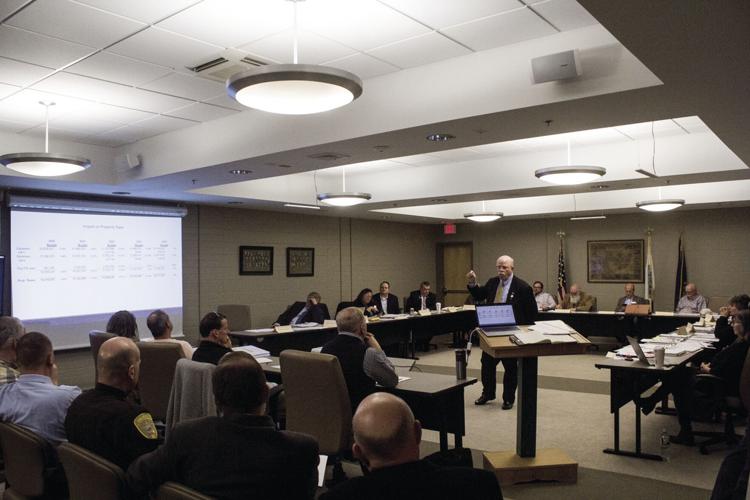
LACONIA — Following two-and-a-half hours of presentations and discussion, the Belknap County Delegation passed the county budget of $33 million Wednesday night. The vote, 12 in favor and four opposed, with one abstention and one member absent, approved the budget, despite attempts by Rep. Barbara Comtois (R-Barnstead) to amend a multitude of line items at the eleventh hour. Comtois has expressed concerns with transparency and participation, and general frustration with the increased county taxes that come with this year's budget.
“Last night it wasn’t really a discussion,” Comtois said Thursday. “It was a lecture-style presentation of the budget. That didn’t serve the taxpayers since there was no real discussion, especially for the new people on the delegation. They didn’t have a chance to discuss the numbers in depth. Basically, seven out of 18 decided what the numbers were going to be, and then lectured on what they would be.”
Comtois, as well as Reps. Thomas Ploszaj (R-Center Harbor), Lisa Smart (R-Meredith) and Nikki McCarter (R-Belmont), voted against approving the budget. Rep. Paul Terry (R-Alton) abstained. Rep. Peter Varney (R-Alton) was absent.
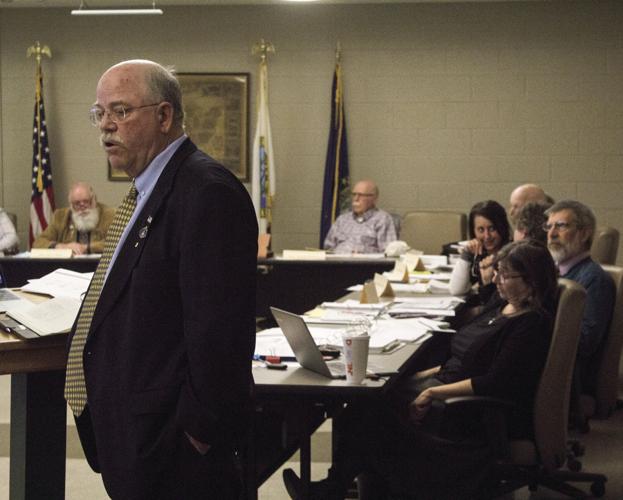
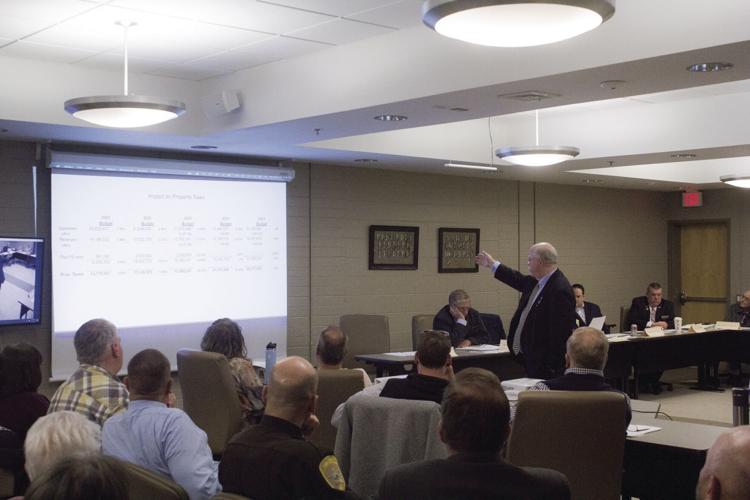
The increase in taxes comes after years of the delegation dipping into the county fund balance to cover expenses, thus artificially keeping tax rates lower, as shown in a 37-slide presentation by Rep. Steven Bogert (R-Laconia), chair of the budget committee. A copy of the presentation accompanies the online version of this article at laconiadailysun.com.
“In 2020, they used $891,080 of fund balance to offset the expenditures. In 2021, we used $3 million. In 2022, we used another $2 million to offset it,” Bogert explained. “Now we're in 2023. We have no more fund balance to use to offset everything, because whether it was wise or unwise ... the decisions were made and now we have to live with those decisions, and we have no fund balance to use.”
Bogert also pointed out a lack of revenue for the county due to understaffing at the nursing home. With low county revenue, a lack of a fund balance from which to draw, rising costs of hiring and retaining county employees and other expenses and shortages, a balanced budget means a 33% tax increase.
“Thirty-three percent sounds like a lot,” Bogert said. “But once you break that down, it's actually $1.44 per thousand on your tax rate. $1.44. That's on average.”
Bogert said a person with a $300,000 home would see an approximate $107 increase in taxes based on this average. Bogert called the increase rather mild considering the rising costs of running the county and low revenue. Bogert justified increased salaries and benefits for county employees as the ultimately more fiscally responsible path.
“Let’s say you took another $250,000 out of expenditures, that will only lower that $1.44 two cents. Two pennies,” Bogert said. “One has to ask themselves, 'Is the 2 cents per thousand a good tradeoff for removing another $250,000 from the budget?' Do you get that buyback trying to run departments by cutting things further down to the bone, making an atmosphere that's not pleasant to work in? If you don't have a pleasant place to work in, what happens? You get turnover.”
Bogert further explained that turnover hurts the county financially due to the cost of training new employees, who can take up to a year before they're "fully up to speed."
Before Bogert's presentation, Comtois, who has expressed strong opposition to the budget and the committee's failure to properly notice multiple meetings, attempted to dissect previous actions of the committee.
“I have a couple things on the March 13 meeting,” Comtois said to Chair Rep. Harry Bean (R-Gilford). “The meeting was, my understanding, called because of four illegal budget review committee meetings. At the very first meeting in January, there was no minutes of the Jan. 19 meeting, no motion to elect any chair or second on those minutes, and I believe that the proper thing to do was to elect the officers because there is no public record and there is no mention in the minutes of who made what motions to elect officers.
“I don't believe that having Rep. Bogert, nothing personal, there, being in charge of that meeting was the proper course of action,” Comtois continued.
“Do you have the same minutes that I have?” Bean asked.
“I do,” Comtois said.
“Three inches down it says 'Motioned by O'Hara, seconded by Bean from the previous officer's vote.'”
Comtois responded by saying Bogert was not elected at the time of the meeting, and emphasized the failure to publicly post previous budget meetings. She then offered commentary regarding recess rules and other procedural review.
“I checked with an attorney to make sure we did everything right, and we did. Unless you can show me your credentials, I'm going to go with him,” Bean said.
When Comtois asked for the identity of the attorney, Bean said it was his personal attorney, and would not reveal the name.
Right before Bogert began his presentation, the delegation approved his request to have all questions and comments held until the presentation was complete, a decision Comtois criticized as stifling discussion.
Bogert presented budget decisions, slide by slide, department by department. When he completed his presentation nearly an hour later, Comtois made motion after motion to amend a variety of specific budget items, including cutting the delegation's meeting fee from $20 per representative to $0.
None of Comtois' amendments passed. A single amendment by Bean to reduce the budget by $50,000 attached to the sheriff's department's full-time staffing line was approved.
“We increased the full-time line by $50,000 to take in unanticipated retirements that were going to be coming,” Bogert said. “I guess that situation dissipated and that $50,000 is no longer needed.”
In an interview, Bogert emphasized there was no intention to hide the actions of the budget committee by failing to properly notice their meetings. Instead, he said it was an error.
“If I had the opportunity to do it over, I would ask that it was noticed,” Bogert reflected. “All the boards I've worked on and stuff, that has not been a question I've ever had to ask. Through the normal process, that was taken care of. That was something unanticipated and it saddens me because they tried to put a blemish on the whole process.
“It was an error, not an intentional act. If I was trying to hide from the public what we're doing, I don't think there would have been a presentation like there was and I don't think a representative would have been standing in the room talking to everybody, including citizens, explaining everything by department.”
“The budget review committee, having been on it for several years, has gone through discussions with department heads,” Comtois said. “We would present it to the delegation and the entire delegation got to vote on those numbers themselves by department.”
Comtois said Wednesday night's process was “absolutely” unprecedented.
"It was a lecture-style presentation,” Comtois said.
“It's a different opinion of how it's supposed to work,” Bean said. “Procedurally, when someone calls a question you put it to a vote, that's what we did.”
Comtois stated she wanted to have a genuine discussion and review of the line items, but Bean disagreed.
“I was hoping, that’s why I asked, 'Are we going to be able to ask questions as we’re going through the budget?' I don’t think I really got an answer,” Comtois said. “I generally thought we were going to be able to have a discussion.”
“She wanted to put on a show, that’s my opinion,” Bean said. “You see who had their hand up almost constantly.”
“I’m OK if I’m in the minority, I also think that different opinions are important, and being respectful and courteous,” Comtois said. “I tried to be respectful to the chair and whoever is in charge of speaking and try to follow the rules. I think it’s important we follow the rules that were given.”
Bean said the votes on the budget spoke for themselves.




(1) comment
So what's 1.44 x 300,000? It's not $107, it's $432. Add in the cost of property value increasing, it's going to be more than that.
Not to mention, it seems odd that we basically used up all of our budget by feeding it directly into large company pockets. When was the last time they got an audit? Why are we paying for railroads and land to GIVE to businesses? Why are we giving a guy huge tax benefits to build luxury apartments instead of affordable housing that he promised he would build when he took the tax gifts and land? Why is the school buying some back part of property to take the kids to another piece of private property and use that person's yard as a school drop off instead of the park, or the school's back property itself?
I'm really curious where this money has actually gone, and who got to keep it. Because they've been fighting to raise property taxes by 30+% every year, and it's not going to be $107 even by their own basic math. If they can't even multiple 1.44x300 and get within 300 of the number, I don't want them controlling where that money is going.[censored][censored]
Welcome to the discussion.
Log In
Keep it Clean. Please avoid obscene, vulgar, lewd, racist or sexually-oriented language.
PLEASE TURN OFF YOUR CAPS LOCK.
Don't Threaten. Threats of harming another person will not be tolerated.
Be Truthful. Don't knowingly lie about anyone or anything.
Be Nice. No racism, sexism or any sort of -ism that is degrading to another person.
Be Proactive. Use the 'Report' link on each comment to let us know of abusive posts.
Share with Us. We'd love to hear eyewitness accounts, the history behind an article.