


For many people, Christmas in America can mean taking in a performance of Pyotr Ilyich Tchaikovsky’s “The Nutcracker” or Charles Dickens’ “A Christmas Carol.”
As an Englishman, Neil Pankhurst finds this rather curious.
“I don’t want to see either one every single year,” said Pankhurst, a writer and director at the Winnipesaukee Playhouse in Meredith. “People seem to want to do that. I’ve never understood it.”
Growing up, panto was the theater Pankhurst took in every year during holiday time, and he’s brought that tradition to the playhouse each year since 2014.
This year, the theater offers “Jack and the Beanstalk: A traditional English panto,” Pankhurst’s adaptation of the traditional fairy tale.
The show opens Friday, Dec. 19, and runs through Thursday, Jan. 1.
What’s a panto?
Pantos are traditional folks stories that weave in elements of musical theater in a vaudevillian style — singing, dancing, bawdy humor, innuendo and double entendres. Panto is short for pantomime, and in the UK, the terms are used interchangeably. Here, where pantomime usually means mime, the style is only referred to as “panto.”
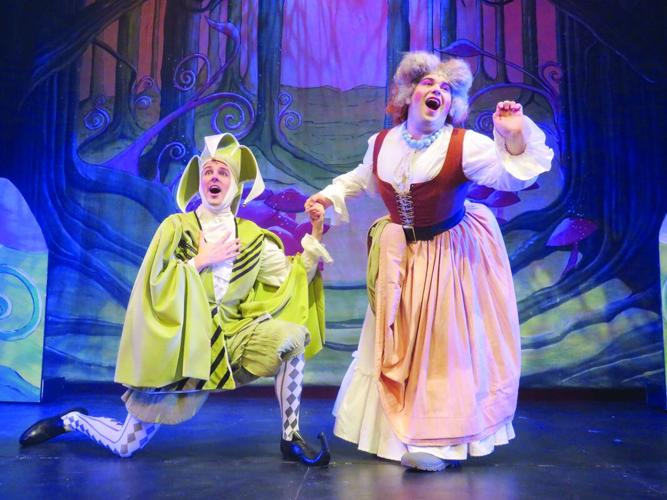
Pantos are for the whole family. The audience is encouraged to "boo" the bad guys, cheer for the heroes and heroines, and even throw things at the stage.
“This is what English people do at the holiday time,” said Lesley, Pankhurst’s wife and the playhouse’s patron and company services director. “In the UK, you’d find giant pantos on vast stages with celebrities in big cities, and in villages, in local halls with local people, and everything in between.”
Neil enjoys the panto, since audiences are seeing a different show each holiday season — any fairy tale with a twist to it, including a broad range of music from different eras — from old classics to Broadway to contemporary music and pop.
He says songs only make it into his shows if he likes them.
“Everyone will find one or two songs they recognize, no matter their age,” Lesley said. “Most pantos in the UK use songs people know, so people can sing along.”
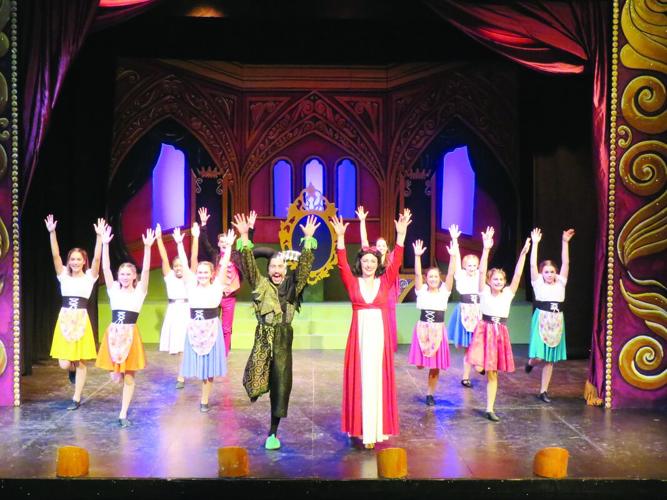
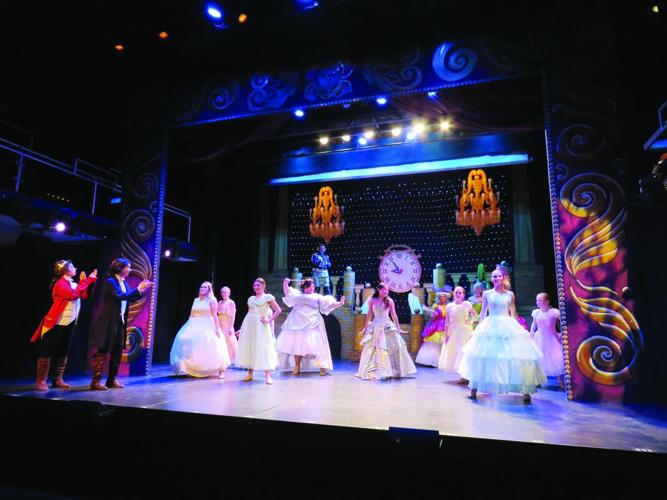
In past years, the playhouse has performed “Cinderella,” “Snow White,” “Sleeping Beauty,” “The Little Mermaid,” and “Beauty and the Beast,” among other favorites, as pantos.
The history of panto
Neil says the origins of panto go back hundreds and hundreds of years — all the way to Greek theater. Pantos can be traced to the Medieval period in Italy, in the 17th and 18th centuries. The concept then traveled to France, at a time when commedia dell’arte improv theater was popular, and on to England.
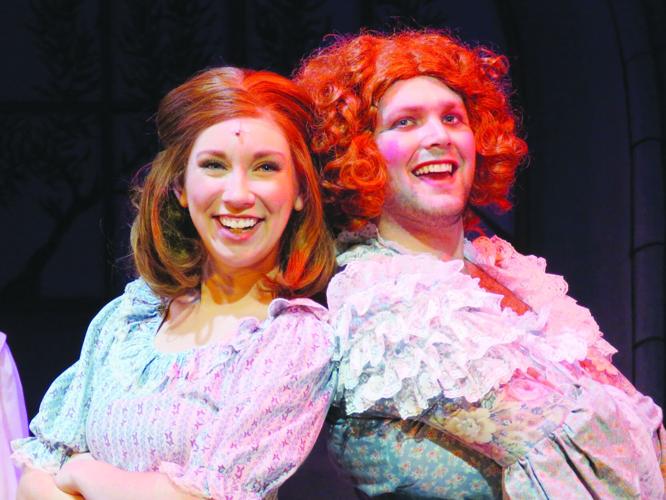
Some facets of the style include the notion bad guys always enter from stage right, and the good guys, stage left. Also, in panto, there is a lot of cross-dressing because, in early theater, there were no female performers; men dressed as all characters, including women.
Only after 1660, in England, were women allowed to enter the stage.
A giant good time
Neil says the first time “Jack in the Beanstalk” was performed as a panto was in 1819, at the Theater Royal Drury Lane in London's West End.
He originally wrote his version nine years ago, when it was first performed at the playhouse. This year, he rewrote it, adding new songs, dance numbers and characters — and some other new elements that could cause “complete chaos” in the audience.
At the core, the audience will still find Jack, his cow, the golden goose, an egg and a giant.
“It is recognizably ‘Jack and the Beanstalk,’” said Lesley, “ ... with some 'Jack and Jill' mixed in. All with a panto flair.”
She adds there is humor on all different levels. “Silly, silly humor for little kids, and bawdy humor for adults. If your kids understand the bawdy humor, we didn’t teach it to them.”
Neil points out the character’s lines are always innocent. “How they are interpreted is another thing.
“The minds of people might not be quite as innocent.”
Performers
The Winnipesaukee Theater has three branches: the professional season, community theater and the education department.
“This is the one time of year that we meld all three of those departments,” said Lesley. “The cast for ‘Jack and the Beanstalk’ is all three branches coming together at the holiday time for our show.”
Many of the characters in Neil’s adaptation are traditional — the same as those performed in 1819 — such as Giant Blunderbore and his sidekick, Fleshcreep.
The cast is Nora Moutrane as Jack Trot; Robert Hooghkirk as Dame Dottie Trot; Nick Winkler as Billy Trot; Grace Gilbert as Jill Stoneyheart; Richard Brundage as Baron Stoneyheart; Bradyn Parmelly as Fleshcreep; Jim Rogato as Giant Blunderbore; Patte Sarausky as Mrs. Blunderbore; Sophie Pankhurst as Golden Harp; and Jer’zori Boisvert, Madden Bolduc, Kerry Forkell, Harper Hallett Alexis Jackman and Natasha Kharitonov in the youth dance ensemble.
For more information and tickets, visit winnipesaukeeplayhouse.org.



(0) comments
Welcome to the discussion.
Log In
Keep it Clean. Please avoid obscene, vulgar, lewd, racist or sexually-oriented language.
PLEASE TURN OFF YOUR CAPS LOCK.
Don't Threaten. Threats of harming another person will not be tolerated.
Be Truthful. Don't knowingly lie about anyone or anything.
Be Nice. No racism, sexism or any sort of -ism that is degrading to another person.
Be Proactive. Use the 'Report' link on each comment to let us know of abusive posts.
Share with Us. We'd love to hear eyewitness accounts, the history behind an article.