


GILFORD — When the SoulFest Christian music festival first came to Gunstock Mountain Resort in 2006, its founder Dan Russell professed to then-general manager Greg Goddard the advantage it offered.
“I said, ‘We’ll make your summer business rival your snow-ski business. ... We'll put on a million-dollar event every summer,’” Russell recounted in an interview. “I said, ‘Greg, this is going to put you guys on the map.’”
Gunstock ended its contract with SoulFest at the end of 2021, with five years remaining in the agreement, and the festival had its final event at the mountain last year. The separation raised questions among local residents and politicians about why the mountain would end a relationship with a longtime partner.
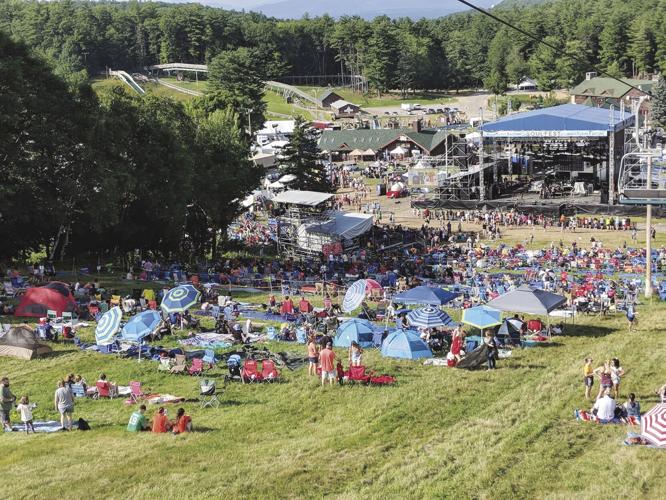
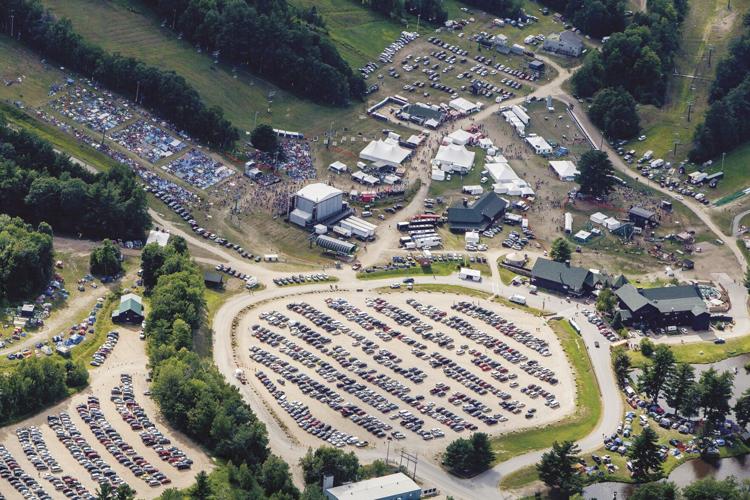
In an interview, General Manager Tom Day and Director of Resort Services Robin Rowe explained that hosting the festival had become a logistical and financial burden on the mountain. The mountain lost revenue — about $75,000 each year — and large portions of their workforce were redirected away from regular duties for weeks. Residents and visitors couldn’t reasonably access the mountain’s offerings during the festival, and, though attendees were respectful guests, the sheer size of the event took a toll on the mountain’s facilities, grounds and staff.
“It just overwhelmed everything,” Day said. “Besides the fact that it actually cost us money to have it ... it didn’t do Gunstock justice.”
Festival organizers, Rowe said, may not have liked Gunstock’s reasons for initiating the change, but seemed to understand them nevertheless.
By contrast, Russell gave a sour account of how the two parties left things. Russell felt that management, primarily Day, had used financial reasons to push out the festival because “they wanted us to go away.” Russell took issue with management’s “evisceration” of a contract he felt to be binding.
“I drew the conclusion that they didn't like us,” Russell said.
Day assumed his role at Gunstock in January 2020. The festival didn’t happen that year, but logistical questions about whether it would have been possible, Day said, raised red flags about how much work the event was for the mountain, and he wondered whether its revenue offset that.
In 2021 the mountain measured the expenses and efforts that went into hosting the festival and compared those to a standard summer weekend.
They tallied what it cost to put up fencing around the entire festival grounds, reshape, resupply and remark campsites, hire electricians, safety officers and first aid, prepare two ski trails to serve as concert stands, bring in hundreds of portable toilets and showers, truck in water for those showers, run 24-hour security, move the summer operations out of the Stockade Lodge where they were housed, hire and run shuttles late into the night, manage garbage and monitor parking. Most attendees stayed at the mountain throughout the weekend and even the week before, according to Rowe, and cleanup consumed another week following.
The arrangement, Day said, was abnormal for a host-festival relationship.
“Normally, when someone comes to a venue, they pay a site fee, and then they take care of everything,” Day said. “They didn't pay a site fee, and we took care of everything.”
The mountain was open, Day said, but little business other than the festival came to the area during that time.
While festival sales were comparable to a standard summer weekend, according to a report from 2021, expenses were more than fourfold higher. Gunstock’s net income during the festival came out to just over $51,000, compared to nearly $126,000 in a standard summer weekend.
More notably for Day, he said, they found that staff dedicated 1,380 labor hours toward the festival — equivalent to the work of eight full-time employees for a month.
Those numbers, Rowe said, confirmed things staff and management already knew.
“I had a very strong sense of how the numbers were going to play out,” Rowe said. “Immediately following the festival we had the meeting where we said, ‘This is not working.’”
Rowe and Day said they approached SoulFest immediately following the 2021 event.
“We didn't want to blindside them, so we were very upfront,” Rowe said. Management presented their concerns to the festival, and sought a better arrangement, but it quickly became apparent, according to both Rowe and Day, that the festival couldn’t meet the mountain’s needs.
“I actually rewrote the contract and took out many of the things that were taxing us,” Rowe said. “We spelled it all out, and there was no possible way they could do that. They just didn't have the bandwidth to do it.”
Russell disputed that account. When asked if the festival, if required to do so, would have been able to be responsible for everything, he replied, “Sure.” If the mountain was losing money, he said he was willing to make up the difference.
Russell further said the mountain did not give the festival enough opportunity to change. The year 2021, he said, was the first he had heard that SoulFest cost the mountain money.
When the festival first came to Gunstock, Goddard said, the mountain’s summer profile was much smaller. Over time, as the mountain grew its wedding offerings and built its Adventure Park, it became more disruptive.
“I couldn’t say whether we lost money, but I don’t think we made much, either,” Goddard said, and “there’s no question it curtailed” those offerings. Over time, he continued, the mountain had many conversations about whether the festival was still a good fit and modified the contract to reflect them, but said he was reluctant to discontinue it.
“They had become quite a fixture at the mountain,” Goddard said. “I felt they brought a lot to the culture” of the area. Continuing the festival, he said, “was probably more of an altruistic decision over a business decision.”
“I’m sad for the SoulFest folks,” he said. “But I’m sure it was the right decision for [current management] ... it was the right business decision.”
While those contract decisions were made more than a year ago, the festival found itself in the crossfire of turmoil at the mountain last summer, which further tarnished Russell’s view of management. He expressed suspicion about Day, and cited rumors he had heard about financial malfeasance by senior management.
“I just heard lots of gossip,” Russell said. “I would hear from people that were involved with the county,” whom he left unnamed, that Day had other reasons to want the festival gone.
Russell couldn’t draw a clear line between what he’d heard about the mountain’s politics and SoulFest’s contract, and added that he largely contributed the impulse to end the contract to Day’s management approach.
“I won't say it was a personal vendetta against me because I don't believe that at all,” he said. “I think they just want to make money and that's not wrong. They've got to, you know, do what they have to do. And I don't like the way they did it.”
Rowe emphasized that Gunstock had, and still has, a positive relationship with festival organizers.
“I still communicate with them to this day,” she said. “It had absolutely nothing to do with them. It was a great working relationship, but, just from a business perspective, it didn't make sense anymore.”
“I'm grateful for everything we did with them,” Russell emphasized. “And I'm thankful for the opportunity to partner with them. I'm proud to have been involved with Gunstock for 17 years.”
The mountain isn’t seeking a replacement for SoulFest, though it may add a handful of small concerts or local events to its summer programming. Allowing staff to focus on regular summer offerings such as weddings and the Adventure Park is a win, Rowe added.
“We’re not necessarily replacing because there's nothing to replace — it was a loss for us,” she said.
SoulFest, which drew around 9,000 attendees last year, announced in August that it would find a new home in Northfield, Massachusetts, whose population is fewer than 3,000. But the festival, according to reporting in the Greenfield Recorder, did not stick the landing in a new location.
SoulFest started selling tickets before applying for, let alone receiving, the necessary permissions from Northfield officials. Compounding resident concerns about noise and safety, citizens and officials alike were put off by the festival’s approach and worried about whether the venue and the town itself could handle an influx of attendees three times the size of its population.
Earlier this month, town officials declared that SoulFest would not be coming to Northfield. Organizers announced last week that the Topsfield Fairgrounds, located in the town of Topsfield, Massachusetts, about 10 miles north of Salem, would house the 2023 festival, its 25th anniversary. The announcement discussed why Northfield didn’t work out:
“We want to invite all of our guests, volunteers, artists, etc., into a welcoming environment, one where we can be a blessing to the local community and economy, not a burden.”


(1) comment
just more anti-christian zealots looking to push us further and further away. There's no honor anymore, you make a deal you stick with your deal. Gunstock should be sold, if for no other reason than the multitudes of the rich who use our county asset as a playground
Welcome to the discussion.
Log In
Keep it Clean. Please avoid obscene, vulgar, lewd, racist or sexually-oriented language.
PLEASE TURN OFF YOUR CAPS LOCK.
Don't Threaten. Threats of harming another person will not be tolerated.
Be Truthful. Don't knowingly lie about anyone or anything.
Be Nice. No racism, sexism or any sort of -ism that is degrading to another person.
Be Proactive. Use the 'Report' link on each comment to let us know of abusive posts.
Share with Us. We'd love to hear eyewitness accounts, the history behind an article.