




Mediation to resolve criminal cases is becoming increasingly common in state courts.
Ten years ago, a less adversarial way to settle cases began when settlement conferences were held in Hillsborough Superior Court in a pilot program. The procedure then spread to the superior courts in other counties. When the COVID pandemic all but shut down courts for several weeks in 2020, posing the risk of the courts developing huge backlogs of cases, criminal mediation was implemented in order to break the logjam.
Mediation — whether through a settlement conference or criminal mediation — offers a different way of resolving felony crimes. Simply put, a judge-mediator acts as a neutral party to facilitate the resolution of the case between the adversaries in an informal setting. It provides a neutral forum for parties to discuss and explore the possibility of early resolution of criminal cases.
In Belknap Superior Court, 320 settlement conferences and criminal mediations were placed on the docket during the last 12 months, according to the Administrative Office of the Courts. Some involved the same defendant with multiple cases. Of those 320, the court held 258 hearings, the rest being continued. About 75% were resolved through some sort of negotiated resolution such as a plea, drug court, court diversion program, or the charges being dropped.
While it takes both the prosecution and the defense to agree to a settlement conference, it takes only one side to initiate criminal mediation.
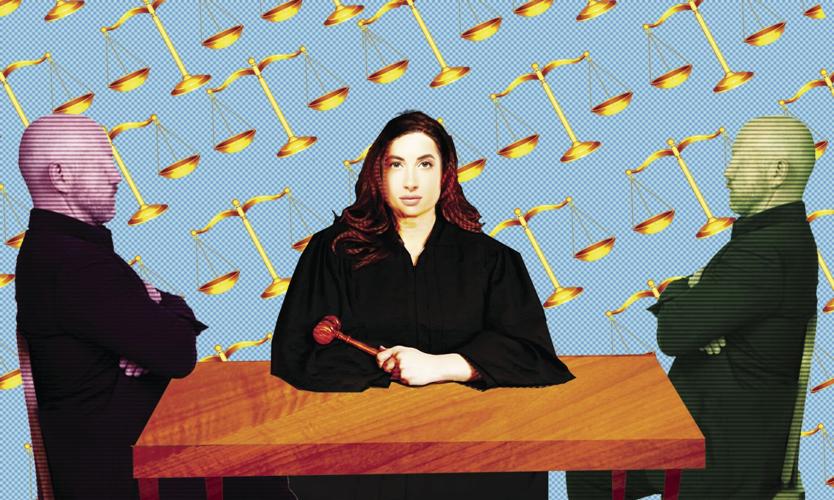
In mediation the judge acts as a facilitator, rather than a decider. Gone are the judge’s robe and the other trappings and rubrics typical of courtroom decorum. The parties sit at a conference table with the attorneys on one side and the judge on the other. Even if a session is held in a courtroom the judge sits at a table on the same level as the attorneys, not at the traditional elevated bench. During the discussion of the case, the attorneys do not raise objections to questions from the other side.
Another major difference is that the judge-mediator serves as an enabler. That degree of neutrality is possible because the mediator is not the judge who would hear the case if it should go to trial, or be the one to impose a sentence on the defendant.
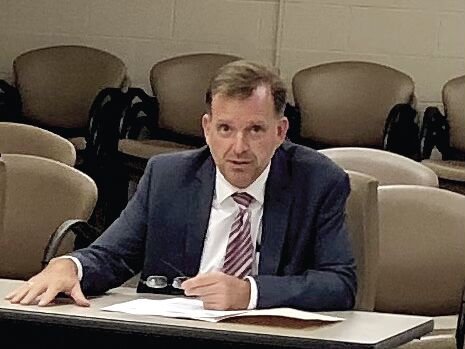
“It’s less adversarial, and much less formal. The parties get to talk about the case in a conversational way,” Belknap County Attorney Andrew Livernois said.
As in civil or divorce cases, using mediation in a criminal case can speed up the process of reaching a resolution. In addition, because the combativeness that can sometimes crop up during a trial is absent, mediation is usually less stressful for the defendant and as well as any victims.
Mediation offers other advantages for the accused, the attorneys and the victims.
The accused gets a chance to talk freely to the judge, which would not be possible at a trial. Having heard the defendant’s personal set of circumstances, the judge then draws on his or her experience to offer the accused a second opinion of the situation they face. The defendant’s attorney may have previously given the client the same advice, but coming from the judge, that counsel may carry more weight.
So, for a defense attorney, the input from the judge can help in getting a difficult client to accept the reality of their dire situation.
“Mediation can be very helpful in getting people to talk and getting the defendant to see reality,” Livernois said.
For Jesse Friedman, who has worked as a criminal defense attorney for more than 20 years, “Mediation can really help where you think the [prosecution] is being a little harsh, and the judge tells the prosecutor they are being a little harsh.”
If the prosecutor has an unbending victim or family member, mediation can help them understand what may be difficulties in the case and the risks of going to trial.
Victims or family members are often frustrated, confused or scared by what seems an interminable legal process. Mediation allows them to tell their story, which can be a big relief because they finally have a judge hearing what they want everyone to know about them, their family, and how the defendant has impacted their life.
Mediation sessions can give both sides neutral feedback leading to earlier and more efficient plea agreements.
Criminal mediation can also take much of the mystery out of the process for the participants.
Both Livernois and Friedman say the mediation process can help by fostering some element of restorative justice, which focuses on the rehabilitation of offenders through reconciliation with victims. Victims have long viewed remorse and apology as essential elements of justice for crimes.
“The victim needs to be heard, and the client needs to express remorse,” said Friedman, who until 2019 was managing attorney at the public defender's office in Laconia, and now is a principal in the criminal defense and family law firm of Friedman & Bresaw in Meredith.
In a video conference organized by the Council on Criminal Justice, Judge Tina Nadeau, the administrative judge of the state’s Superior Courts, said mediation sessions offer a “uniform and therapeutically supported way of resolving a case short of trial.”
The mediation sessions in Belknap Superior Court are handled by Peter Fauver, a retired judge, who spent 26 years on the bench.
"I enjoy trying to resolve disputes in any type of case, whether it's criminal or civil. I just enjoy every aspect of it," Fauver said in a 2008 interview he gave to Foster’s Daily Democrat when he retired as a full-time judge.
Livernois said mediation is especially suited to cases where there is little dispute about the facts, such as in drug possession cases.
“In cases like that the stakes are lower, and so there is more room for negotiation,” he explained.
But he said that mediation is not appropriate in very serious cases, like sex abuse or child abuse.
Another feature that distinguishes mediation from traditional court proceedings is that the sessions are confidential. The lawyers, defendant, or others impacted by the case can speak frankly, knowing that what they say during mediation will not become public, and cannot be used at trial or during a sentencing hearing.
Even the case judge is not told what was said during a mediation session. The judge-mediator will, however, tell the court what the likelihood is of the prosecution and defense of agreeing on a resolution.
Numerous researchers have shown that individuals who interact with the criminal justice system are more likely to base their opinions of the experience on the fairness of the process itself rather than on the outcome of the process.
“The beauty of [the process of mediation] is you have some power over the outcome,” Livernois said. “In a trial you don’t have any say in the outcome, and when the judge sentences you that’s the sentence you get.”


(0) comments
Welcome to the discussion.
Log In
Keep it Clean. Please avoid obscene, vulgar, lewd, racist or sexually-oriented language.
PLEASE TURN OFF YOUR CAPS LOCK.
Don't Threaten. Threats of harming another person will not be tolerated.
Be Truthful. Don't knowingly lie about anyone or anything.
Be Nice. No racism, sexism or any sort of -ism that is degrading to another person.
Be Proactive. Use the 'Report' link on each comment to let us know of abusive posts.
Share with Us. We'd love to hear eyewitness accounts, the history behind an article.