




Seven in 10 women in an October 2026 Hone Health survey didn't recognize — or weren't sure — that their symptoms were related to perimenopause. That includes 8% who didn't know what perimenopause was.
Most people have heard of menopause, which is technically a single day one year after a woman's last period. But many are less familiar with perimenopause, the transition leading up to menopause. Perimenopause typically lasts 4–8 years but can span 12–15 years or more. During this time, sex hormones fluctuate wildly, causing perimenopause symptoms ranging from sleep problems and anxiety to joint pain and unexplained weight gain. Women — and their doctors — don't always connect the dots.
"Perimenopause isn't missed because women have no symptoms," says Hone-affiliated OB-GYN Shelly Chvotzkin, D.O. "It's missed because they aren't aware of how early perimenopause can start or the wide range of symptoms it can cause, and most doctors aren't trained to diagnose or treat it."
Clinicians are only now getting dedicated guidance on how to treat perimenopause. In September 2026, Obstetrics & Gynecology published a toolkit for managing the transition. It recommends two main hormonal approaches: menopausal hormone therapy (MHT) and contraceptives.
But as Hone Health explains below, before perimenopause can be treated, it has to be recognized.
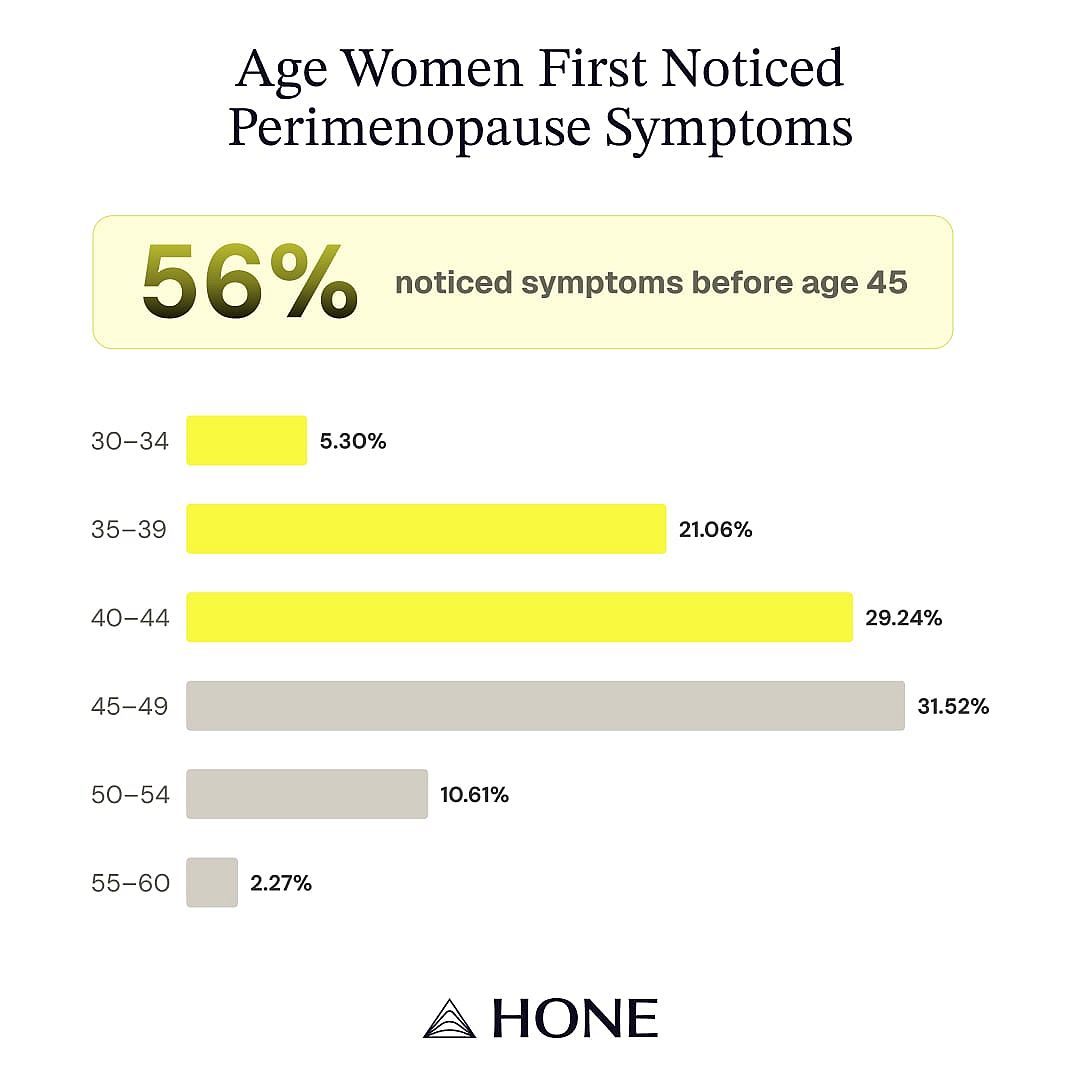
More Than Half Noticed Symptoms Before 45
More than 55% of respondents said their symptoms began before age 45, including 26% who noticed them in their 30s. That's well before the average U.S. menopause age of 50–52.
"It's understandable that a 39-year-old having sleep disruption, anxiety, brain fog, or unexplained body changes would have little reason to connect those problems to perimenopause," Chvotzkin says.
Nearly 10% of respondents said they delayed seeking treatment because they thought they were too young or still had regular periods, which can create a false sense that hormone levels are stable.
More Than 7 in 10 Didn't Name Period Changes Among Their First Symptoms
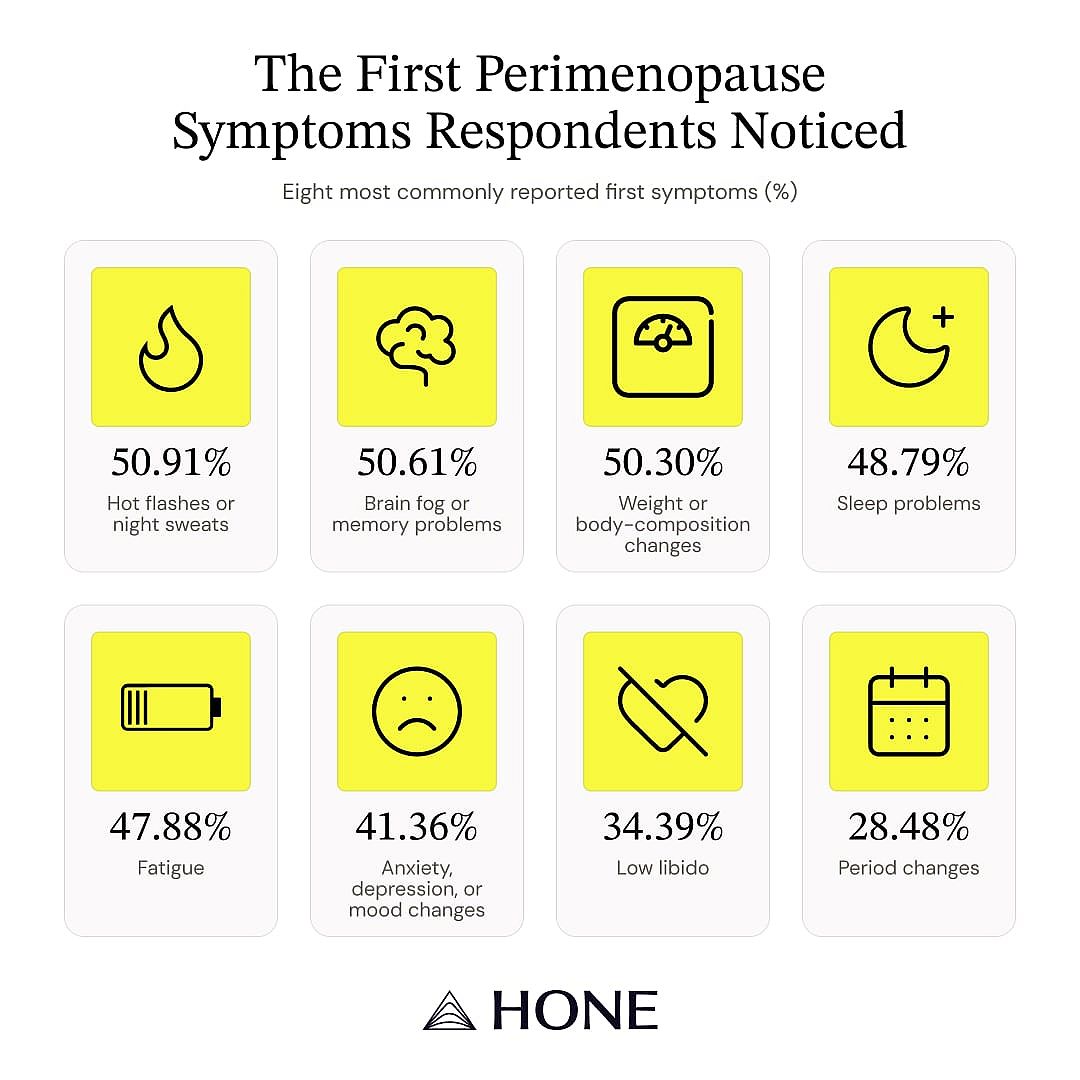
Only 28% of respondents listed period changes among the first three perimenopause symptoms they experienced.
"Perimenopause doesn’t always announce itself with irregular periods," Chvotzkin says. “Women can spend many years in perimenopause while continuing to have regular, predictable menstrual cycles, all while experiencing subtle hormonal shifts and symptoms.”
Instead, 51% listed hot flashes or night sweats among their first symptoms. Brain fog or memory problems also reached 51%, followed by body-composition changes at 50%, sleep problems at 49%, and fatigue at 48%.
"These symptoms are common, disruptive, and easy to explain away. Poor sleep gets blamed on stress. Brain fog gets chalked up to an overloaded schedule," Chvotzkin says. "But taken together, the cluster of changes suggests hormonal decline."
Nearly Half Said Clinicians Attributed Their Symptoms to Something Else
Nearly half of respondents said a doctor had attributed their symptoms to another cause before considering perimenopause.
Asked what they were told was causing their symptoms, 55% of that group cited normal aging. About three in 10 heard that lifestyle habits or excess weight, anxiety or depression, or stress and burnout might be responsible. Another 17% were told a thyroid problem or another medical condition might be the cause.
Clinicians attributed symptoms to:
- 55%: Normal aging
- 31%: Lifestyle habits or excess weight
- 30%: Anxiety or depression
- 29%: Stress or burnout
- 17%: Thyroid or another medical condition
63% Cited Barriers to Treatment
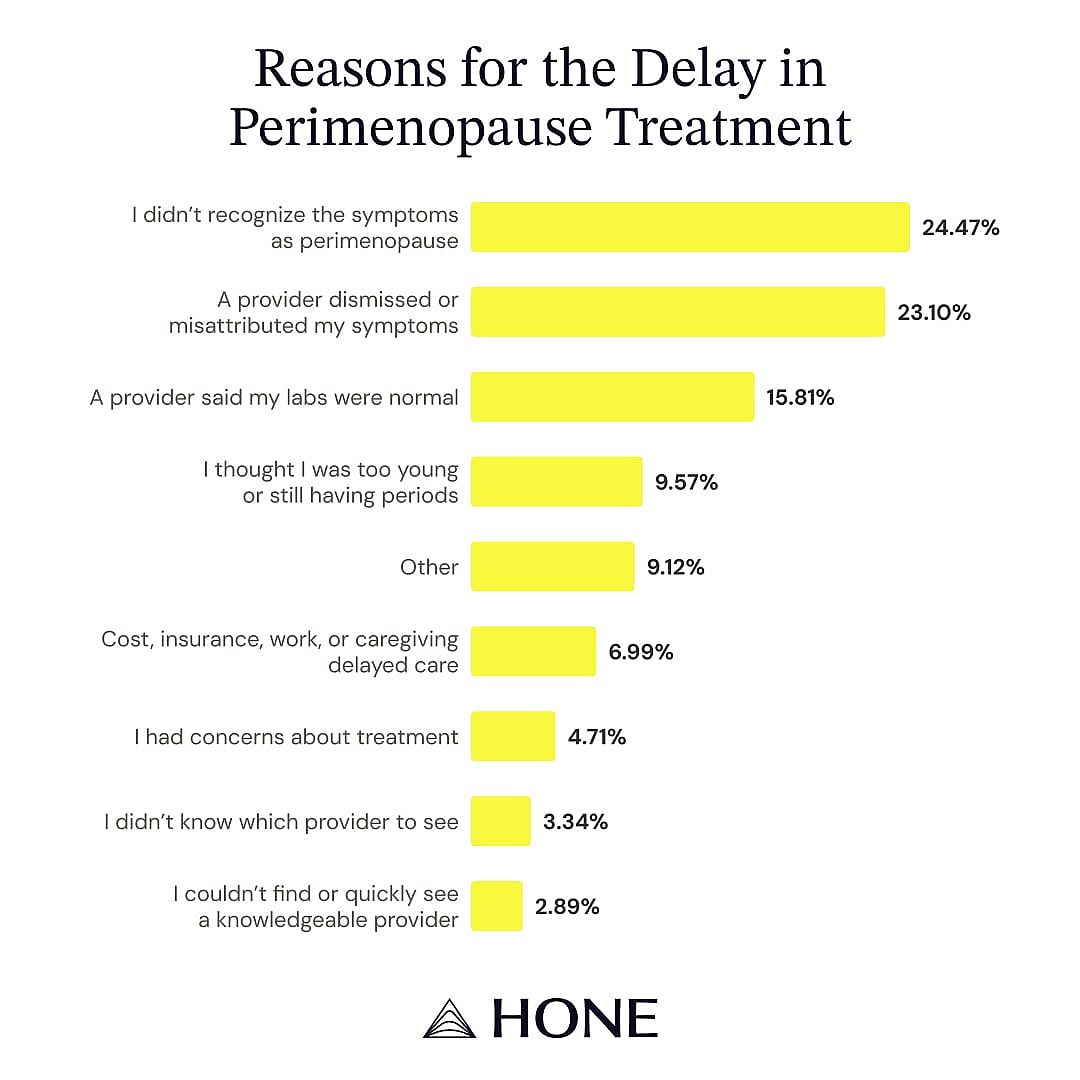
Although 42% first sought hormonal treatment before age 45, only 36% received it by that age. More than half of respondents cited one of three reasons they didn't receive hormone treatment sooner:
- 24% didn't recognize their symptoms as hormonal.
- 23% said a provider dismissed or misattributed their symptoms.
- 16% were told their lab results were normal.


Lab results alone cannot diagnose or rule out perimenopause. Hormone levels can fluctuate significantly, so one result may not explain symptoms that change across weeks or months. Hone Health physicians diagnose perimenopause by considering symptoms, age, menstrual history, and medical history alongside lab testing. Testing helps rule out other causes of symptoms and may catch early signs of disease, which tend to accelerate during the hormonal transition.
More Than 6 in 10 Saw Multiple Doctors Before Getting Hormone Treatment
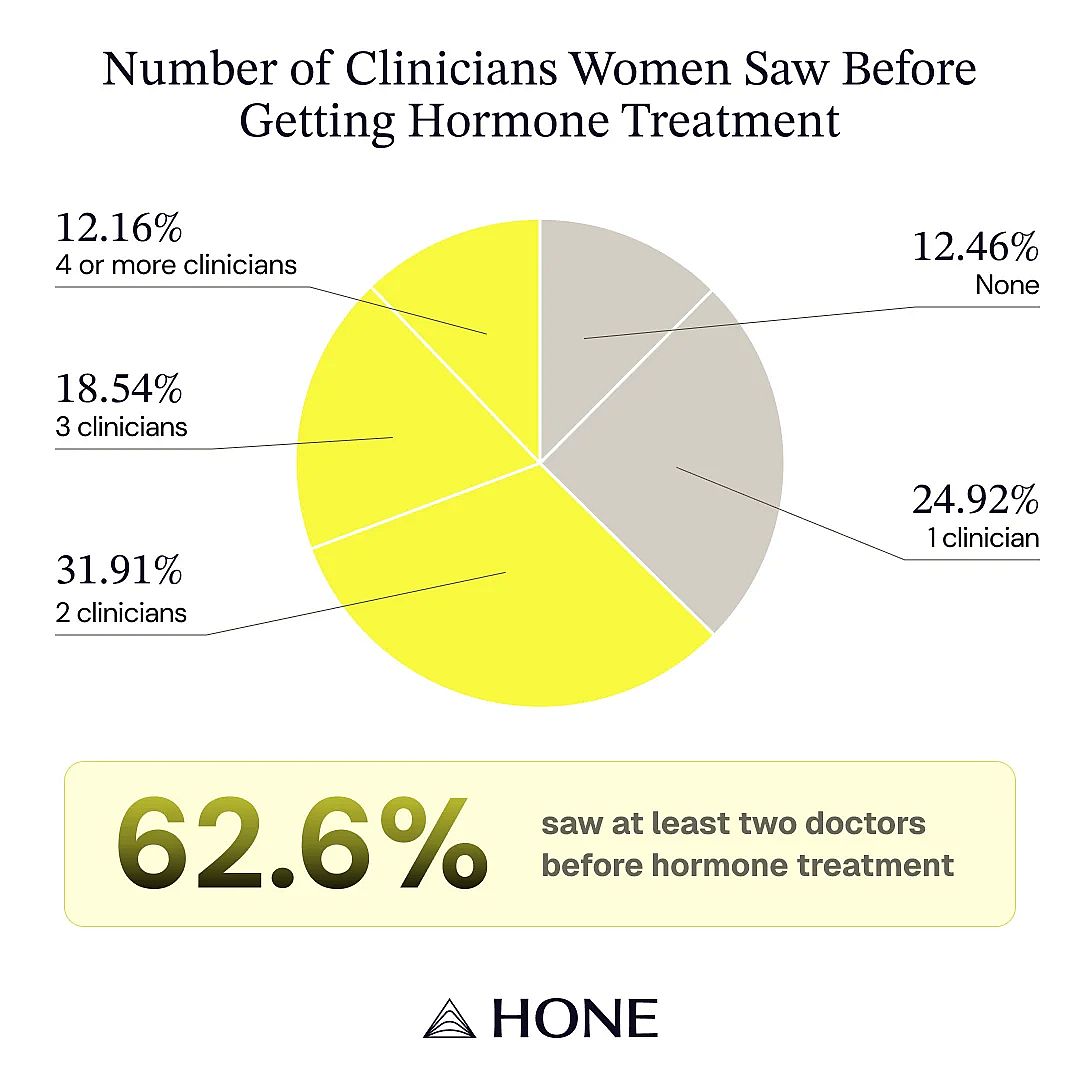
About 63% of respondents saw at least two clinicians before receiving hormone treatment. Roughly three in 10 saw three or more.
“That is the practical cost of perimenopause — more appointments, incomplete explanations, and more time spent suffering with symptoms that medications could vastly improve,” Chvotzkin says.
Most Said No One Explained the Long-Term Health Effects
Sixty-eight percent of respondents said no clinician had explained how midlife hormonal changes could affect their heart, bones, brain, or metabolic health. That counseling gap can become a treatment gap. Women who don't recognize perimenopause may miss the opportunity to consider treatment during an important window for intervention.
An October 2026 Nature Medicine study analyzed more than 300 million laboratory tests from over one million women. It identified a "physiological cliff" around the final menstrual period. Researchers found abrupt changes in markers of bone health, lipid metabolism, liver and kidney function, and blood chemistry that tipped in the direction of disease. Risks for osteoporosis, heart attack, and stroke also rise sharply after menopause.
Those health shifts were smaller among women using menopausal hormone therapy. The study is observational and can’t prove that MHT prevented the changes, but it does suggest that treatment may soften some of the whole-body effects of hormonal decline. Other research has shown that MHT is most effective and also safest for women before age 60 or within 10 years of menopause.
Because reproductive hormones begin changing more than a decade before the final menstrual period, recognizing perimenopause early gives women more time to assess their risks, discuss appropriate treatment, and protect their long-term health.
About the Survey
Hone Health surveyed 660 female members about their experiences with perimenopause symptoms and treatment in October 2026. Responses relied on self-reported recall. The results describe this group and may not represent all U.S. women or establish that perimenopause caused every reported symptom.
FAQs
What are the first symptoms of perimenopause?
In Hone Health's survey of 660 female members, hot flashes or night sweats (51%) and brain fog or memory problems (51%) led the list of first perimenopause symptoms. Body-composition changes (50%), sleep problems (49%), and fatigue (48%) followed.
Can you be in perimenopause if you still have regular periods?
Yes. "Regular periods do not automatically rule out perimenopause," says Hone-affiliated OB-GYN Shelly Chvotzkin, D.O. In the survey, only 28% listed period changes among their first three symptoms, and nearly 10% delayed treatment because they thought they were too young or still had regular periods.
How early can perimenopause symptoms start?
In Hone's survey, more than 55% of respondents said their symptoms began before age 45, including 26% who noticed them in their 30s.
Can a lab test diagnose perimenopause?
Lab results alone cannot diagnose or rule out perimenopause. Hormone levels can fluctuate significantly, so one result may not explain symptoms that change across weeks or months. Doctors typically consider age, clinical history, menstrual patterns, and the full symptom picture.
Why do doctors often miss perimenopause?
Most doctors aren't trained to diagnose or treat perimenopause. In the survey, 55% of respondents say they were told their symptoms reflected normal aging, and nearly half say a doctor attributed their symptoms to another cause.
This story was produced by Hone Health and reviewed and distributed by Stacker.


(0) comments
Welcome to the discussion.
Log In
Keep it Clean. Please avoid obscene, vulgar, lewd, racist or sexually-oriented language.
PLEASE TURN OFF YOUR CAPS LOCK.
Don't Threaten. Threats of harming another person will not be tolerated.
Be Truthful. Don't knowingly lie about anyone or anything.
Be Nice. No racism, sexism or any sort of -ism that is degrading to another person.
Be Proactive. Use the 'Report' link on each comment to let us know of abusive posts.
Share with Us. We'd love to hear eyewitness accounts, the history behind an article.