



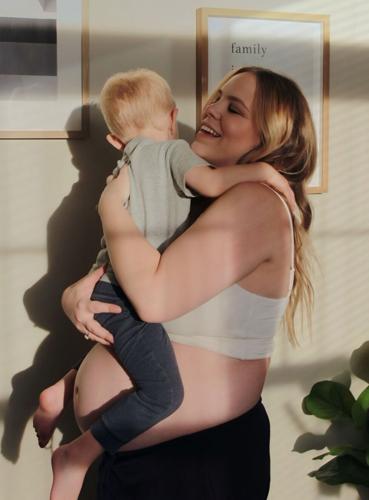


(Photo by Natalia Olivera via Pexels)
By Stephen Beech
Giving birth again too soon after having a baby can speed up biological aging, warns a new study.
Researchers believe that when pregnancies occur too closely together, the mother’s body may not have enough time to recover — causing changes related to biological aging to accumulate.
The study of biological aging — how cells, tissues, and organs change over time, independent of how many years have passed — is a growing area of research that aims to help scientists understand the root causes of chronic illnesses and find ways to improve longevity.
A new review, published in the journal Trends in Endocrinology and Metabolism, analyzes the connections between pregnancy and biological aging.
The American research team hopes that studying the biological changes that occur during pregnancy can help improve maternal health.
Corresponding author Jesse Poganik said: “Our previous research has found that biological age transiently rises during pregnancy, peaking around the third trimester or at the time of delivery.

(Photo by Shylynn Imbraguglio via Pexels)
“If we accept the idea that these short-term changes in biological age occur, the question is how we can relate those changes to the overall trajectory of aging over the course of a lifetime.”
The researchers propose that the recovery time between pregnancies may ultimately affect a mother’s long-term health.
Repeated pregnancies with short intervals in between could potentially prevent complete recovery, allowing some changes to accumulate over successive pregnancies.


Poganik, of Harvard Medical School, Boston, said: “It’s possible that this could change the overall trajectory of aging.”
But he says that the changes don’t necessarily equate with biological damage, adding: “We know that some level of parity, or carrying a pregnancy to term, is actually beneficial to a person’s lifespan.”
The World Health Organization (WHO) currently recommends waiting a minimum of 24 months after a live birth before conceiving another child, as a way to reduce health risks for both mother and baby.

(Photo by Dhemer Gonçalves via Pexels)
But Poganik explains that to make specific recommendations based on biological aging rather than pregnancy outcomes, additional research would be needed to measure biological age across multiple pregnancies and then follow the mothers for decades afterwards.
The research also has implications for improving maternal health during and after pregnancy.
Poganik said: “What motivates me on a more near-term basis is addressing current clinical challenges, including the huge maternal mortality crisis in the United States compared with other industrialized countries.
“Any insights we can gain that can improve the health of mothers makes this a worthwhile research endeavour.”
As well as methylation patterns in blood, he says many other tools can contribute to the study of biological aging — including brain-imaging studies and data from wearable devices.
Poganik added: “There’s a lot of excitement about using biological age-assessment tools to guide individual health on a preventative and personalized level.
“Studying changes during pregnancy is just one way to gain a more fundamental understanding of aging more broadly.”


(0) comments
Welcome to the discussion.
Log In
Keep it Clean. Please avoid obscene, vulgar, lewd, racist or sexually-oriented language.
PLEASE TURN OFF YOUR CAPS LOCK.
Don't Threaten. Threats of harming another person will not be tolerated.
Be Truthful. Don't knowingly lie about anyone or anything.
Be Nice. No racism, sexism or any sort of -ism that is degrading to another person.
Be Proactive. Use the 'Report' link on each comment to let us know of abusive posts.
Share with Us. We'd love to hear eyewitness accounts, the history behind an article.