





Photo by JESSICA TICOZZELLI via Pexels
By Stephen Beech
Social media "friends" don't help overcome loneliness, according to new research.
The first-of-its-kind study suggests that all of the strangers people befriend online are not actually helping them to feel less lonely.
On the contrary, social media connection with people you don’t know in person is associated with increased loneliness, according to the findings published in the journal Public Health Reports.
The study involving more than 1,500 American adults aged 30 to 70 showed that connecting online with people you actually do know was not linked with greater loneliness — but neither was it associated with decreased loneliness.
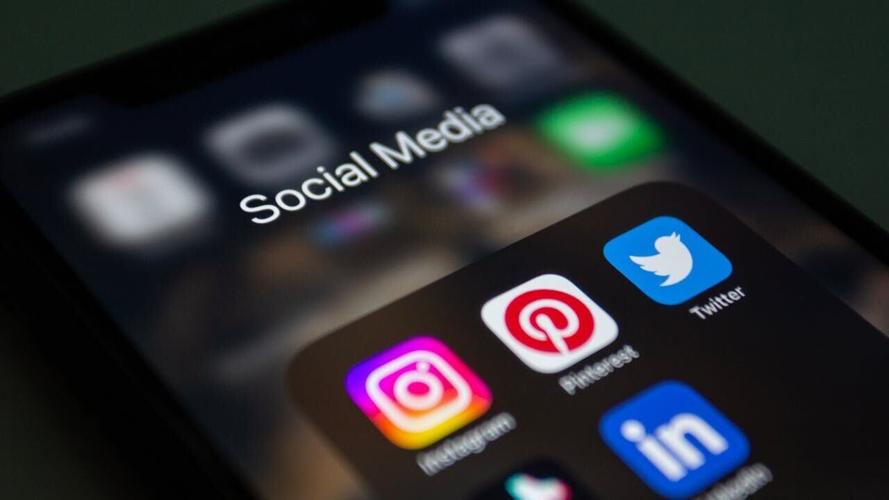
Participants reported their personal, non-business engagement with 10 social media platforms: Facebook, X, Reddit, YouTube, LinkedIn, Instagram, TikTok, Snapchat, Pinterest and WhatsApp.
Study leader Professor Brian Primack said: "People experiencing loneliness may wish to examine critically their interactions with strangers on social media and to prioritize in-person connections over social media ones, even when those social media connections are considered close."

Photo by Bastian Riccardi via Pexels
Dr. Primack, of Oregon State University's College of Health, says the U.S. Public Health Service developed a deep interest in loneliness following a 2023 report on the nation’s loneliness epidemic by then Surgeon General Vivek Murthy.
Murthy's report noted that even before the COVID-1 pandemic, around half of American adults reported measurable levels of loneliness, and that lacking connection brings health risks on a par with smoking.
People who often feel lonely are more than twice as likely to develop depression.


They also face a 29% increased risk of heart disease and a 32% increased risk of stroke while lonely older adults face a 50% increased risk of developing dementia and a 60% chance of premature death.
Dr. Primack says the new research is a step toward filling a knowledge "gap" regarding social media’s role in loneliness.
Most previous studies looked at teenagers and young adults, whereas the new research examines adults in midlife and later adulthood.
Dr. Primack said: “This gap in the literature is important because people who aren’t teens or young adults comprise 75% of the U.S. population.
"These people are heavily exposed to social media, and many of the downstream health impacts of loneliness grow increasingly severe as adulthood progresses."

Photo by Can Camgöz via Pexels
The Oregon State University (OSU) research team noted that overall, around 35% of the study group’s social media contacts were people they had never met in person.
They suspect that one reason interacting with “strangers” on social media is associated with loneliness is because of social media’s "high potential" for facilitating misinterpretation.
Study co-author Jessica Gorman, also of OSU, added: “We know that social media interactions can result in idealization of other people’s friendships with each other, which can exacerbate the effects of social comparison.
“This idealization is possibly stronger when those friendships involve people you’ve never met because there is no personal experience to counter that idealization.”
The project builds on earlier work by Dr. Primack and Professor Gorman linking loneliness to the amount and frequency of social media use.
It adds to a growing body of work by OSU researchers exploring loneliness’ link to conditions such as insomnia and nightmares.


(0) comments
Welcome to the discussion.
Log In
Keep it Clean. Please avoid obscene, vulgar, lewd, racist or sexually-oriented language.
PLEASE TURN OFF YOUR CAPS LOCK.
Don't Threaten. Threats of harming another person will not be tolerated.
Be Truthful. Don't knowingly lie about anyone or anything.
Be Nice. No racism, sexism or any sort of -ism that is degrading to another person.
Be Proactive. Use the 'Report' link on each comment to let us know of abusive posts.
Share with Us. We'd love to hear eyewitness accounts, the history behind an article.