


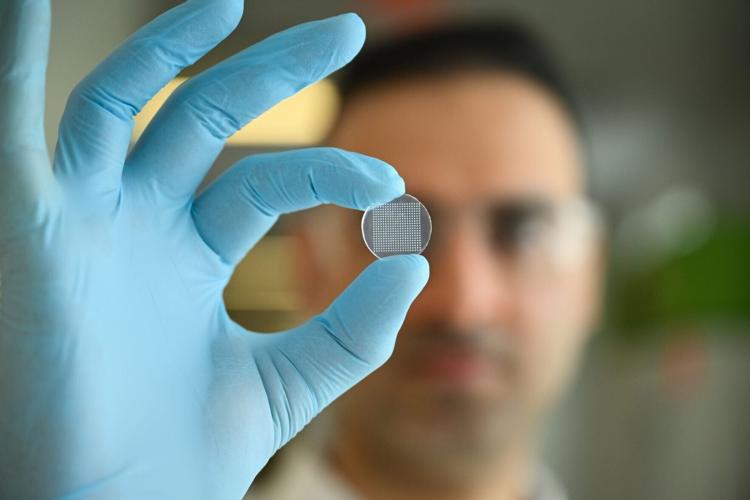
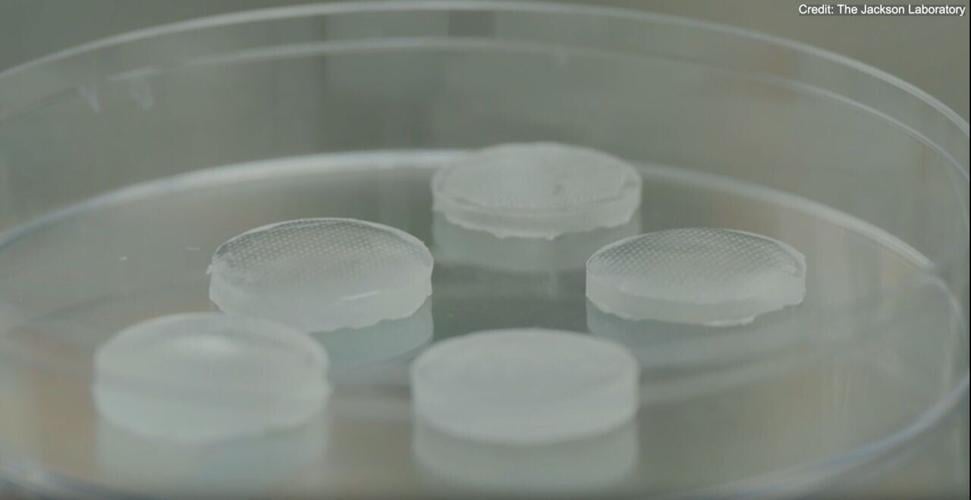

Sasan Jalili holds the microneedle skin patch, which is about the size of a quarter. (The Jackson Laboratory via SWNS)
By Stephen Beech
A "painless" new skin patch is providing a more accurate way to monitor immune conditions.
The bandage-like microneedle patch samples key cells often missed in routine blood samples and biopsies, say scientists.
American researchers developed the new device that can sample the body’s immune responses painlessly from the skin - without the need for taking blood or surgical biopsies.
They say it detects inflammatory signals within minutes and collects specialised immune cells within hours.
The patch is already helping doctors and researchers study immune responses in ageing and skin autoimmunity, including vitiligo and psoriasis.
The research team say it could, in future, make it easier to track how people respond to vaccines, infections, and cancer therapies by complementing traditional blood tests and biopsies while being far easier on patients.

(The Jackson Laboratory via SWNS)
The patch, described in the journal Nature Biomedical Engineering, was developed by scientists at The Jackson Laboratory (JAX) in Maine, working with colleague at Massachusetts Institute of Technology (MIT).
Dr. Sasan Jalili, a biomedical engineer and immunologist at JAX, said: “Traditionally, studying some of the most important immune cells in the body requires a skin biopsy or blood draws.
"Because many of these cells live and respond in tissues like the skin, accessing them has meant invasive procedures.
“We’ve shown we can capture them painlessly and noninvasively instead.
"This is especially important in sensitive or visible areas like the face or neck, where people often don’t want biopsies because of scarring, as well as for older adults, frail patients, and very young children or infants.”
Initially developed during his postdoctoral training at MIT, the platform was further refined, optimized, and advanced from mouse models toward clinical application at JAX through collaborations with the University of Massachusetts Chan Medical School.
Most current tests for monitoring immune cells and inflammatory biomarkers rely on taking blood, but many of the cells that recognise specific infections, vaccines, or autoimmune triggers circulate only sparsely in blood.
Dr. Jalili explained that the patch works by harnessing resident memory T cells, immune sentinels that live in skin and other “barrier” tissues and rapidly respond to previously encountered foreign threats, or antigens.

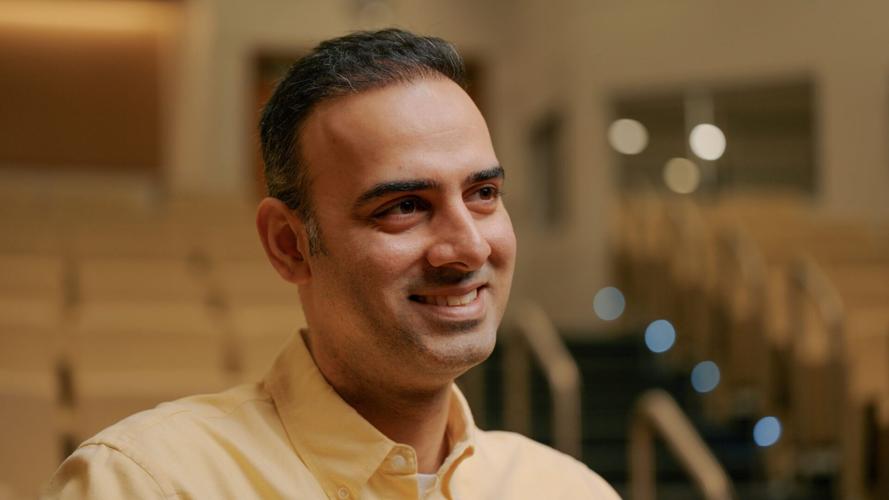
Dr. Sasan Jalili is a biomedical engineer and immunologist. (The Jackson Laboratory via SWNS)
When those cells recognise a familiar antigen, such as a fragment of a virus or an allergen, they “sound the alarm” - releasing signals to attract additional immune cells from the bloodstream, including the highly specialised T cells that recognise that same threat.
By triggering the natural process, which concentrates key immune cells in the skin, the research team deliberately assessed immune responses.
The sampled material revealed the number and state of T cells and other signalling molecules, offering a "dynamic" readout of the immune system’s strength and responsiveness to specific diseases and conditions.
Dr. Jalili said: “In this study, we used antigen-specific T cells as a proof of concept, but the patch also captures other immune cells and inflammatory biomarkers.”


In mouse vaccination models, the patch dramatically boosted the recovery of antigen-specific T cells, recruiting many of the cells from the bloodstream rather than skin.
In a human test at Chan Medical School, the patch also collected a rich mix of immune cells and signalling proteins, including resident memory T cells.
Dr. Jalili said: “This study marks the first demonstration of live human immune cell sampling using a microneedle patch.
“This opens the door to a new way of monitoring immune responses that’s practical, painless, and clinically feasible.”

(The Jackson Laboratory via SWNS)
He says the patch absorbs immune cells and signalling proteins from the skin after resident memory T cells are briefly reactivated with a small amount of antigen.
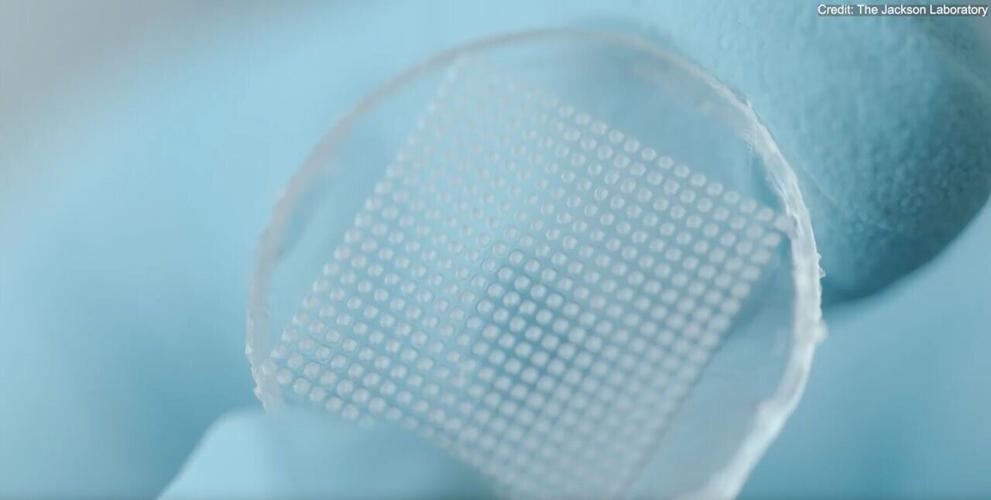
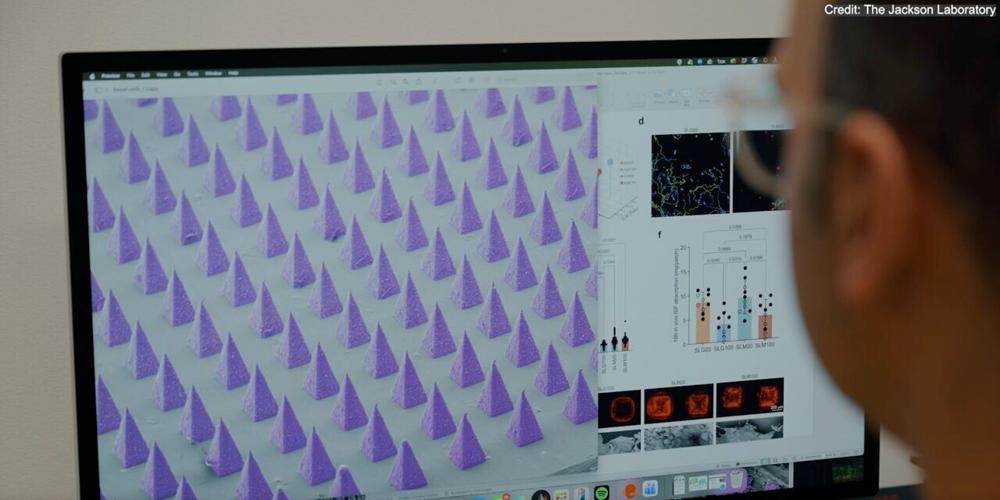
It contains hundreds of microscopic needles made of an approved polymer.
A seaweed-derived hydrogel coats the needles and absorbs immune cells and molecules from skin interstitial fluid.
The microneedles reach only the upper skin layers - causing minimal irritation and no damage to nerves or blood vessels, according to the research team.
They say blood tests and biopsies will remain essential tools, and additional studies to determine how the patch performs across different diseases and patient groups are under way.
But study co-author Professor Darrell Irvine, an immunologist and bioengineer at Scripps Research, said the early findings are "particularly promising."
He said: “Not only did we run extensive preclinical experiments, we were able to carry out an initial test in humansd.
“That’s exciting because it almost never happens with brand-new technologies.

(The Jackson Laboratory via SWNS)
"Moving new technologies from the lab to testing on patients often takes years.”
The research team say the patch may be especially useful for skin conditions, since immune cells that drive conditions - such as allergic dermatitis, psoriasis, and vitiligo - already live in the tissue.
Dr. Jalili is already using it to study how age-related skin changes contribute to chronic inflammation and frailty in older people.
He said the patch could eventually support at-home monitoring- allowing patients with skin conditions to track unpredictable flare-ups.
Dr. Jalili says the technology could also be adapted for oral or nasal cavities, opening the door to monitoring mucosal immune responses.
He added: “People wouldn’t need hours of sampling.
"Even 15 to 30 minutes can be enough to detect inflammatory signals and get a sense of what’s happening in the tissue."





(0) comments
Welcome to the discussion.
Log In
Keep it Clean. Please avoid obscene, vulgar, lewd, racist or sexually-oriented language.
PLEASE TURN OFF YOUR CAPS LOCK.
Don't Threaten. Threats of harming another person will not be tolerated.
Be Truthful. Don't knowingly lie about anyone or anything.
Be Nice. No racism, sexism or any sort of -ism that is degrading to another person.
Be Proactive. Use the 'Report' link on each comment to let us know of abusive posts.
Share with Us. We'd love to hear eyewitness accounts, the history behind an article.