



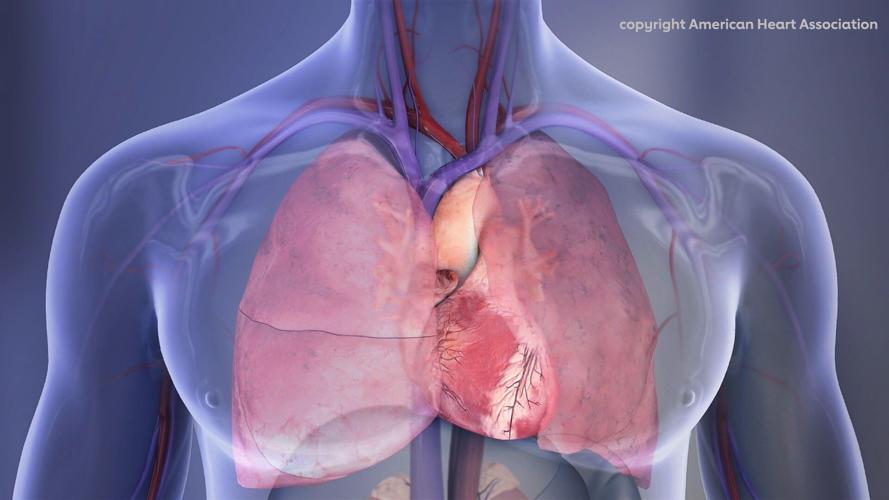


Human Chest Cavity illustration that shows the right lung, left lung and heart. (American Heart Association via SWNS)
By Stephen Beech
Night owls are more likely to suffer a heart attack or stroke, warns new research.
People who stay up late and are active at night - particularly women - tend to have poor cardiovascular health scores compared to those with more typical sleep-wake timing, according to the findings.
The study showed that middle-aged and older adults who are naturally more active in the evenings are at greater risk of a heart attack or stroke, compared to people without a strong morning or evening preference.
Unhealthy habits among night owls - such as poor diet quality, insufficient sleep and smoking - may account for their lower cardiovascular health profile, according to analysis of data from over 300,000 British adults.
But helping them improve their lifestyle may lower their risk for heart attack and stroke, say scientists.
Researchers reviewed health data for more than 300,000 adults with an average age of around 57 participating in the UK Biobank medical database to assess how "chronotypes" - a person’s natural preference for sleep-wake timing - impacted their cardiovascular health.
Around one-in-12 participants said they were “definitely evening people” - which was characterised as having a late-night bedtime, such as 2am, and peak activity later in the day.

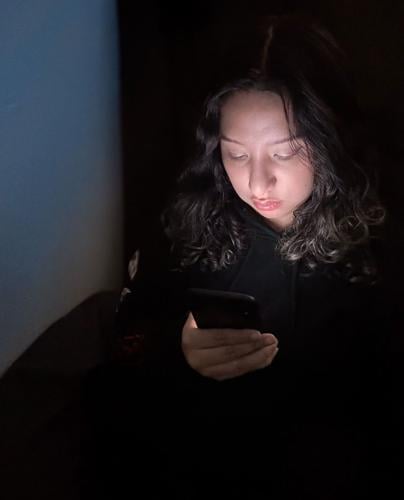
People who stay up late and are active at night - particularly women - tend to have poor cardiovascular health scores. (American Heart Association via SWNS)
Self-reported “definitely morning people” - who were more active earlier in the day and had earlier bedtimes such as 9pm - made up about 24% of participants.
Around two out of every three participants were classified as “intermediate” chronotype if they said they were unsure, or if said they were neither a morning person nor an evening person.
Cardiovascular health was measured according to the American Heart Association’s Life’s Essential 8 measures, which note habits and factors associated with optimal cardiovascular health.
The metrics include a healthy diet, regular physical activity, not smoking, good sleep quality, as well as healthy levels for weight, cholesterol, blood sugar and blood pressure.

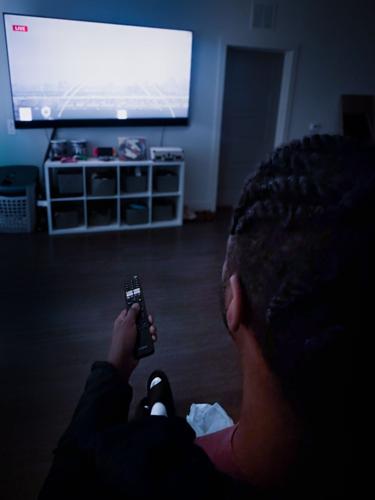
Man watching television at night. (American Heart Association via SWNS)


The analysis, published in the Journal of the American Heart Association, found that “evening people” or night owls had a 79% higher prevalence of having an overall poor cardiovascular health score compared to intermediate chronotypes.
Night owls also had a 16% higher risk of having a heart attack or stroke over an average median of around 14 years follow-up, compared to people within the intermediate category.
Evening chronotype was more strongly related to low cardiovascular health scores in women than in men.
The findings suggested that much of the increased risk of heart disease among evening people was due to poor heart health habits and factors, especially nicotine use and inadequate sleep.
In contrast, “morning people” - or early birds - had a 5% lower prevalence of low heart health scores compared with those without a strong morning or evening chronotype.
Lead study author Dr. Sina Kianersi said: "Evening people often experience circadian misalignment, meaning their internal body clock may not match the natural day-to-night light cycle or their typical daily schedules.”
Dr. Kianersi, a research fellow at Brigham and Women’s Hospital and Harvard Medical School, Boston, added: “Evening people may be more likely to have behaviours that can affect cardiovascular health, such as poorer diet quality, smoking and inadequate or irregular sleep.”

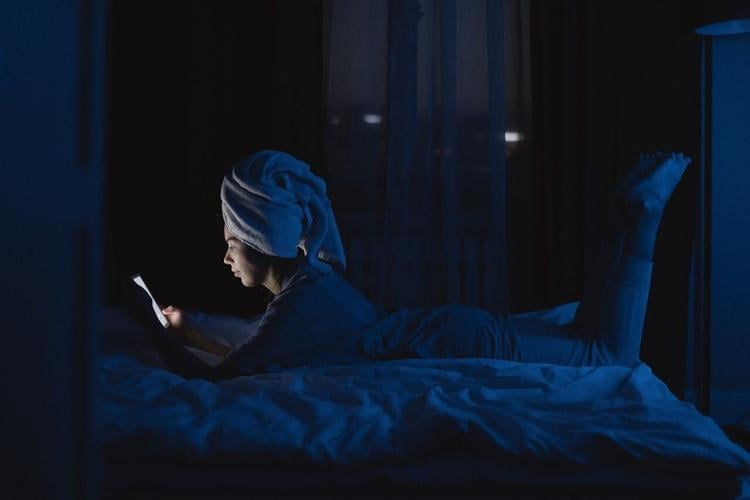
(Photo by SHVETS production via Pexels)
But the study findings are not all bad news for night owls, according to Dr Kristen Knutson, volunteer chair of the 2025 American Heart Association (AHA) statement.
Dr. Knutson, who was not involved in the study, said: "These findings show that the higher heart disease risks among evening types are partly due to modifiable behaviours such as smoking and sleep.
"Therefore, evening types have options to improve their cardiovascular health.
“Evening types aren’t inherently less healthy, but they face challenges that make it particularly important for them to maintain a healthy lifestyle.”
The AHA scientific statement Dr. Knutson led suggests that individual chronotype should be considered in guiding the timing of interventions or treatment.
She added: “Some medications or therapies work best when they align with a specific time of relevant circadian rhythms, and this time will vary depending on whether you are a morning, intermediate, or evening chronotype."
“Targeted programmes for people who naturally stay up late could help them improve their lifestyle behaviours and reduce their risk of cardiovascular disease.”


(0) comments
Welcome to the discussion.
Log In
Keep it Clean. Please avoid obscene, vulgar, lewd, racist or sexually-oriented language.
PLEASE TURN OFF YOUR CAPS LOCK.
Don't Threaten. Threats of harming another person will not be tolerated.
Be Truthful. Don't knowingly lie about anyone or anything.
Be Nice. No racism, sexism or any sort of -ism that is degrading to another person.
Be Proactive. Use the 'Report' link on each comment to let us know of abusive posts.
Share with Us. We'd love to hear eyewitness accounts, the history behind an article.