



Heat stroke vs. heat exhaustion: Emergency response guide
Understanding the difference between heat stroke and heat exhaustion can mean the difference between life and death during extreme heat emergencies. When temperatures soar and humidity climbs, your body's cooling system faces intense pressure. While both conditions stem from heat exposure, they represent vastly different medical situations requiring distinct responses, Doctronic reports.
Key Takeaways
- Heat stroke involves body temperature above 103°F with altered mental state, while heat exhaustion presents with profuse sweating and weakness.
- Heat stroke is a life-threatening emergency requiring immediate 911 call, heat exhaustion can often be managed with cooling and hydration.
- Core body temperature and mental status are the two critical distinguishing factors between these heat illnesses.
- Recognition within the first 30 minutes improves outcomes for both conditions.
What Are Heat Stroke and Heat Exhaustion
Heat exhaustion serves as your body's warning system when cooling mechanisms become overwhelmed, but continue to function. Think of it as your internal thermostat working overtime, producing excessive sweat while struggling to maintain normal temperature. Your body recognizes the threat and attempts to compensate by increasing blood flow to the skin and rapid breathing.
Heat stroke occurs when your body's temperature regulation completely fails, posing an immediate risk of organ damage. Unlike heat exhaustion, this represents total system breakdown. Your internal thermostat stops working entirely, leaving core temperature to climb dangerously high. Brain function becomes impaired, and without intervention, permanent damage or death can occur within hours.
Both conditions result from prolonged exposure to high temperatures combined with dehydration, but heat stroke represents the most severe form of hyperthermia, requiring immediate medical intervention. The progression from normal temperature regulation to heat stroke can happen rapidly, especially in vulnerable populations. Understanding this spectrum helps you respond appropriately when someone shows signs of heat-related illness.
When Heat Emergencies Strike: High-Risk Scenarios
Outdoor labor during heat waves creates prime conditions for both heat exhaustion and heat stroke, especially in construction, landscaping, and agricultural work. Workers wearing protective equipment face additional risk as gear prevents natural cooling through evaporation. Even experienced outdoor professionals can develop heat illness when temperature and humidity levels exceed their body's adaptation capacity.
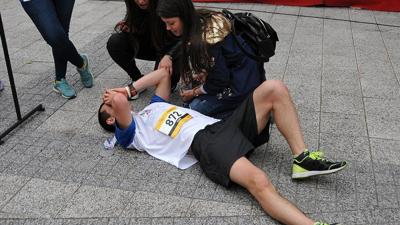
Athletic activities in temperatures above 85°F with high humidity levels challenge even the fittest individuals. Football practices, marathon running, and intense training sessions push athletes beyond normal heat tolerance. The competitive drive to continue despite early warning signs often leads to dangerous escalation from heat exhaustion to heat stroke.
Elderly individuals in homes without adequate air conditioning during extended heat periods are also particularly vulnerable. Age-related changes in circulation and medication effects can impair natural cooling responses. As with conditions affecting circulation that can cause non-cardiac chest pain, heat stress impacts multiple body systems simultaneously.
Children left in vehicles present extreme emergency situations where temperatures can rise 20°F in just 10 minutes. Their smaller body mass and immature temperature regulation make them susceptible to rapid heat stroke development. Even brief exposures can prove fatal.
How to Recognize Heat Stroke vs. Heat Exhaustion Symptoms
Heat exhaustion presents with heavy sweating, weakness, nausea, and crucially, normal mental function. Victims remain alert and responsive, though they feel terrible. Their skin appears pale and feels cool despite the sweating. They may complain of headache, dizziness, or muscle cramps. Body temperature typically stays below 103-104°F.
Heat stroke is characterized by a body temperature above 103°F, hot, dry skin, and confusion or unconsciousness. This altered mental state represents the key danger sign. Victims may seem disoriented, agitated, or completely unresponsive. Their skin feels hot to the touch and appears flushed red. Sweating often stops entirely as the body's cooling system fails.
Pulse characteristics differ between conditions. Heat exhaustion produces a rapid and weak pulse as the cardiovascular system struggles with dehydration and heat stress. Heat stroke creates a rapid and strong pulse as the heart works frantically to circulate blood through overheated organs.
Skin temperature assessment reveals cool and moist skin in exhaustion versus hot and dry skin in stroke. This simple touch test provides immediate diagnostic information. Just as recognizing early signs of serious conditions like stroke can save lives, identifying these skin changes guides proper treatment.
Emergency Response Protocols for Heat Illness
Heat exhaustion response focuses on moving the person to a cool environment, removing excess clothing, and implementing gradual cooling measures. Start by relocating them to shade or air conditioning. Remove unnecessary clothing layers and apply cool, wet cloths to skin. Encourage small sips of cool water if they remain conscious and alert.
Heat stroke requires immediate 911 activation followed by aggressive cooling with ice packs applied to the neck, armpits, and groin areas. These locations contain major blood vessels that rapidly distribute cooled blood throughout the body. Time becomes critical as brain damage can occur within 15-30 minutes of core temperature exceeding 106°F.


Hydration protocols differ between conditions. Heat exhaustion patients who remain conscious can take small, frequent sips of cool water or sports drinks. However, never give oral fluids to suspected heat stroke victims due to altered consciousness and aspiration risk. Professional medical teams will provide intravenous fluids.
Continuous monitoring of consciousness level determines if the condition escalates from exhaustion to stroke. Any change in mental status warrants immediate emergency services activation.
Critical Treatment Differences
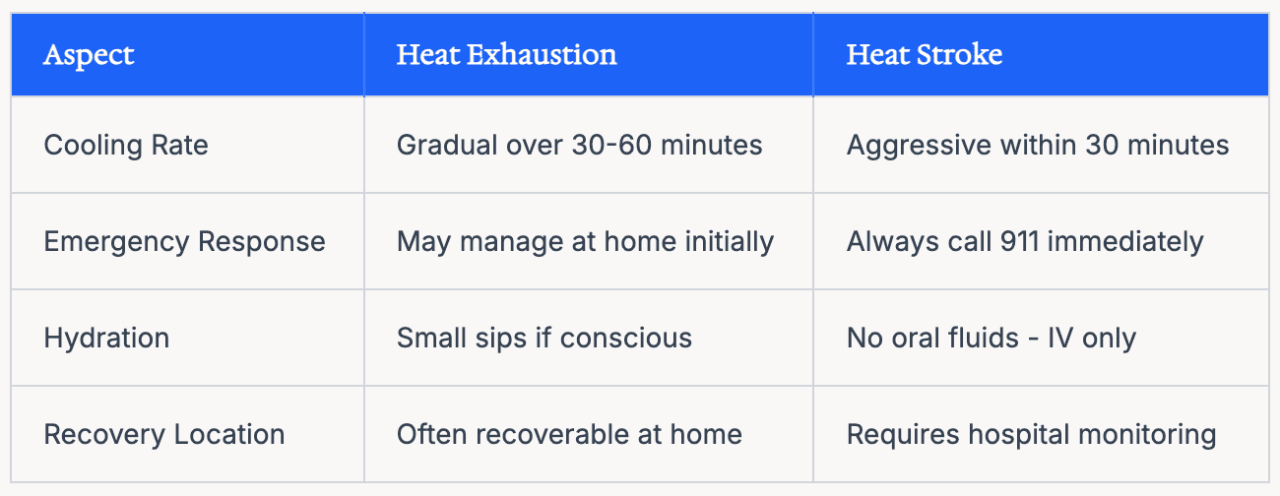
Heat exhaustion allows for gradual cooling over 30-60 minutes while maintaining patient comfort. You have time to implement cooling strategies and observe the response. Most people recover fully with proper treatment and can return to normal activities within 24-48 hours.
Heat stroke demands aggressive cooling within 30 minutes to prevent permanent organ damage. Every minute of delay increases the risk of brain injury, kidney failure, or death. Even if the person seems to improve with cooling, emergency transport remains necessary for complete evaluation and monitoring.
Heat exhaustion patients can often recover at home with proper cooling and hydration, assuming they respond appropriately to initial treatment. Monitor them closely for the next 24 hours and ensure they avoid heat exposure until fully recovered.
Heat stroke always requires emergency medical transport regardless of apparent improvement. Hospital teams need to assess organ function, provide advanced cooling techniques, and monitor for complications. Heat stroke can cause unpredictable effects requiring professional management.
Frequently Asked Questions
Can heat exhaustion turn into heat stroke if untreated?
Yes, heat exhaustion can progress to heat stroke within minutes to hours without proper treatment. The transition occurs when the body's cooling system completely fails. This is why immediate cooling and hydration are crucial for heat exhaustion, and why any change in mental status requires emergency activation.
How accurate are infrared thermometers for diagnosing heat stroke vs. heat exhaustion?
Infrared thermometers can provide useful temperature readings, but shouldn't be the sole diagnostic tool. Core body temperature measurement requires rectal thermometry for accuracy. Focus on overall symptoms, including mental status, skin condition, and sweating patterns rather than relying exclusively on forehead temperature readings.
Should I give water to someone with suspected heat stroke?
Never give oral fluids to suspected heat stroke victims due to altered mental status and choking risk. Their confusion or unconsciousness makes swallowing dangerous. Focus on external cooling measures while waiting for emergency services. Professional medical teams will provide appropriate intravenous hydration.
When is it safe to return to activities after heat exhaustion?
Wait at least 24-48 hours after complete symptom resolution before returning to heat exposure or strenuous activity. Your body needs time to restore fluid balance and repair heat-stressed systems. Gradually increase activity levels over several days, ensuring adequate hydration and monitoring for symptom recurrence.
Can AI symptom checkers help distinguish between heat stroke and heat exhaustion?
AI tools can provide valuable guidance for symptom assessment, but heat emergencies require immediate action and medical attention based on key signs like mental status and body temperature. Use AI consultations as supplementary information while prioritizing direct emergency response for suspected heat stroke cases.
The Bottom Line
Recognizing heat stroke vs. heat exhaustion saves lives through appropriate emergency response. Heat exhaustion responds well to cooling and hydration measures, allowing many people to recover at home with proper care. Heat stroke represents a true medical emergency requiring immediate 911 activation and aggressive cooling to prevent permanent organ damage or death. The key distinguishing factors remain core body temperature above 103°F and altered mental status in heat stroke, versus normal consciousness with profuse sweating in heat exhaustion. Understanding these differences empowers you to take correct action when minutes matter.
This story was produced by Doctronic and reviewed and distributed by Stacker.


(0) comments
Welcome to the discussion.
Log In
Keep it Clean. Please avoid obscene, vulgar, lewd, racist or sexually-oriented language.
PLEASE TURN OFF YOUR CAPS LOCK.
Don't Threaten. Threats of harming another person will not be tolerated.
Be Truthful. Don't knowingly lie about anyone or anything.
Be Nice. No racism, sexism or any sort of -ism that is degrading to another person.
Be Proactive. Use the 'Report' link on each comment to let us know of abusive posts.
Share with Us. We'd love to hear eyewitness accounts, the history behind an article.