



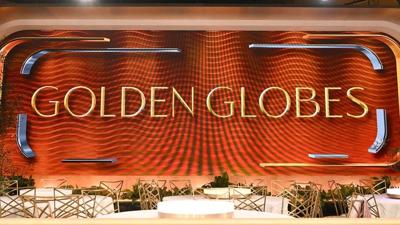

How award season has evolved into a second-screen cultural spectacle
In a media landscape shaped by on-demand streaming and personalised feeds, live television might seem like a fading idea. Yet year after year, award shows like the Golden Globes still dominate timelines, group chats, and entertainment headlines. They create moments that capture reaction, commentary, and conversation in real time.
That cultural pull is reflected in both viewing figures and social buzz. The Golden Globes 2025 telecast drew an estimated 10.1 million viewers across broadcast and streaming platforms, making it one of the most-watched entertainment award nights of the season.
Beyond TV screens, the ceremony generated around 40 million social media impressions on show night, with total engagement up more than 124% year over year, underlining how awards culture now lives as much online as it does on air.
A recent survey of 2,000 U.S. respondents by Mecca Bingo into awards-season habits suggests that while viewing styles have changed, engagement has not disappeared. More than 20% say they still watch major awards shows live from start to finish, treating the night as an event. Another 19% tune in live more casually, while almost 26% primarily follow awards shows through highlights and clips. The result is an experience that rarely lives on just one screen.

What people think about the Golden Globes
When asked which words best describe the Golden Globes, the most common answers were “entertaining” (29%) and “glamorous” (28%), closely followed by “a social event” (25%). Attitudes reinforce that shift toward spectacle. 42% say they enjoy the Globes more for the fashion and social moments than the awards themselves, while 37% say the red carpet and celebrity appearances are the main reason they pay attention at all.
The red carpet, celebrity moments, unexpected wins, and speeches that instantly become memes remain central to the appeal. Rather than being seen purely as a traditional ceremony, the Golden Globes are increasingly viewed as a pop-culture moment. It is something people experience not just by watching the broadcast, but by participating in the wider conversation across platforms.
From live TV to second screens
Streaming has given viewers control, but it has also removed one thing television still does best, which is shared experience. Awards shows offer unpredictability. Viewers don’t just watch to see who wins. They watch for what might happen.


And increasingly, they don’t watch alone. The survey found that 38% use a second screen while watching awards shows, while 24% actively engage socially and 14% post or comment during the broadcast itself. For many, Golden Globes night is as much about reaction as result.
Why familiarity still comforts us
Many entertainment formats, such as game shows and video games, rely on anticipation followed by payoff. They are built around clear segments, recurring beats, and moments of suspense that resolve quickly. These are patterns audiences instantly understand.
Awards shows follow the same familiar rhythm: categories, envelopes, winners, reactions. In an age of infinite choice, that predictability can feel comforting. It allows viewers to dip in and out, half-watch, scroll, or chat, without ever feeling lost.
This helps explain why awards ceremonies adapt so well to modern viewing habits. Their structure makes them easy to experience across multiple screens, in fragments, or through highlights, while still feeling part of a single shared event.
Why awards shows still capture attention
Attention now looks different from what it once did. Awards shows have shifted from appointment television to a modern ritual. They are something people are more likely to fold into relaxed nights at home rather than sit down to formally watch.
Rather than competing with modern habits, awards shows have absorbed them. They have become less about sitting still and more about taking part: watching, posting, reacting, catching up, sharing.
And in a fragmented media world, the ability to pull people toward the same moment, even in different ways, remains powerful. It is why, year after year, the Golden Globes still find themselves at the center of the entertainment conversation.
Methodology
To uncover award show attitudes, Mecca Bingo conducted a nationwide survey of 2,000 U.S. respondents in December 2025. The survey is nationally representative of age (21+), gender and state. The survey respondents included 58% females and 42% males. The average age of the respondents was 36 years.
This story was produced by Mecca Bingo and reviewed and distributed by Stacker.


(0) comments
Welcome to the discussion.
Log In
Keep it Clean. Please avoid obscene, vulgar, lewd, racist or sexually-oriented language.
PLEASE TURN OFF YOUR CAPS LOCK.
Don't Threaten. Threats of harming another person will not be tolerated.
Be Truthful. Don't knowingly lie about anyone or anything.
Be Nice. No racism, sexism or any sort of -ism that is degrading to another person.
Be Proactive. Use the 'Report' link on each comment to let us know of abusive posts.
Share with Us. We'd love to hear eyewitness accounts, the history behind an article.