


Like many mammals, deer physically prepare for winter by better insulating their bodies. In the fall, deer gradually trade their summer coats for warmer winter ones, more substantial with thicker, longer, darker hair. Called guard hair, it protects their fur and skin from rain and snow.
Their winter coat naturally absorbs more sunlight and traps more body heat than their warm-weather coat, which provides protection from the cold. Deer also have oil-producing glands in their skin that help make their hair water resistant, especially valuable in the snow. For further insulation, their bodies naturally begin to retain more fat in winter.
Deer also alter their behavior to survive the winter weather. They generally become less active, sometimes dropping their metabolism by half, which allows them to save energy. Deer can hunker down during particularly harsh winter weather and survive on their fat, but eventually they have to eat something, although their preferred food sources are long gone.
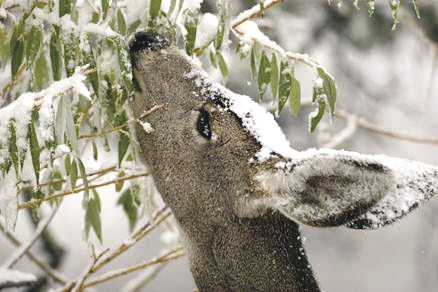
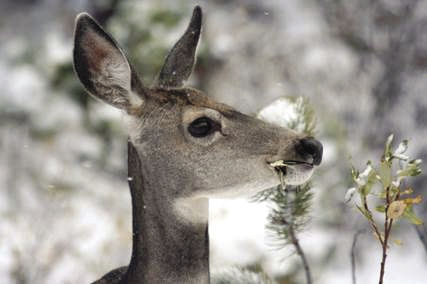
Deer do survive harsh winters, even when the vegetation they prefer is nearly impossible to find. Deer’s usual winter diet includes food that is not particularly nutritious, but is above snow and available, like twigs, leaves, bark and evergreen shrubs and trees like yews and arborvitae. Arborvitae is a tree and a common backyard hedging solution that grows moderately fast. During a harsh winter, deer can decimate arborvitae trees.
Because food is scarce during winter, high deer populations mean more competition for food, and deer are likely to be more resistant to efforts to repel them. They’ll return to areas like the yard, where they found plentiful pickings in warm weather and be inclined to stay put until the yard is stripped of all possible food sources. An adult deer eats about seven pounds of food a day and usually occupies a three- to four-square-mile area for their entire lives. That means if a deer has been in the yard before, it is more than likely they will return to forage in the winter.
To save shrubs and trees from deer damage in winter, the best defense is the continual use of a proven-effective repellent, like Bobbex Deer Repellent, foliar spray.
Experts recommend a steady course of repellent application in every season as deer shift their feeding patterns. Since deer learn from experience, maintaining repellent applications throughout the year will teach them to continually bypass the yard in favor of less objectionable fare elsewhere.
Left undeterred, deer can strip landscaping and expensive, susceptible plantings in winter, leaving an unattractive yard and high replacement costs when warm weather arrives. Preparing now and taking preventive steps against the ravages of deer can help ensure they’ll learn to leave the yard alone throughout the winter, and with continued use, keep them at bay all year long.
For more information, visit www.bobbex.com.


(0) comments
Welcome to the discussion.
Log In
Keep it Clean. Please avoid obscene, vulgar, lewd, racist or sexually-oriented language.
PLEASE TURN OFF YOUR CAPS LOCK.
Don't Threaten. Threats of harming another person will not be tolerated.
Be Truthful. Don't knowingly lie about anyone or anything.
Be Nice. No racism, sexism or any sort of -ism that is degrading to another person.
Be Proactive. Use the 'Report' link on each comment to let us know of abusive posts.
Share with Us. We'd love to hear eyewitness accounts, the history behind an article.