


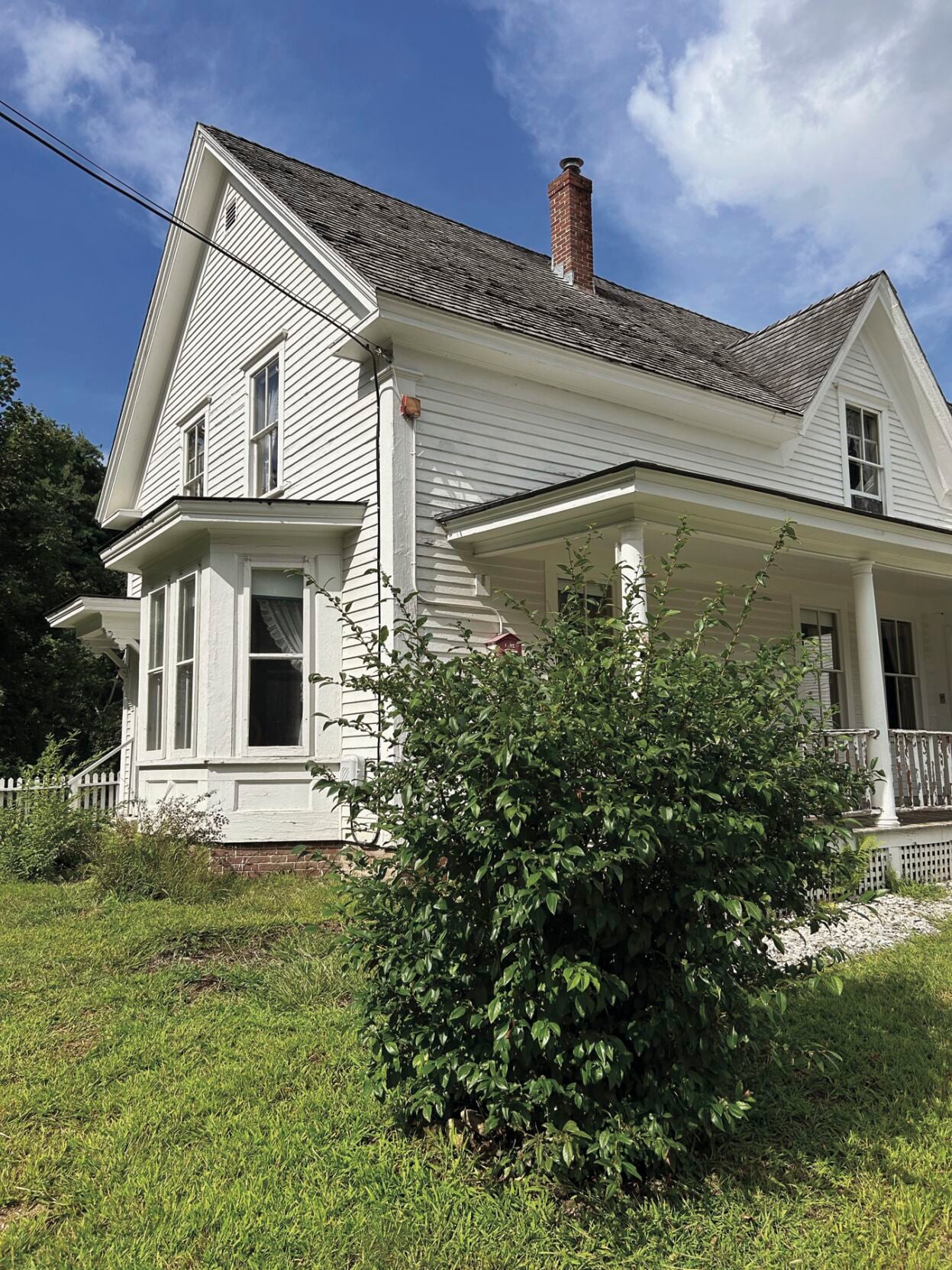
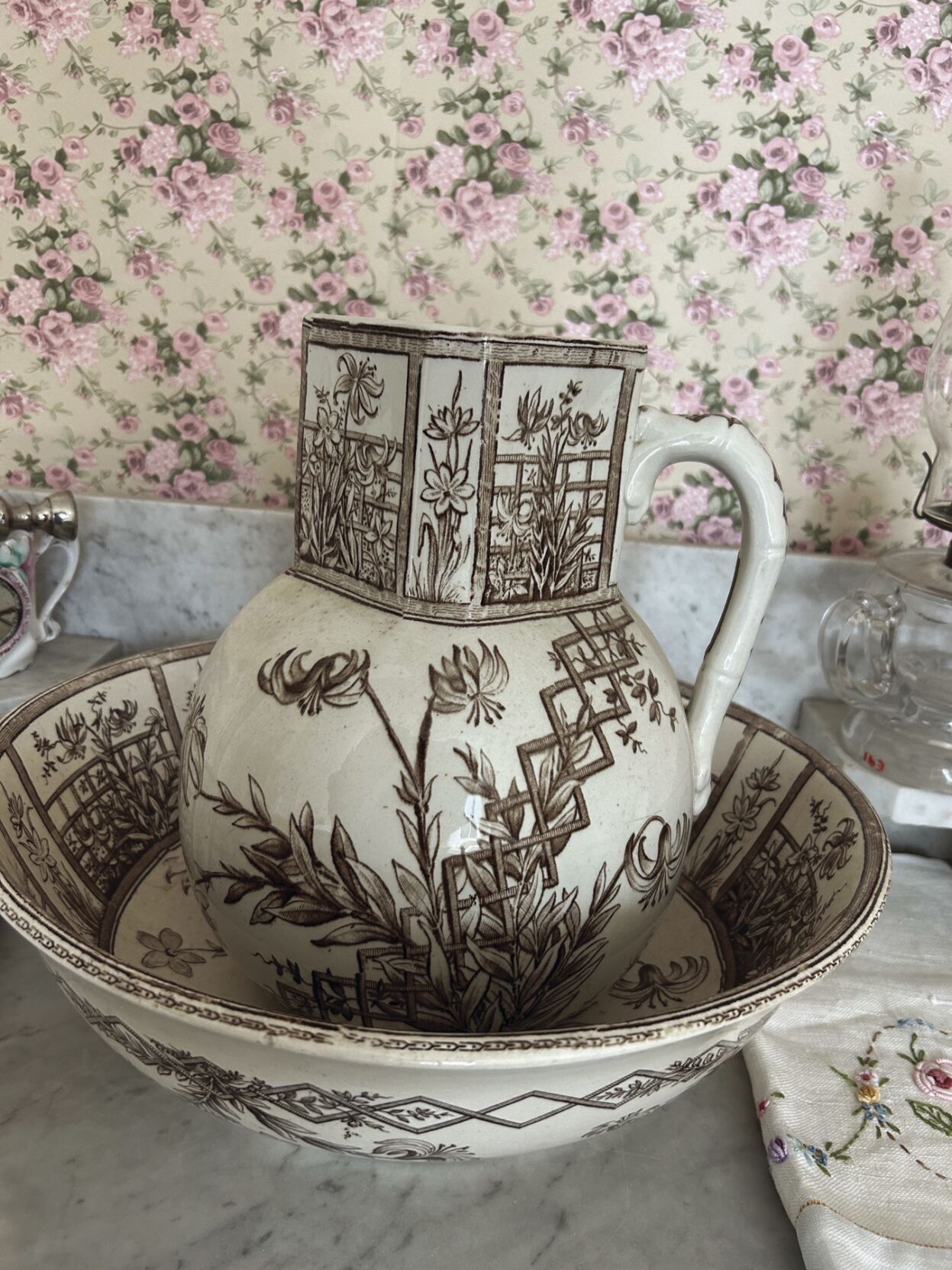
The Frost Place on South Road in Franconia is a “house museum,” a sanctuary for lovers of poetry and books. The house is situated to allow a splendid view of “his favorite mountains in the Franconia Range: Lafayette, Lincoln and Liberty.” It isn’t difficult to understand why Robert Frost wanted to live just a few miles from Bethlehem, in the White Mountains, so he could feel the changing of the seasons, the wind whistling through the trees and the sound of birds in conversation or singing to greet the dawn. Now it is possible to tour the house and attend poetry programs through the summer. Behind the house there is a nature trail where one can walk and read a few of the poems inspired by his walks, posted along the way.
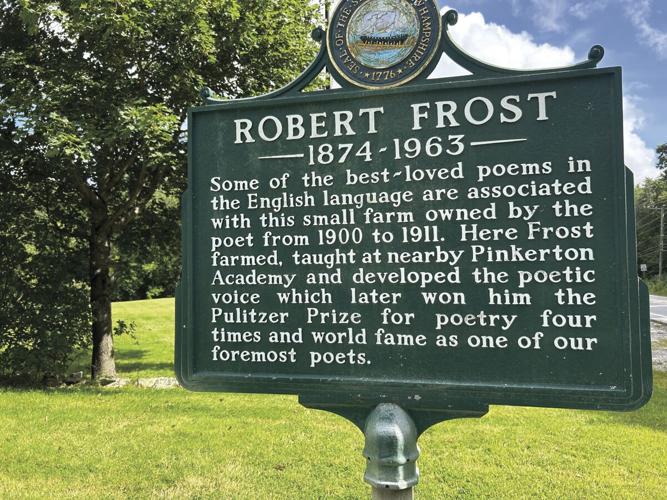
I have visited Frost Place a few times and attended poetry readings during the summer. I always find my visits magical. This summer I traveled to Derry to visit the farm where the Frost family lived from 1901 to 1911.
Robert and his wife, Elinor White Frost, moved to Derry when his grandfather, William Prescott Frost, died and left him an annuity so he could afford the farm. Their second son, Carol Frost, was born there on May 22, 1902, his second daughter, Irma Frost, on June 27, 1903, and a third daughter, Marjorie Frost, on March 29 in 1905. Frost taught for a few years at Pinkerton Academy and in 1909 the family rented a house closer to the academy. They left Derry in 1911 when Robert Frost accepted a position at Plymouth Normal School in Plymouth.
Robert Frost’s poetry is influenced by New Hampshire, our landscape and our people. In an essay by Lawrance Thompson, titled: “Robert Frost’s Affection for New Hampshire,” Frost is quoted as saying:
“Not a poem, I believe, in all my six books, from 'A Boy’s Will' to 'A Further Range,' but has something in it of New Hampshire. Nearly half of my poems must have been written in New Hampshire. Every single person in my North of Boston was friend or acquaintance of mine in New Hampshire. I lived, somewhat brokenly to be sure, in Salem, Derry, Plymouth, and Franconia, New Hampshire, from my tenth (actually, eleventh) to my forty-fifth (forty-sixth) year. …. So, you see it has been New Hampshire, New Hampshire with me all the way.”
I encourage you to visit the Frost farms in Franconia and Derry. Take a tour, walk the nature trails, and feel what he felt as he was inspired to write his poetry.
'The Pasture'
By Robert Frost
I'm going out to clean the pasture spring.
I'll only stop to rake the leaves away
(And wait to watch the water clear, I may):
I sha'n't be gone long — You come too.
I'm going out to fetch the little calf
That's standing by the mother. It's so young,
It totters when she licks it with her tongue.
I sha'n't be gone long — You come too.
This poem was composed while Frost lived in Derry and first published in 1914, in North of Boston. It has always been, for many reasons, a poem I have loved. In our frenetic, complicated world, I encourage to take a moment and read a poem by Robert Frost. He was, after all, one of us.
•••
Elizabeth Howard is the host of the Short Fuse Podcast, found on Spotify, Apple Podcasts or through the Arts Fuse. Her career intersects journalism, marketing, and communications. "Ned O’Gorman: A Glance Back," a book she edited, was published in May 2016. She is the author of "A Day with Bonefish Joe," a children’s book, published by David R. Godine. You can send her a note at eh@elizabethhoward.com.


(0) comments
Welcome to the discussion.
Log In
Keep it Clean. Please avoid obscene, vulgar, lewd, racist or sexually-oriented language.
PLEASE TURN OFF YOUR CAPS LOCK.
Don't Threaten. Threats of harming another person will not be tolerated.
Be Truthful. Don't knowingly lie about anyone or anything.
Be Nice. No racism, sexism or any sort of -ism that is degrading to another person.
Be Proactive. Use the 'Report' link on each comment to let us know of abusive posts.
Share with Us. We'd love to hear eyewitness accounts, the history behind an article.