


The New York Times recently compiled a list of the 100 best books of the 21st Century, selected by a group of well-known authors. It’s difficult for me to identify the one American writer I most admire, because I love the work of James Baldwin, Toni Morrison, Willa Cather, Cormac McCarthy and Herman Melville. However, William Faulkner is probably at the top
My dog-eared copy of “The Sound and the Fury” is filled with notes, highlighted paragraphs and awkwardly drawn boxes around words that are repeated in one or two graphs. Faulkner’s use of sensuous language, “smelling the rain” or “hearing the roof,” and his long rambling sentences are poetic.
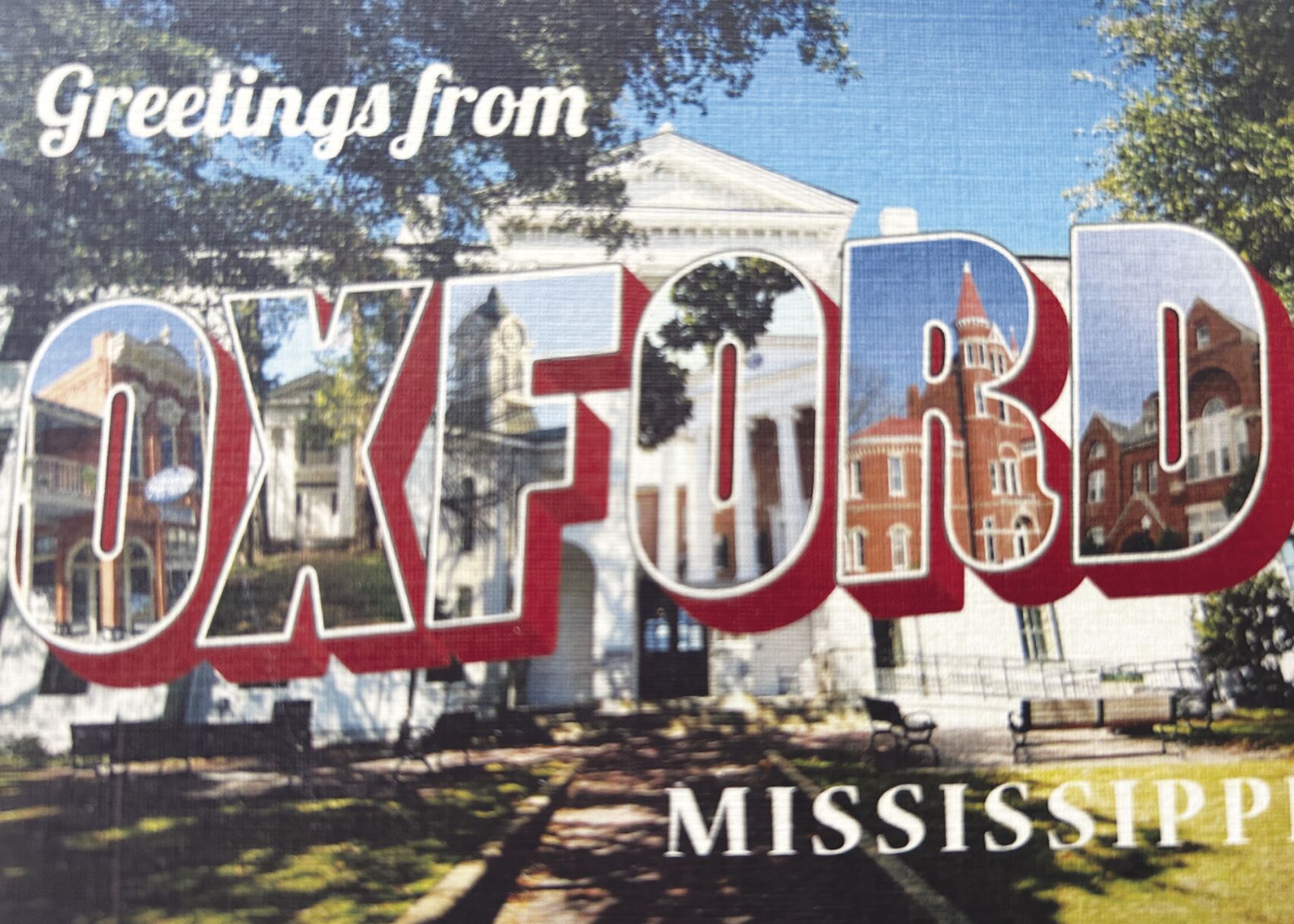
This year he would be 137 years-old, he was born in 1897 and died in 1962 and it is the fiftieth anniversary of the Faulkner and Yoknapatawpha Conference held at the University of Mississippi in Oxford, Mississippi. This is the longest literary conference honoring the work of one author in the United States. I am presenting a paper,
considering Faulkner’s influence on two contemporary writers, South African author Damon Galgut and the late Syrian author Khaled Khalifa.
The conference begins on Sunday, July 21, and I’m excited about being in Oxford again. I visited a few years ago and just looked back at my notes from that visit:
“One of the places I have wanted to visit is Rowan Oak, the house in Oxford, Mississippi where Faulkner lived and did most of his writing.
Last week I made that trip. It began in New Orleans visiting the William Faulkner bookshop located just off an alley on Jackson Square in the French Quarter. In 1925, Faulkner rented rooms in the house when he moved to New Orleans and it is where his writing career began. Now a lovely independent bookstore, The William Faulkner Bookshop has become a literary landmark.
The drive from New Orleans to Oxford is almost six hours, fortunately broken up with a stop for lunch at Rick’s Diner Inn in Goodman, Mississippi, a small hamlet with a population of just over 1,200. Almost every town in Mississippi has some literary connection and Goodman is no exception, as it was the home of David Herbert Donald, a Pulitzer-winning historian.
Rowan Oak, situated on 40 acres of land just a few miles from the square in downtown Oxford, was Faulkner's home from 1930 until his death in 1962. Faulkner’s daughter, Jill Faulkner Summers, sold it to the University of Mississippi in 1972. There is a trail, approximately five miles long, that meanders through the woods from Rowan Oak to the campus of the university.
The house is left as it was when Faulkner was living there. In his office and writing room his small manual typewriter is set up on a simple wooden table so he can look out across the expansive grounds. The plot outline for “The Fable” is written in his hand on the wall.
Southern style is radically different from our northern style. The cultural influences of the French who settled much of Mississippi in the mid-1700s, the Spanish who came later, then the British and the many Africans, have collectively made major contributions to the Delta region.
This cultural integration, combined with fresh fish from the Gulf, has contributed to extraordinary food. The rhythm of music, gospel, blues and jazz, just seems to hang in the air. The many plantations and stately houses, now either restored as historic homes or renovated as private residences, remind us of the elegant Southern lifestyle. All framed, of course, by the complicated underbelly of the South that is ever present. The poverty, the racial inequality and the lingering prejudice. Leading to stories and fascinating characters, of course.
Touring Faulkner’s home we notice a radio in the room that was Jill Faulkner’s bedroom. Apparently, she and her father had an argument over this because he didn’t want a radio in the house. One can only smile. What would he think of our various devices and enormous television screens with the screeching cacophony of political diatribes constantly being broadcast. Somehow one can picture William Faulkner sitting quietly, a pipe in his mouth and a tall Bourbon over ice on a side table, leaning over his small black Underwood Standard or Remington typewriter. Even now.”
It will be hot in Oxford, although the heat has been intense in New Hampshire, too. I’m looking forward to a quiet August in New Hampshire, after my week in Mississippi. Then I’ll probably visit Robert Frost’s farm in Franconia, and drive to Bethlehem and stop at Super Secret for an ice-cream. I am, after all, a northern girl.
•••
Elizabeth Howard is the host of the Short Fuse Podcast, found on Spotify, Apple Podcasts or through the Arts Fuse. Her career intersects journalism, marketing, and communications. “Ned O’Gorman: A Glance Back,” a book she edited, was published in May 2016. She is the author of “A Day with Bonefish Joe,” a children’s book, published by David R. Godine. You can send her a note at: eh@elizabethhoward.com.


(0) comments
Welcome to the discussion.
Log In
Keep it Clean. Please avoid obscene, vulgar, lewd, racist or sexually-oriented language.
PLEASE TURN OFF YOUR CAPS LOCK.
Don't Threaten. Threats of harming another person will not be tolerated.
Be Truthful. Don't knowingly lie about anyone or anything.
Be Nice. No racism, sexism or any sort of -ism that is degrading to another person.
Be Proactive. Use the 'Report' link on each comment to let us know of abusive posts.
Share with Us. We'd love to hear eyewitness accounts, the history behind an article.