


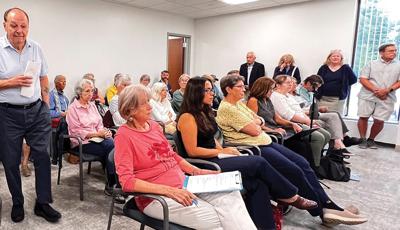
CONCORD — Residents from Wolfeboro, Laconia and surrounding Lakes Region communities turned out in force Monday, packing the room for a New Hampshire Pesticide Control Board meeting as the board took a significant step toward reducing the use of neonicotinoid pesticides on non-agricultural turf and classifying four of the chemicals as restricted-use pesticides.
The meeting drew a standing-room-only crowd, heavily represented by residents from the Lakes Region who traveled to Concord during one of the busiest weeks of the summer season to make clear how seriously they take the protection of New Hampshire’s lakes, waterways and natural environment.
The board moved forward with proposed rules that would classify clothianidin, dinotefuran, imidacloprid and thiamethoxam as restricted-use pesticides. The proposal also includes a prohibition on the use of those pesticides on non-agricultural turf, including lawns, playing fields and other maintained turf areas.
The turf provision is particularly important to lake communities because pesticides applied to lawns and other maintained turf can move off-site through runoff and other pathways and ultimately reach aquatic ecosystems.
For Rep. John MacDonald, of Wolfeboro, Monday’s action represents the next step in an effort that began in the Legislature and continued when the Pesticide Control Board took up the issue through its rulemaking authority.
MacDonald was the prime sponsor of HB 1431, bipartisan legislation addressing neonicotinoid pesticides that passed the New Hampshire House earlier this year. When the legislation did not advance through the Senate, MacDonald continued working with the Pesticide Control Board, conservation organizations, scientists and residents to keep the issue moving forward.
"I was tremendously encouraged to see so many people from Wolfeboro, Laconia and communities throughout our area make the trip to Concord," MacDonald said. "August is a busy time in the Lakes Region, but people made time because they care deeply about our lakes and natural resources. We have reached an important milestone, but the work isn't finished. The next step is the public hearing, and continued public participation will matter.”
Monday’s action moves the proposed neonicotinoid rules toward a public hearing, with the date to be announced. At that hearing, members of the public will have an opportunity to comment on the proposed rules before they are finalized.
The effort has depended on sustained public involvement as well as continued work through the legislative and regulatory process. Residents have attended meetings, submitted testimony, contacted state officials and conservation organizations, and kept attention focused on the issue.
"John could not have gotten this far without the public behind him, and his persistence and legislative experience have helped keep the issue moving when the legislative path stalled," said Tonya Albee, of Wolfeboro, founder of the Six Legged Society. "What happened Monday was remarkable. That turnout sent a clear message: people are paying attention, and they expect meaningful action to protect our lakes and natural resources."
The proposed rule is not yet final. The upcoming public hearing will give residents, lake associations, conservation organizations, scientists and other interested parties an opportunity to review the proposed language and provide comments before the Pesticide Control Board completes the rulemaking process.
The date and details of the public hearing will be available soon.


(0) comments
Welcome to the discussion.
Log In
Keep it Clean. Please avoid obscene, vulgar, lewd, racist or sexually-oriented language.
PLEASE TURN OFF YOUR CAPS LOCK.
Don't Threaten. Threats of harming another person will not be tolerated.
Be Truthful. Don't knowingly lie about anyone or anything.
Be Nice. No racism, sexism or any sort of -ism that is degrading to another person.
Be Proactive. Use the 'Report' link on each comment to let us know of abusive posts.
Share with Us. We'd love to hear eyewitness accounts, the history behind an article.