


By ADAM DRAPCHO, LACONIA DAILY SUN
SANDWICH — A local electrical contractor said the tariffs on solar energy panels announced by President Donald Trump last week will hurt, rather than help, the domestic industry.
“The last three years have been the best years I’ve had in business,” said Kim Frase, owner of Frase Electric, based in Sandwich. Installation of photovoltaic systems, which convert sunlight into electricity, has grown in recent years to account for two-thirds of his overall business. He traces the growth of the industry back to the creation of the Energy Policy Act of 2005, which provided a 30 percent tax credit for solar installations.
Since then, the consistently falling costs of photovoltaic panels, combined with tax incentives, has propelled a solar boom, even in cloudy New England. Trump’s tariffs, said Frase, are likely going to be a wet blanket thrown on the hot market.
“It was a huge growing industry for eight years of Obama, now Trump’s starting to screw it up,” Frase said, noting that the growth of solar is thanks to both political parties, as the Energy Policy Act originated during the George W. Bush administration. As manufacturers refined their processes, the cost of panels plummeted. Frase said the cost of an installation fell from $9 per watt in 2009 to $2-3 per watt now.
A state tax rebate shaved another $1,000 off the cost of an installation in New Hampshire, and that rebate is likely to expire at the end of the month.
“I’ve got a bunch of things hitting me now,” said Frase.
An average residential installation costs $15,000 to $20,000, he said, and customers could realize energy savings that would exceed the cost of the project in as little as six years. The expiring state rebate will add another year to that payback period. The tariff will likely add 10 percent to the cost of an installation, extending the payback by another year.
Frase isn’t sure by how much, but he expects the changing circumstances will hurt his business.
“Between the tariff and almost the elimination of the state rebate, it’s going to be hard to say, will it be 10 percent, will it be 20 percent, will it be 30 percent?”
Frase Electric employs 11 people, part of the 260,000-strong workforce in solar energy in the United States, according to a census performed by the nonprofit Solar Foundation. The vast majority of those jobs are in installation; very few Americans are employed by solar panel manufacturers.
Most of the world’s solar panels are made in Asia. Frase uses LG panels, made in Korea, though he also uses American-made panels in some applications. Because there are few remaining American manufacturers, he expects that the tariffs will create a demand for domestic panels and cause their prices to rise as well.
“I think it’s going to affect cost of all solar panels,” said Frase. “The tariff is certainly going to hurt the industry, I don’t think it’s going to help the industry. We’re going to be going the wrong direction in renewable energy. Everyone’s trying to find ways to keep costs down, the industry has come a long way in 3-4 years, now (Trump) is going to slow it down? It’s good-paying jobs with good bonuses. I’m definitely thinking it’s going to hurt my business.”
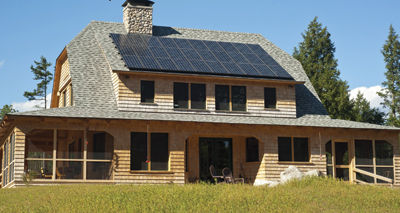
Solar power installations, such as this 7.2-kilowatt system, have grown to account for two-thirds of the business for Frase Electric. President Trump’s recently-announced tariffs could reverse some of the growth that the industry has experienced, Kim Frase fears. (Courtesy photo)


(0) comments
Welcome to the discussion.
Log In
Keep it Clean. Please avoid obscene, vulgar, lewd, racist or sexually-oriented language.
PLEASE TURN OFF YOUR CAPS LOCK.
Don't Threaten. Threats of harming another person will not be tolerated.
Be Truthful. Don't knowingly lie about anyone or anything.
Be Nice. No racism, sexism or any sort of -ism that is degrading to another person.
Be Proactive. Use the 'Report' link on each comment to let us know of abusive posts.
Share with Us. We'd love to hear eyewitness accounts, the history behind an article.