


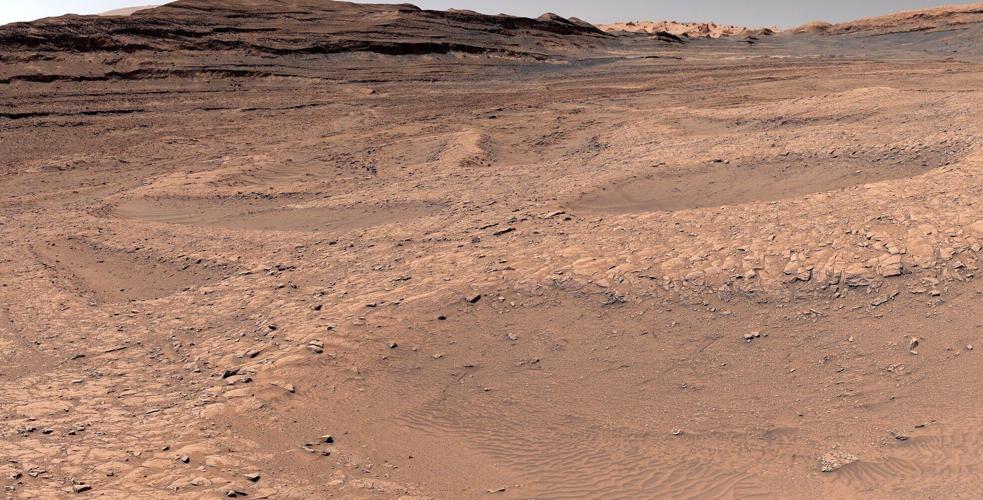

The new study includes this NASA Curiosity Mars rover panorama of boxwork formations — the low ridges seen here with hollows in between them — taken using its Mastcam on Sept. 26, 2025. (NASA / JPL-Caltech / MSSS via SWNS)
By Dean Murray
Maybe David Bowie was right with his spiders from Mars?
Space scientists say they have spotted a hilly landscape that looks like spiderwebs on the Red Planet.
NASA's Curiosity rover has spent six months exploring the site to investigate if they are a clue to the presence of water.
The region features geologic formations called boxwork, low ridges standing roughly 3 to 6 feet (1 to 2 metres) tall with sandy hollows in between.
NASA's Jet Propulsion Laboratory said: "A hilly landscape that looks like spiderwebs when viewed from orbit holds clues to the history of water on ancient Mars.

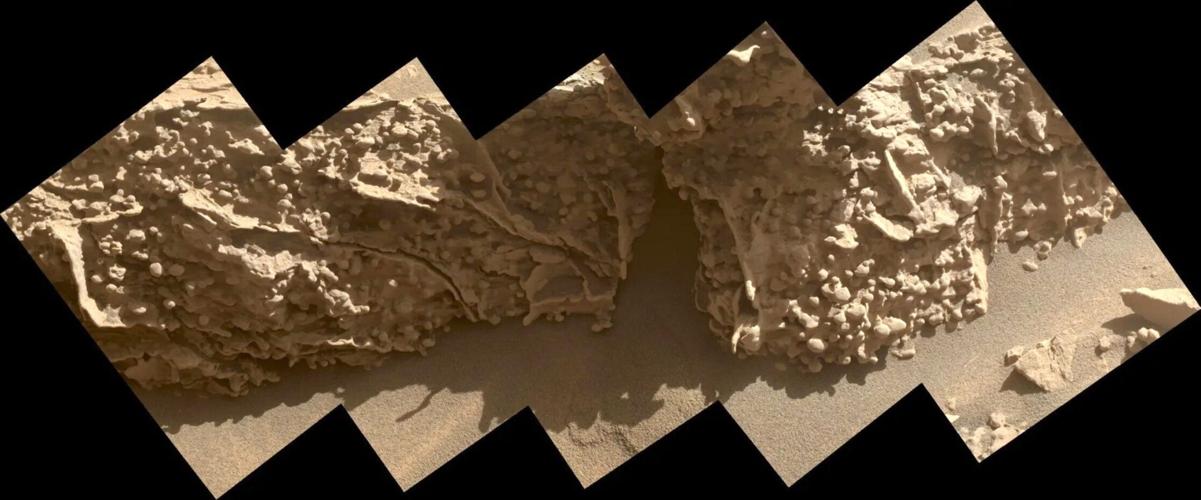
The new study includes this image of bumpy nodules formed by minerals left behind as groundwater was drying out on Mars billions of years ago. (NASA / JPL-Caltech / MSSS via SWNS)


"Crisscrossing the surface for miles, the formations suggest ancient groundwater flowed on this part of the Red Planet later than scientists expected.
"This possibility raises new questions about how long microbial life could have survived on Mars billions of years ago, before rivers and lakes dried up and left a freezing desert world behind."
To explain the shapes, scientists have proposed that groundwater once flowed through large fractures in the bedrock, leaving behind minerals. Those minerals then strengthened the areas that became ridges while other portions without mineral reinforcement were eventually hollowed out by wind.

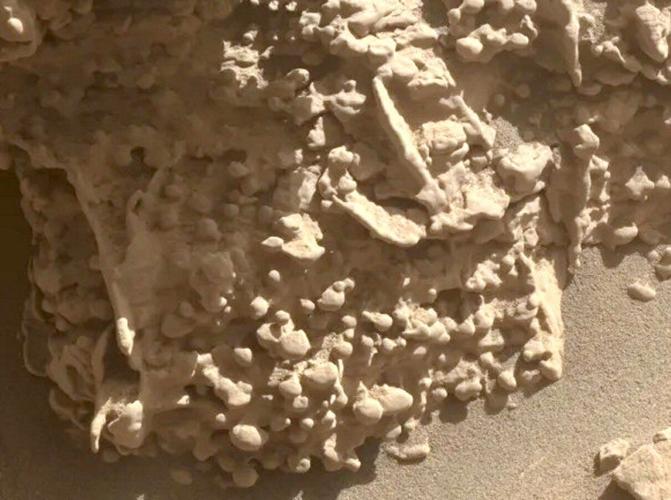
The new study includes this image of bumpy nodules formed by minerals left behind as groundwater was drying out on Mars billions of years ago. (NASA / JPL-Caltech / MSSS via SWNS)
“Seeing boxwork this far up the mountain suggests the groundwater table had to be pretty high,” said Tina Seeger of Rice University in Houston, one of the mission scientists leading the boxwork investigation. “And that means the water needed for sustaining life could have lasted much longer than we thought looking from orbit.”
The rover also discovered bumpy textures called nodules, an obvious sign of past groundwater that has been spotted many times by Curiosity and other Mars missions. Unexpectedly, these nodules were not found near the central fractures, but along a ridge’s walls and the hollows between them.
“We can’t quite explain yet why the nodules appear where they do,” Seeger said. “Maybe the ridges were cemented by minerals first, and later episodes of groundwater left nodules around them.”


(0) comments
Welcome to the discussion.
Log In
Keep it Clean. Please avoid obscene, vulgar, lewd, racist or sexually-oriented language.
PLEASE TURN OFF YOUR CAPS LOCK.
Don't Threaten. Threats of harming another person will not be tolerated.
Be Truthful. Don't knowingly lie about anyone or anything.
Be Nice. No racism, sexism or any sort of -ism that is degrading to another person.
Be Proactive. Use the 'Report' link on each comment to let us know of abusive posts.
Share with Us. We'd love to hear eyewitness accounts, the history behind an article.