


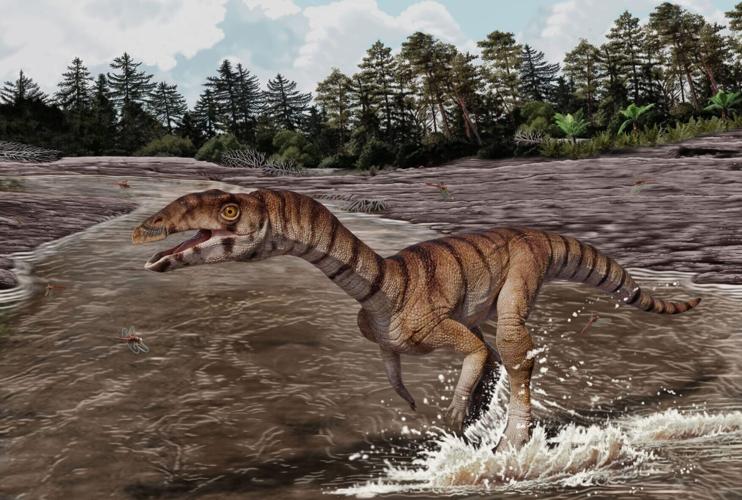

Reconstruction of Labrujasuchus expectatus, a new species of Shuvosauridae from Late Triassic rocks of Ghost Ranch, New Mexico. (Jorge Gonzalez via SWNS)
By Stephen Beech
A newly discovered crocodile ancestor had a body similar to an ostrich and no teeth.
The strange creature — dubbed the "Witch Croc" — shows the "weirdness" of life at the dawn of the dinosaur age around 250 million years ago, say American scientists.
The fossilized remains of the bipedal, toothless beast were unearthed at Ghost Ranch, New Mexico.
Scientists explained that, during the Triassic period, the modern animals we know were just beginning to diversify into a menagerie of forms and body plans that rhyme with the lifestyles of extinct and living animals better known to the public, but nested in groups that ended up taking wildly divergent paths.
One example was Labrujasuchus expectatus, or the Witch Croc.

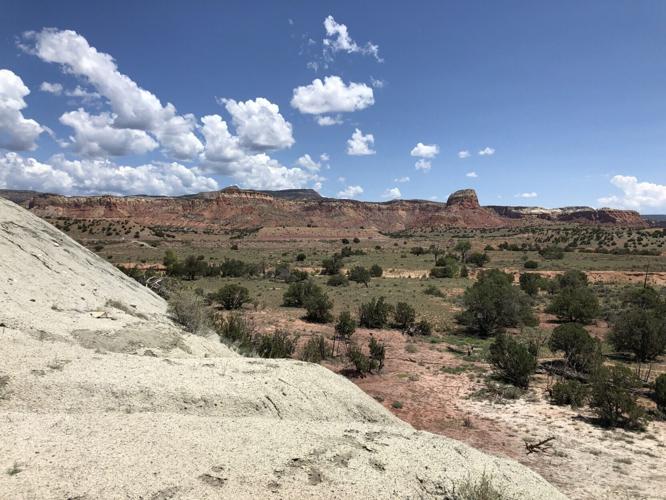
View across Ghost Ranch lands and Late Triassic rocks from the Hayden Quarries site. (Nate Smith via SWNS)
Labrujasuchus looked very much like ornithomimosaurs — a group of bipedal dinosaurs from the Cretaceous period with body plans similar to those of modern ostriches, according to a study published in the Journal of Vertebrate Paleontology.
But Labrujasuchus comes from the branch of archosaurs that led to crocodiles, four-legged and full of teeth.
Experts say the newly described Labrujasuchus navigated the world on two legs with tiny arms and a toothless mouth tipped in a beak.
Study lead author Alan Turner, of Stony Brook University, New York, said: "We see a lot of the successful strategies for modern animals and non-avian dinosaurs first arise in the Triassic, and shuvosaurs are a great example of that convergent evolution.

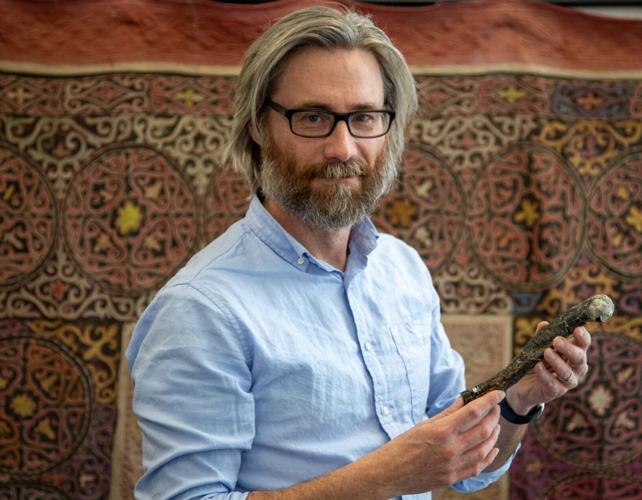
Dr. Alan Turner (Stony Brook University) holding the femur of Labrujasuchus expectatus. (James Napoli via SWNS)
"Bipedalism is certainly a unique path for crocodile relatives to take, but it's a path well-trod by dinosaurs and later birds. It obviously worked for these animals."


One of only five identified species, he says Labrujasuchus expectatus fills the gap between two earlier discovered shuvosaurs from the region, an evolutionary link paleontologists knew was waiting to be found.
Turner says the discovery was the "expected unexpected" — which inspired the species name "expactatus."
The witchy genus moniker, Labrujasuchus, references the "Ranchos de los Brujos" — or Ranch of the Witches — an old Spanish name for Ghost Ranch, and the Greek word "suchus" meaning "crocodile."
Study co-author Nate Smith said: "Legend has it, the local rancheros gave the site the name 'Ranchos de Los Brujos' to keep folks away from the cattle-rustling operations of the Archuleta brothers.

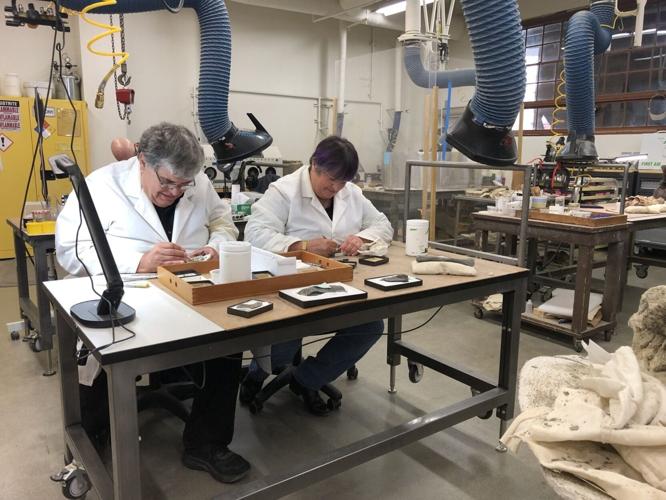
Dinosaur Institute volunteers Richard Hayes and Anne Baker-Hayes preparing Hayden Quarry Ghost Ranch fossils in NHMLAC's Level 4 Fossil Lab. (Nate Smith via SWNS)
"We wanted to give a nod to that colorful history, and honor the incredible role Ghost Ranch has played in expanding our view of the Triassic.
"We also wanted to highlight how the fossil record works — finding one shuvosaur from earlier in the Triassic and one from later meant that we paleontologists knew there were probably more from in-between waiting to be discovered and described."
Home to four quarries excavated by paleontologists for decades, the research team say Ghost Ranch continues to produce some of the most "exquisitely produced" fossils from the epoch.
The location was made famous by artist Georgia O'Keeffe's dramatic paintings of its colorful badlands.

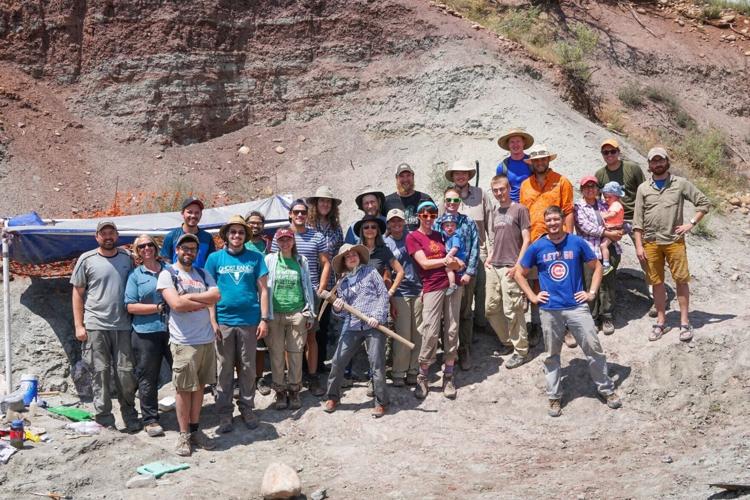
Fieldwork crew, including most of the co-authors and Dinosaur Institute Director Dr. Nate Smith at right foreground, at the Hayden Quarries, Ghost Ranch, New Mexico. (Nate Smith via SWNS)
Joanne Lefrak is the Director of Experience and Social Impact at the Ghost Ranch Education and Retreat Center, where teams of paleontologists and volunteers are hosted each summer.
She said: "This summer is the 20th anniversary of Nate and his colleagues coming out to do excavations at Ghost Ranch, and we're so proud to play a central role in making that incredible research possible.
"Whether visitors are seeking its iconic landscape and spiritual healing or digging into ancient history, Ghost Ranch is a place like nowhere else on the planet.
"We're looking forward to collaborating with Turner, Smith, and all their colleagues to continue sharing this extraordinary place for years to come."


(0) comments
Welcome to the discussion.
Log In
Keep it Clean. Please avoid obscene, vulgar, lewd, racist or sexually-oriented language.
PLEASE TURN OFF YOUR CAPS LOCK.
Don't Threaten. Threats of harming another person will not be tolerated.
Be Truthful. Don't knowingly lie about anyone or anything.
Be Nice. No racism, sexism or any sort of -ism that is degrading to another person.
Be Proactive. Use the 'Report' link on each comment to let us know of abusive posts.
Share with Us. We'd love to hear eyewitness accounts, the history behind an article.