



(Cardet co6cs via Wikimedia Commons)
By Stephen Beech
A key ingredient in magic mushrooms makes fish less aggressive and lazier, according to new research.
The chemical compound may reduce energetically costly behavior, say scientists.
They believe their findings could help develop new drugs in the future for treating human behavioral problems.
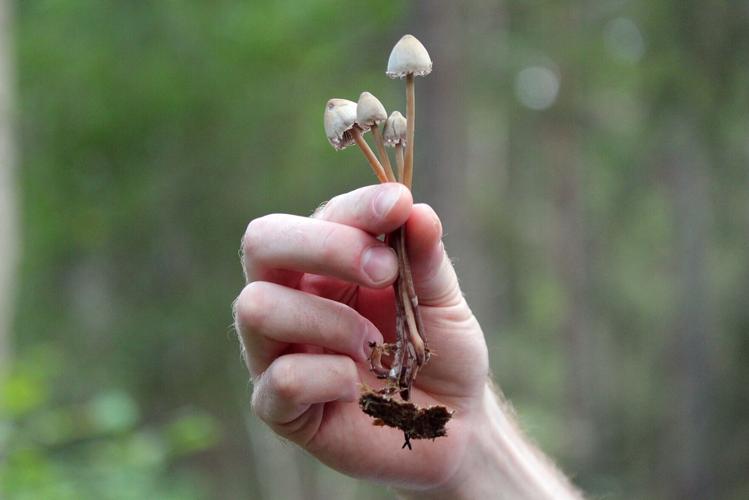
More than 200 mushrooms - primarily those belonging to a genus of gilled mushrooms called Psilocybe - contain the psychoactive compound psilocybin.
In the brain of humans, the chemical can bind to serotonin receptors and influence behavior and emotions - including aggression, appetite, and mood.
But its effects on the social behavior of animals remained largely unexplored until now.
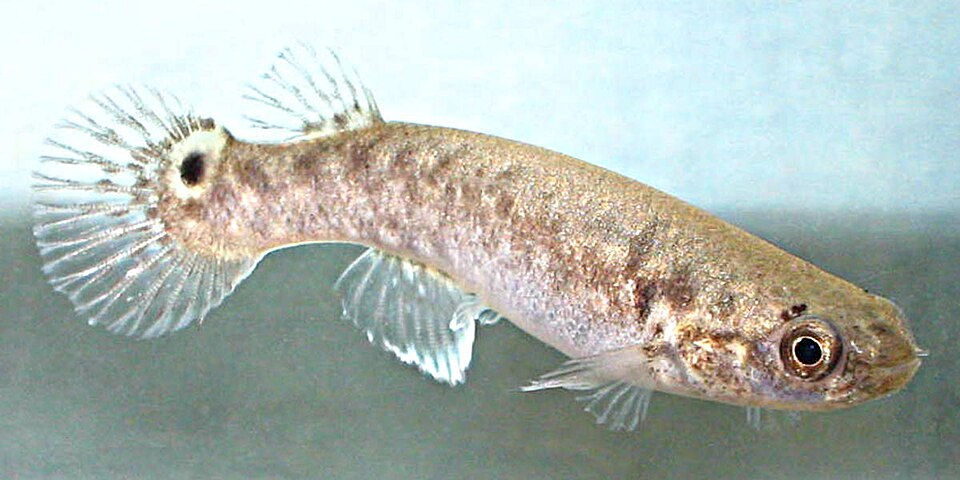
Researchers in Canada tested whether the effects of psilocybin extend to the social behavior of the amphibious mangrove rivulus fish for the groundbreaking study, published in the journal Frontiers in Behavioral Neuroscience.
First author Dayna Forsyth said: "We show that an acute, low dose of psilocybin significantly reduces activity and aggressive attack behavior during social interactions in adult mangrove rivulus fish, a species that is naturally highly aggressive."

Tania Malréchauffé
Senior author Suzie Currie added: "These findings provide the first evidence that psilocybin can selectively reduce escalated aggression in a vertebrate model without suppressing social interaction."
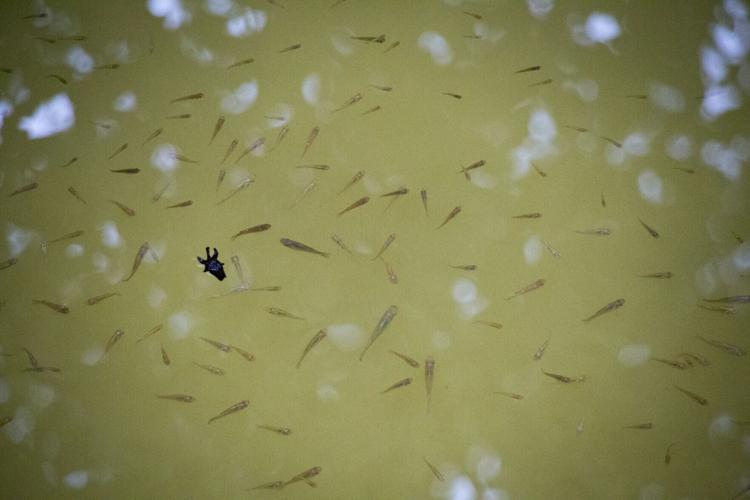
The researchers explained that mangrove rivulus fish are "innately aggressive" - especially when paired with another individual.
But their aggressive behaviors are straightforward and subtle changes can easily be detected.
Currie said the fish are also self-fertilizing and produce embryos that are genetically identical, so the model ensures all observed effects are caused by psilocybin treatment rather than genetic differences between fish.
The team used three genetically distinct, lab-bred lines.
Fish from one line were exposed to psilocybin, fish from a second served as stimulus fish.
A third line was used to quantify whole-body concentrations and absorption of psilocybin.
For the first phase of the experiment, the focal fish was added into a tank containing a stimulus fish to measure normal behavior.
The fish were separated by an opaque cover placed over a fiberglass mesh barrier through which the fish could see and smell, but not reach, each other.
After a five-minute adjustment period to the shared tank, the opaque barrier was removed and interaction monitored.


The same focal fish was 24 hours later put in a water tank in which psilocybin was dissolved.

After exposure to the substance for 20 minutes, the fish was added into the tank occupied by the same stimulus fish of the day before.
After removal of the opaque barrier, interaction was observed again.
Observation of behavior to measure activity and aggression levels revealed that fish dosed with psilocybin showed decreased levels of activity and performed fewer swimming bursts compared to specimens that hadn't received psilocybin treatment.
Currie, a biologist at The University of British Columbia, said: "Swimming bursts are highâenergy attack behaviors that represent an escalation of aggression towards the stimulus fish without making physical contact.
"Other types of aggressive behaviors, like headâon displays, are more about communication and social assessment and require very little energy."
Forsyth, a research associate and former masters student at Acadia University, Nova Scotia, said: "Psilocybin's calming effect appears to selectively reduce energetically costly, escalated behaviors while lowerâenergy social display behaviors remained largely unchanged.
"This suggests that this compound can selectively dampen escalated social conflict rather than shutting down behavior altogether."
Psilocybin also influenced activity levels, with dosed fish spending less time moving than control fish when paired with another one.
The research team say that, in the long run, non-human models in drug-screening experiments can provide reliable results that can later be translated to humans.
They believe their findings could in future help improve therapeutic research by clarifying which aspects of social behavior are most sensitive to psilocybin.

Mathew Schwartz
But the team pointed out that the current study didn't test clinical treatments and results from fish cannot be directly extrapolated to humans.
The study also focused on single doses and short periods of exposure, and didn't examine long-term effects, repeated dosing, or adaptation over time.
The team say further research is needed to confirm whether the lower level of aggression observed in the study can be sustained.
Currie added: "Future studies can build on this work to explore how psilocybin alters neural signaling, which serotonin pathways are involved, and why some aspects of social behavior are affected while others are not.
"These are questions that are difficult or impossible to answer directly in humans."
The findings follow a study showing that salmon are being driven wild by cocaine.
Researchers found that traces of the illicit drug in their natural environment saw juvenile Atlantic salmon swim further and disperse more widely as a result of exposure to narcotics.
The study, published last month in the journal Current Biology, was the first to show the effects of cocaine contamination on fish behavior in the wild rather than under lab conditions.


(0) comments
Welcome to the discussion.
Log In
Keep it Clean. Please avoid obscene, vulgar, lewd, racist or sexually-oriented language.
PLEASE TURN OFF YOUR CAPS LOCK.
Don't Threaten. Threats of harming another person will not be tolerated.
Be Truthful. Don't knowingly lie about anyone or anything.
Be Nice. No racism, sexism or any sort of -ism that is degrading to another person.
Be Proactive. Use the 'Report' link on each comment to let us know of abusive posts.
Share with Us. We'd love to hear eyewitness accounts, the history behind an article.