


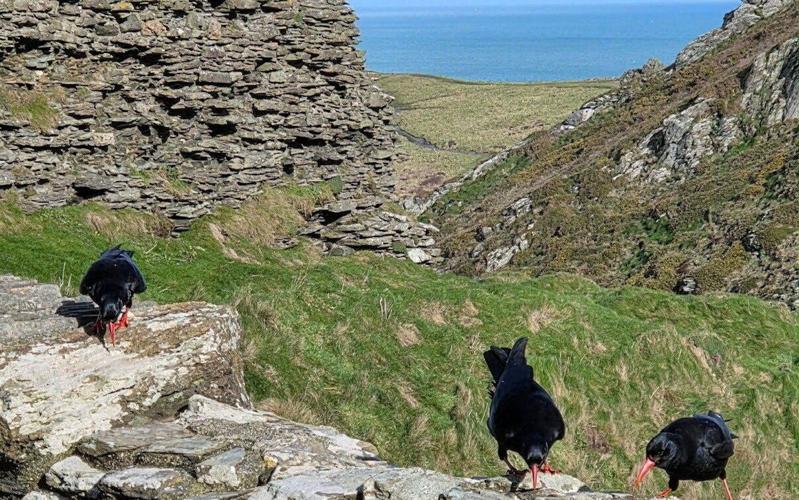
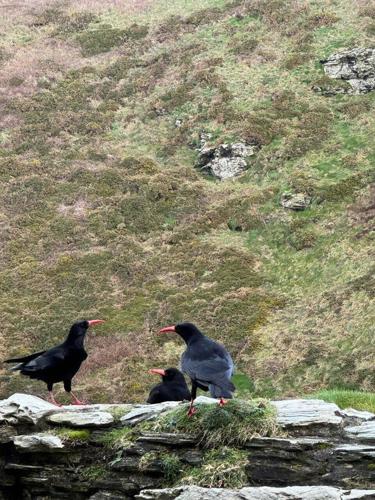

Rare choughs at Tintagel Castle in the United Kingdom. (English Heritage via SWNS)
By Ed Chatterton
A rare species of bird said to be the guardian of King Arthur's soul has returned to Tintagel Castle — for the first time in 100 years.
Red-billed choughs have been spotted at the historic site in Cornwall where they were considered extinct after an absence of around a century, English Heritage revealed today (Thurs).
Long woven into Cornish folklore, King Arthur's soul is said to live on in the form of a chough, with its distinctive red beak and feet symbolizing his violent and bloody end at the Battle of Camlann in the early 6th century.
Arthurian legend also has it the famous "once and future king" did not die but instead departed to the mystical island of Avalon or lies in an enchanted sleep, waiting for the moment Britain most needs him.

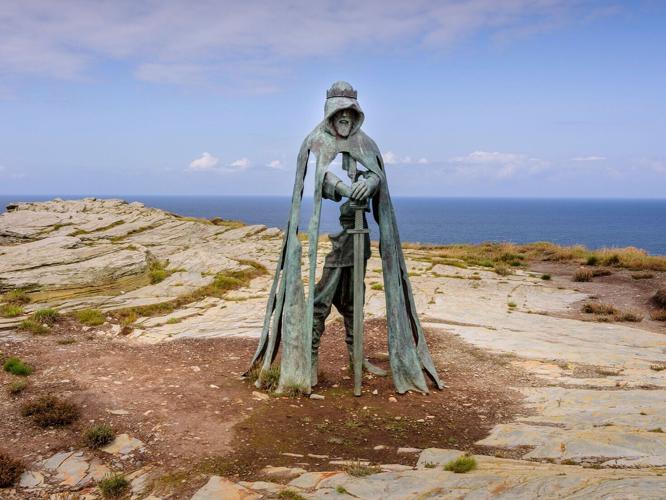
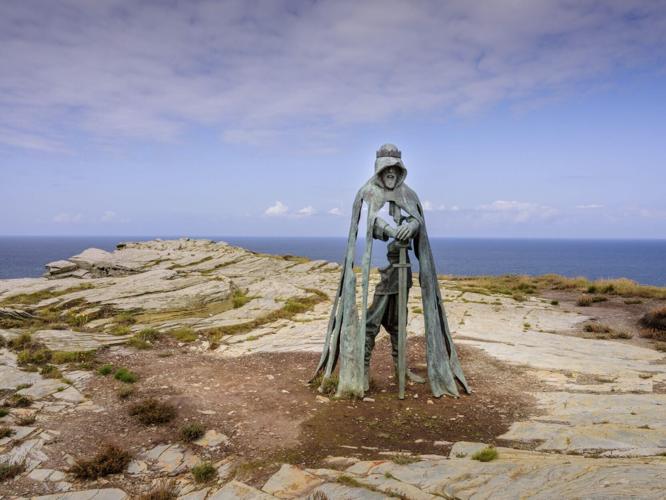
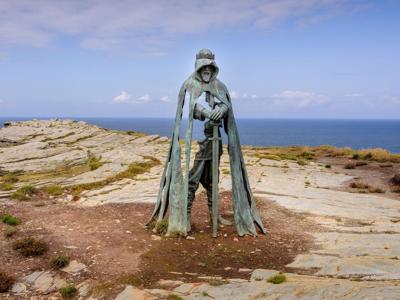
Gallos statue at Tintagel Castle in the United Kingdom. (English Heritage via SWNS)
In Cornish tradition, he is also imagined as resting within the landscape itself, ready to re-emerge from the site of his conception when needed.
English Heritage curator Win Scutt said: "People have told stories for centuries about choughs at Tintagel, so to see them here again, at a place so bound up with the legend of Arthur, feels extraordinary.
"It's a rare moment where nature and myth seem to meet."


It was seen as a bad omen by many locals when choughs — a member of the crow family — became completely extinct across Cornwall in 1973.
But they have been successfully recolonized in Cornwall after the arrival of three birds from southern Ireland on Lizard in 2001.

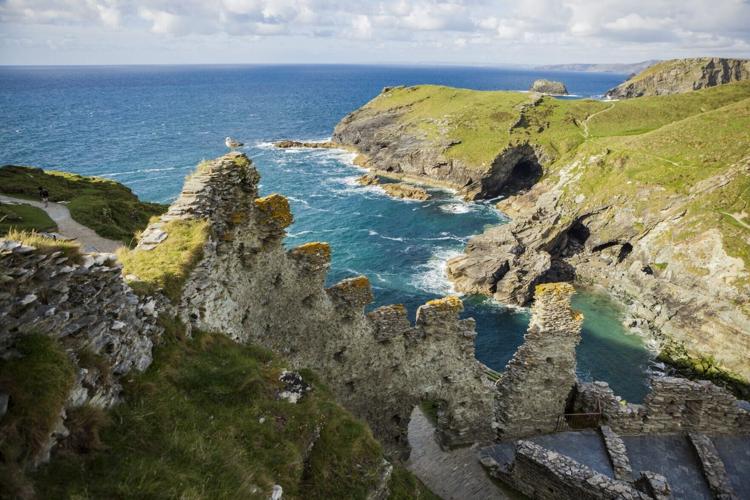
Tintagel Castle in the United Kingdom. (English Heritage via SWNS)
Since then, numbers have grown — and now they have been observed once again circling and foraging around Tintagel's rugged coastline. A wild-born chough also took to the skies in South East England last year for the first time in over 200 years.
Hilary Mitchell and Steve Ashby, of Cornwall Birds, said: "This is an amazing conservation success story, testament to the work done by conservation organizations, farmers, landowners and volunteers.
"Their dedication restored habitat essential for our chough to thrive and kept the birds safe so that they could recolonize the Cornish coast."

Choughs at Tintagel Castle in the United Kingdom. (English Heritage via SWNS)
The chough is also included in Cornwall's coat of arms alongside the miner and the fisherman.
Once widespread around the coast of Britain, they began declining in the early 19th century.
As the chough's numbers dwindled, it became an increasingly prized target for egg collectors and trophy hunters, which is believed to have sealed the bird's fate in Cornwall.


(0) comments
Welcome to the discussion.
Log In
Keep it Clean. Please avoid obscene, vulgar, lewd, racist or sexually-oriented language.
PLEASE TURN OFF YOUR CAPS LOCK.
Don't Threaten. Threats of harming another person will not be tolerated.
Be Truthful. Don't knowingly lie about anyone or anything.
Be Nice. No racism, sexism or any sort of -ism that is degrading to another person.
Be Proactive. Use the 'Report' link on each comment to let us know of abusive posts.
Share with Us. We'd love to hear eyewitness accounts, the history behind an article.